SIX vs QNT: Analyzing Performance Metrics of Two Leading Blockchain Technology Platforms

10-6-2025, 12:16:49 AM
Altcoins
Blockchain
Crypto Insights
Investing In Crypto
RWA
Article Rating : 3.8
half-star
0 ratings
The article "SIX vs QNT: Analyzing Performance Metrics of Two Leading Blockchain Platforms" offers an in-depth analysis comparing the investment value of SIX Network and Quant (QNT) amidst their distinct application scenarios in blockchain technology. It examines historical price trends, supply mechanisms, institutional adoption, and ecosystem development to address investor queries about which token might be the better buy. Suitable for new and experienced investors, it highlights the risk factors and strategies for different investment profiles. Additionally, real-time prices can be viewed on Gate, providing valuable insights into current market performance and projections.
SIX vs QNT: Analyzing Performance Metrics of Two Leading Blockchain Technology Platforms

Introduction: SIX vs QNT Investment Comparison

In the cryptocurrency market, the comparison between SIX vs QNT has always been an unavoidable topic for investors. The two not only show significant differences in market cap ranking, application scenarios, and price performance but also represent different positions in the crypto asset space.

SIX Network (SIX): Since its launch, it has gained market recognition for its focus on simplifying blockchain adoption and real-world asset (RWA) tokenization for businesses.

Quant (QNT): Since its inception, it has been hailed as a technology provider enabling trusted digital interaction, recognized for solving interoperability through the creation of a global blockchain operating system.

This article will comprehensively analyze the investment value comparison between SIX and QNT, focusing on historical price trends, supply mechanisms, institutional adoption, technological ecosystems, and future predictions, attempting to answer the question investors care about most:

"Which is the better buy right now?"

I. Price History Comparison and Current Market Status

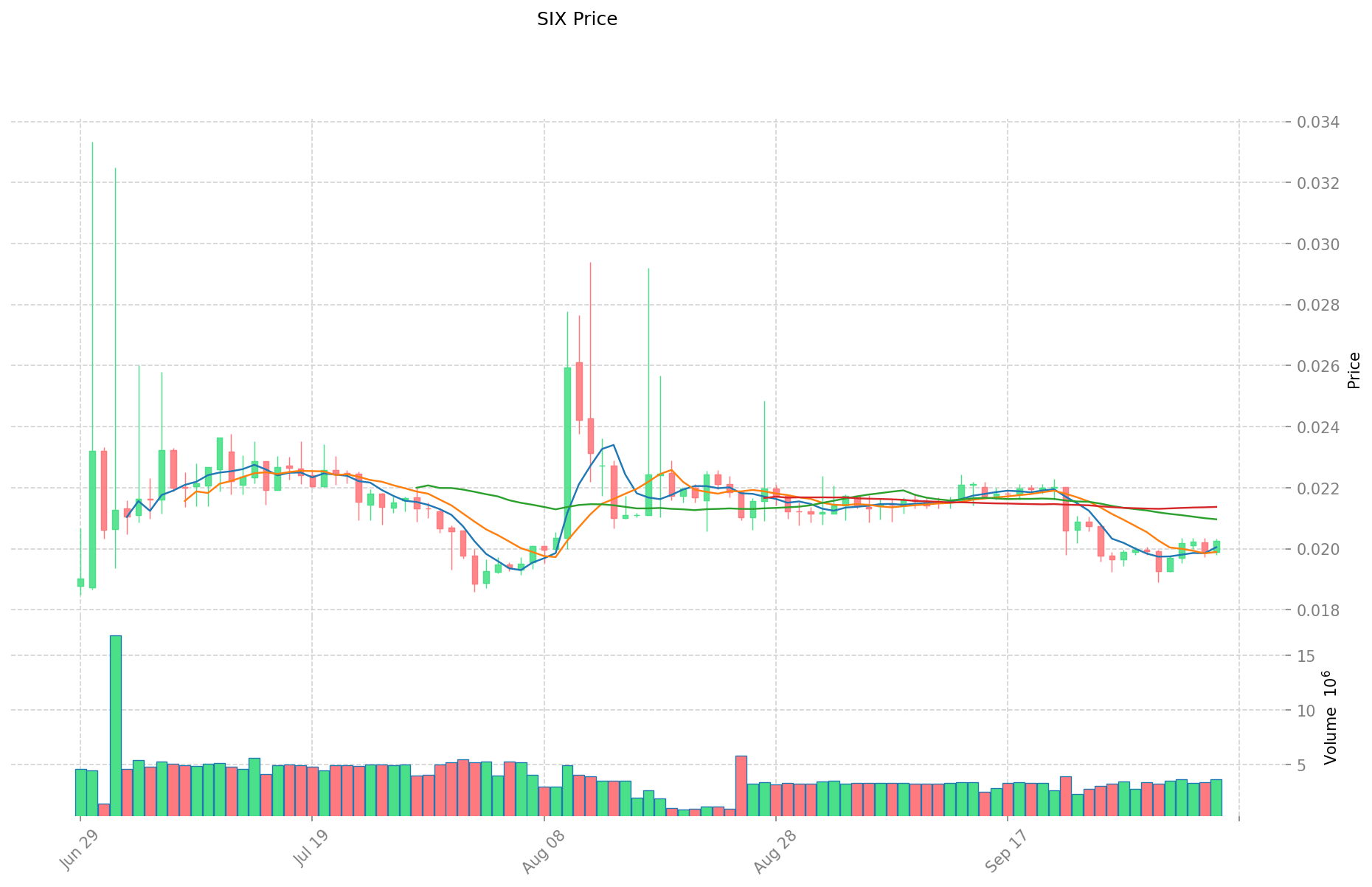
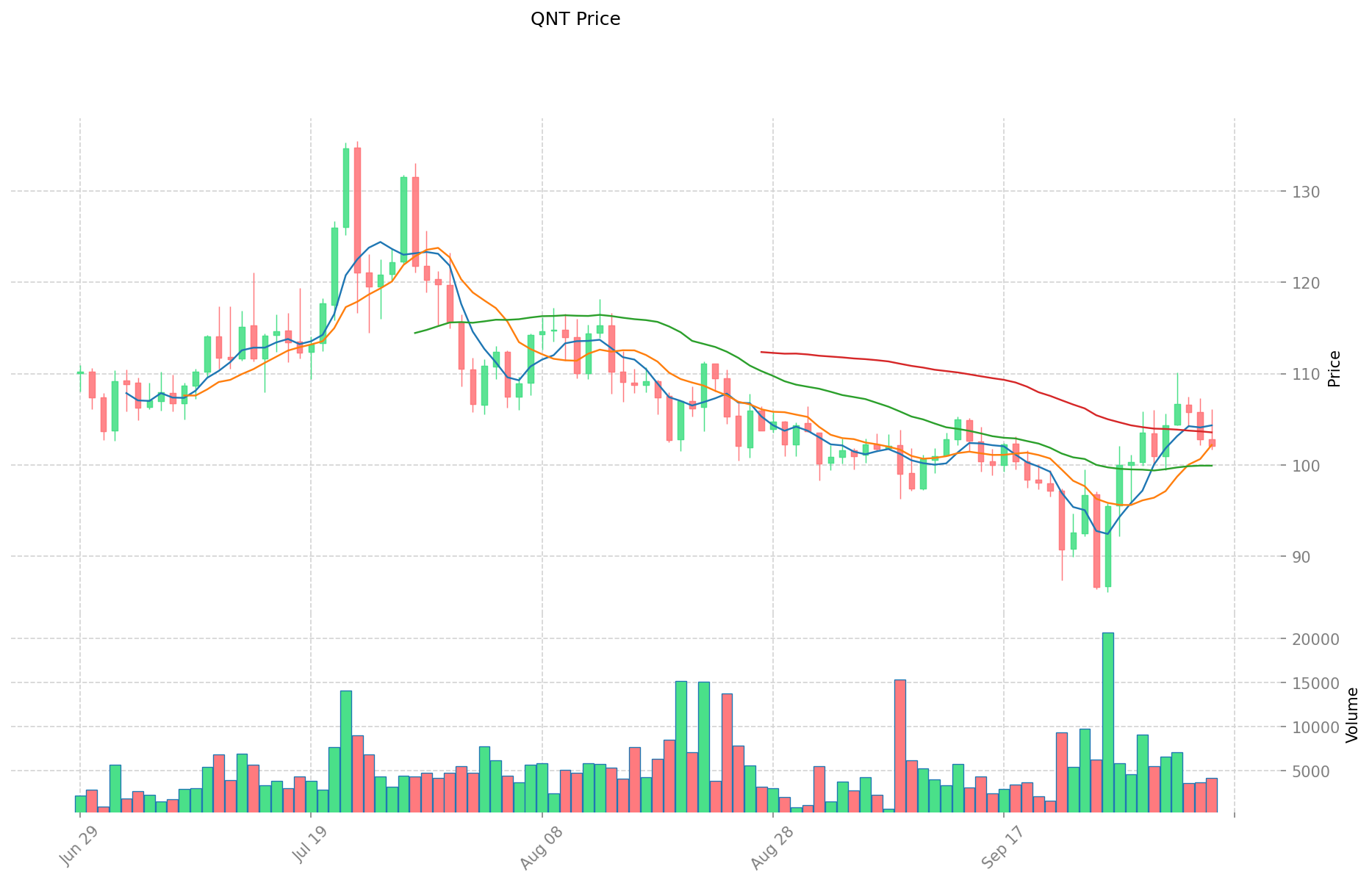
  • 2021: QNT reached its all-time high of $427.42 on September 11, 2021.
  • 2024: SIX hit its all-time high of $0.0415 on November 19, 2024.
  • Comparative Analysis: During market cycles, SIX dropped from $0.0415 to $0.01426, while QNT fell from $427.42 to its all-time low of $0.215773.

Current Market Situation (2025-10-06)

  • SIX current price: $0.02024
  • QNT current price: $101.95
  • 24-hour trading volume: $74,001.93 (SIX) vs $426,978.88 (QNT)
  • Market Sentiment Index (Fear & Greed Index): 74 (Greed)

Click to view real-time prices:

price_image1 price_image2

II. Core Factors Affecting SIX vs QNT Investment Value

Supply Mechanism Comparison (Tokenomics)

  • QNT: The Quant Network token has a fixed supply model that affects its price dynamics
  • 📌 Historical Pattern: Limited token supply mechanisms typically create scarcity that can drive price appreciation during periods of increased demand.

Institutional Adoption and Market Applications

  • Enterprise Adoption: QNT is part of the Oracle blockchain platform which has begun deployment
  • Interoperability: QNT offers cross-blockchain interoperability which enhances its utility

Technical Development and Ecosystem Building

  • QNT Technical Development: Focus on interoperability solutions for blockchain networks
  • Ecosystem Comparison: QNT has positioned itself within the enterprise blockchain ecosystem with focus on interoperability protocols

Macroeconomic and Market Cycles

  • Market Leverage: Liquidation of leveraged long positions has been identified as a key factor in QNT price volatility
  • Market Sentiment: Price movements are significantly affected by market-wide sentiment and trading patterns

III. 2025-2030 Price Predictions: SIX vs QNT

Short-term Prediction (2025)

  • SIX: Conservative $0.01357 - $0.02025 | Optimistic $0.02025 - $0.02511
  • QNT: Conservative $81.52 - $101.90 | Optimistic $101.90 - $149.79

Mid-term Prediction (2027)

  • SIX may enter a growth phase, with estimated prices ranging from $0.02029 to $0.03186
  • QNT may enter a consolidation phase, with estimated prices ranging from $102.69 to $165.59
  • Key drivers: Institutional capital inflow, ETF developments, ecosystem growth

Long-term Prediction (2030)

  • SIX: Base scenario $0.03529 - $0.03976 | Optimistic scenario $0.03976 - $0.04976
  • QNT: Base scenario $169.40 - $198.20 | Optimistic scenario $198.20 - $227.00

View detailed price predictions for SIX and QNT

Disclaimer: This analysis is based on historical data and market projections. Cryptocurrency markets are highly volatile and unpredictable. These predictions should not be considered as financial advice. Always conduct your own research before making investment decisions.

SIX:

年份 预测最高价 预测平均价格 预测最低价 涨跌幅
2025 0.02511 0.02025 0.0135675 0
2026 0.0278964 0.02268 0.0156492 12
2027 0.031863132 0.0252882 0.020483442 24
2028 0.03800563578 0.028575666 0.01685964294 41
2029 0.0372855289968 0.03329065089 0.0306273988188 64
2030 0.049756206820194 0.0352880899434 0.022584377563776 74

QNT:

年份 预测最高价 预测平均价格 预测最低价 涨跌幅
2025 149.793 101.9 81.52 0
2026 130.88036 125.8465 65.44018 23
2027 165.5888247 128.36343 102.690744 25
2028 185.189920461 146.97612735 85.246153863 44
2029 172.72634486172 166.0830239055 127.883928407235 62
2030 227.0022770740374 169.40468438361 88.0904358794772 66

IV. Investment Strategy Comparison: SIX vs QNT

Long-term vs Short-term Investment Strategies

  • SIX: Suitable for investors focusing on real-world asset tokenization and blockchain adoption
  • QNT: Suitable for investors interested in enterprise blockchain solutions and interoperability

Risk Management and Asset Allocation

  • Conservative investors: SIX: 30% vs QNT: 70%
  • Aggressive investors: SIX: 60% vs QNT: 40%
  • Hedging tools: Stablecoin allocation, options, cross-currency portfolios

V. Potential Risk Comparison

Market Risks

  • SIX: Relatively low market cap may lead to higher volatility
  • QNT: Susceptible to market-wide sentiment and leveraged trading

Technical Risks

  • SIX: Scalability, network stability
  • QNT: Interoperability challenges, potential security vulnerabilities

Regulatory Risks

  • Global regulatory policies may have different impacts on both tokens

VI. Conclusion: Which Is the Better Buy?

📌 Investment Value Summary:

  • SIX advantages: Focus on real-world asset tokenization, potential for growth in adoption
  • QNT advantages: Enterprise-level adoption, interoperability solutions, fixed supply mechanism

✅ Investment Advice:

  • New investors: Consider a balanced approach with a slight preference for QNT due to its established market presence
  • Experienced investors: Explore opportunities in both, with allocation based on risk tolerance and market analysis
  • Institutional investors: Focus on QNT for its enterprise solutions and interoperability features

⚠️ Risk Warning: The cryptocurrency market is highly volatile. This article does not constitute investment advice. None

VII. FAQ

Q1: What are the key differences between SIX and QNT? A: SIX focuses on simplifying blockchain adoption and real-world asset tokenization for businesses, while QNT is recognized for solving interoperability through a global blockchain operating system. QNT has a fixed supply model and is more established in enterprise blockchain solutions.

Q2: Which token has shown better historical price performance? A: QNT has demonstrated higher price peaks historically, reaching an all-time high of $427.42 in September 2021. SIX's all-time high was $0.0415 in November 2024. However, both tokens have experienced significant volatility.

Q3: What are the main factors affecting the investment value of SIX and QNT? A: Key factors include supply mechanisms (QNT has a fixed supply), institutional adoption, technical development, ecosystem building, and macroeconomic conditions. QNT's focus on interoperability and enterprise solutions is a significant differentiator.

Q4: How do the price predictions for SIX and QNT compare for 2030? A: For 2030, SIX's base scenario predicts $0.03529 - $0.03976, with an optimistic scenario of $0.03976 - $0.04976. QNT's base scenario is $169.40 - $198.20, with an optimistic scenario of $198.20 - $227.00.

Q5: What investment strategies are recommended for SIX and QNT? A: For conservative investors, a portfolio allocation of 30% SIX and 70% QNT is suggested. Aggressive investors might consider 60% SIX and 40% QNT. New investors may prefer a balanced approach with a slight preference for QNT due to its established market presence.

Q6: What are the primary risks associated with investing in SIX and QNT? A: Both tokens face market risks, technical risks, and regulatory risks. SIX's lower market cap may lead to higher volatility, while QNT is susceptible to market-wide sentiment and leveraged trading. Technical risks include scalability and network stability for SIX, and interoperability challenges for QNT.

Q7: Which token is considered the better buy for different types of investors? A: For new investors, a balanced approach with a slight preference for QNT is suggested due to its established market presence. Experienced investors might explore opportunities in both, allocating based on risk tolerance. Institutional investors may focus on QNT for its enterprise solutions and interoperability features.

* The information is not intended to be and does not constitute financial advice or any other recommendation of any sort offered or endorsed by Gate.
Related Articles
2025 WHITEPrice Prediction: Analysis of Market Trends and Future Value Potential

2025 WHITEPrice Prediction: Analysis of Market Trends and Future Value Potential

The article "2025 WHITE Price Prediction: Analysis of Market Trends and Future Value Potential" explores WhiteRock's pivotal role in asset tokenization, analyzing its price history and market status. It delves into influential factors like macroeconomic conditions, technological advancements, and ecosystem development, offering comprehensive price predictions from 2025 to 2030. Targeting investors seeking strategic insights, it guides on investment methodologies and risk management in a volatile crypto landscape. Optimizing for SEO, key topics include "tokenized assets," "investment strategies," and "price prediction." Enhance your understanding of WhiteRock's market dynamics and potential growth opportunities.
9-24-2025, 6:11:39 AM
What Will ONDO Price Be in 2025? Analyzing Historical Trends and Market Predictions

What Will ONDO Price Be in 2025? Analyzing Historical Trends and Market Predictions

This article explores the volatile price trends of ONDO, currently at $0.60, down from a 2024 high of $2.15. It provides a comprehensive analysis of historical data and expert market predictions, highlighting potential recovery scenarios with forecasts up to $1.43 in 2025. Readers will gain insights into the technical indicators and market volatility impacting ONDO's valuation. Suitable for investors and traders, the article emphasizes the importance of risk management while navigating the drastic daily price changes and overall bearish outlook. Key metrics and strategic industry positioning bolster its informative depth.
11-5-2025, 12:24:21 PM
2025 PLUME Price Prediction: Analyzing Market Trends and Potential Growth Factors for the Emerging Cryptocurrency

2025 PLUME Price Prediction: Analyzing Market Trends and Potential Growth Factors for the Emerging Cryptocurrency

The article provides a comprehensive analysis of PLUME's market trends and potential growth factors, focusing on price predictions from 2025 to 2030 for this emerging cryptocurrency. It addresses historical price evolution, current market status, and key factors influencing future prices, offering investment strategies tailored to different risk appetites. Targeted at investors and stakeholders, the article emphasizes technical developments and risks associated with PLUME, including volatility, regulatory uncertainties, and concentration in holdings. By examining PLUME's investment value, it provides actionable recommendations for investors, supported by detailed market sentiment indicators and trading participation methods exclusively on Gate.
10-19-2025, 2:25:50 AM
EL vs HBAR: Comparing the Performance and Applications of Different Quantum Computing Architectures

EL vs HBAR: Comparing the Performance and Applications of Different Quantum Computing Architectures

This article dives into the investment comparison between ELYSIA (EL) and Hedera (HBAR) in the cryptocurrency market. It offers insights into price history, current status, supply mechanisms, institutional adoption, technological ecosystems, and macroeconomic factors affecting both. Suitable for investors contemplating EL's RWA tokenization potential or HBAR's enterprise-grade technology, it provides price predictions and investment strategies tailored to varying risk appetites, while discussing risks facing each asset. Discover key differences, performance, and growth drivers through a detailed yet concise exploration of these crypto assets. View real-time prices on Gate for informed decisions.
10-3-2025, 12:44:07 PM
2025 BST Price Prediction: Analyzing Market Trends and Potential Growth Factors

2025 BST Price Prediction: Analyzing Market Trends and Potential Growth Factors

This article delves into the 2025 BST price prediction by examining Blocksquare's historical price trends, current market status, and various factors influencing future price movements. It provides insights into investment strategies tailored for different types of investors, addressing market sentiment and risk management approaches. The piece is structured to cover BST's market position, price history review, influencing factors, prediction outlook, and investment strategies, followed by potential risks and challenges. Targeting investors looking for professional insights, the article aids in understanding the nuances of real estate tokenization and cryptocurrency investments while highlighting Gate as a platform for trading and data analysis.
10-13-2025, 2:22:29 AM
Is SIX Network (SIX) a Good Investment?: Analyzing Growth Potential and Market Trends in Digital Economy Infrastructure

Is SIX Network (SIX) a Good Investment?: Analyzing Growth Potential and Market Trends in Digital Economy Infrastructure

The article "Is SIX Network (SIX) a Good Investment?" examines SIX Network's growth potential and market trends within the digital economy infrastructure. It discusses SIX's current investment status, historical price trends, key factors influencing its value, and future price predictions. Suitable for potential investors, including beginners, experienced traders, and institutional bodies, the article provides insights into investment strategies, risk management, and technical advancements in blockchain and RWA tokenization. It emphasizes SEO keywords like investment potential, blockchain adoption, and real-world asset tokenization, enhancing readability and market relevance while guiding investment decisions.
10-6-2025, 4:10:56 AM
Recommended for You
Is Falcon Finance (FF) a good investment?: A Comprehensive Analysis of Returns, Risks, and Market Potential

Is Falcon Finance (FF) a good investment?: A Comprehensive Analysis of Returns, Risks, and Market Potential

The article provides a comprehensive analysis of Falcon Finance (FF) as an investment, focusing on its market position, historical price trends, technical foundation, and investment prospects. It explores the project's aim to create sustainable yield opportunities through collateralization, appealing to investors interested in DeFi protocols. The content is structured to detail FF's current market status, technical specifications, and ecosystem growth, followed by a thorough examination of future investment forecasts and associated risks. Keywords such as "collateralization," "DeFi," "investment," "protocol," and "market analysis" are emphasized to enhance keyword density and readability.
12-16-2025, 1:25:10 PM
Is Zebec Protocol (ZBCN) a good investment?: A Comprehensive Analysis of Tokenomics, Use Cases, and Market Potential in 2024

Is Zebec Protocol (ZBCN) a good investment?: A Comprehensive Analysis of Tokenomics, Use Cases, and Market Potential in 2024

The article "Is Zebec Protocol (ZBCN) a good investment?" delivers an in-depth analysis of ZBCN's tokenomics, use cases, and market potential up to 2024. It explores ZBCN's current investment position, backed by detailed price history and market metrics, highlighting its functionality on the Solana blockchain. Investigating the protocol's supply dynamics and its technological foundations, the article explains ZBCN's utility in decentralized finance, focusing on potential risks and rewards for different investor profiles. Key insights include price forecasts and strategic recommendations, making it essential for investors assessing ZBCN's long-term viability.
12-16-2025, 1:24:16 PM
Is Audiera (BEAT) a good investment?: A Comprehensive Analysis of Tokenomics, Market Potential, and Risk Factors

Is Audiera (BEAT) a good investment?: A Comprehensive Analysis of Tokenomics, Market Potential, and Risk Factors

This article offers an in-depth analysis of Audiera (BEAT) as a potential investment, exploring its tokenomics, market potential, and associated risks. It includes a comprehensive overview of BEAT's performance metrics, supply structure, and project features. Designed for investors keen on emerging cryptocurrencies, it addresses volatility, future price outlook, and risk management strategies. Readers will find details on BEAT's integration of AI and blockchain, aiding in informed decision-making. Optimized for readability, it highlights key investment factors succinctly.
12-16-2025, 1:23:33 PM
Is zkSync (ZK) a good investment?: A Comprehensive Analysis of Layer 2 Scaling Solutions and Future Prospects

Is zkSync (ZK) a good investment?: A Comprehensive Analysis of Layer 2 Scaling Solutions and Future Prospects

This article offers a comprehensive analysis of zkSync's investment potential, focusing on its historical price trends, market performance, and risk factors. It caters to both beginner and experienced investors interested in Layer 2 scaling solutions. The writer breaks down the technical foundations, competitive landscape, and price forecasts for zkSync, examining both short and long-term outlooks to support informed investment decisions. Key insights include the impacts of market saturation, token supply mechanics, and regulatory challenges, emphasizing cautious investment approaches. The article is structured to enhance keyword density for Layer 2 solutions, zero-knowledge proof, and cryptocurrency investments, facilitating easy navigation for readers interested in detailed market insights.
12-16-2025, 1:21:48 PM
TBC vs MANA: A Comprehensive Comparison of Two Leading Blockchain Governance Tokens

TBC vs MANA: A Comprehensive Comparison of Two Leading Blockchain Governance Tokens

TBC vs MANA: A Comprehensive Comparison explores two blockchain governance tokens, analyzing investment value through historical trends, market adoption, technical specifications, and risks. It aids investors in determining the better buy between TBC's scalable Bitcoin smart contract layer and MANA's decentralized virtual world. Structured analysis of market conditions, project overviews, risk factors, and investment strategies provides insights tailored for both conservative and aggressive investors. Readers gain a thorough understanding of each asset's positioning, potential returns, and associated risks within the current market framework.
12-16-2025, 1:12:55 PM
ZBU vs FIL: Comprehensive Comparison of Two Leading Blockchain Storage Solutions

ZBU vs FIL: Comprehensive Comparison of Two Leading Blockchain Storage Solutions

This article presents a thorough comparison of two blockchain storage solutions: ZEEBU (ZBU) and Filecoin (FIL). It examines their investment value by analyzing historical price trends, market dynamics, and technological ecosystems. Investors looking at these tokens will understand market positioning, liquidity, and token distribution. The article is structured to provide key insights on ZBU and FIL, discussing their current market status, project ecosystems, and regulatory implications, making it ideal for both conservative and aggressive investors. Key topics include price performance, supply mechanics, and usage scenarios for informed decision-making.
12-16-2025, 1:12:18 PM