What is ARB: Understanding the Arbitrum Governance Token and Its Role in Ethereum Scaling Solutions

9-12-2025, 1:29:31 AM
Blockchain
DAO
DeFi
Ethereum
Layer 2
Article Rating : 4.8
half-star
0 ratings
This article explores Arbitrum (ARB), a key Ethereum Layer 2 scaling solution launched by Offchain Labs to address blockchain scalability issues and high transaction fees. It covers Arbitrum's significant role in enhancing the DeFi ecosystem, its technical architecture, and market dynamics up to 2025. Offering insight into Arbitrum's community engagement, strategic partnerships, and competitive advantages, the article outlines its future roadmap and practical advice on participating in its ecosystem. Ideal for crypto enthusiasts and developers, it reviews challenges and highlights its transformative potential in decentralized technology.
What is ARB: Understanding the Arbitrum Governance Token and Its Role in Ethereum Scaling Solutions

Arbitrum's Position and Significance

In 2023, Offchain Labs introduced Arbitrum (ARB), aiming to address scalability issues and high transaction costs on the Ethereum network.

As an Ethereum Layer 2 scaling solution, Arbitrum plays a crucial role in the DeFi and smart contract ecosystems.

As of 2025, Arbitrum has become a leading Layer 2 solution for Ethereum, boasting significant transaction volume and a thriving developer community. This article will delve into its technical architecture, market performance, and future potential.

Origin and Development History

Background

Arbitrum was created by Offchain Labs in 2023 to solve Ethereum's scalability challenges and high gas fees.

It emerged during the surge in demand for Ethereum-based applications, aiming to provide faster and cheaper transactions while maintaining Ethereum's security.

Arbitrum's launch opened new possibilities for DeFi protocols and dApp developers seeking better performance.

Key Milestones

  • 2023: Mainnet launch, achieving high throughput and low-cost transactions.
  • 2023: Major upgrade introducing enhanced compatibility with Ethereum tools and wallets.
  • 2024: Adoption by major DeFi protocols, driving ARB price to new highs.
  • 2025: Ecosystem explosion, with the number of dApps surpassing 1,000.

With support from the Arbitrum Foundation, Arbitrum continues to optimize its technology, security, and real-world applications.

How Does Arbitrum Work?

Decentralized Control

Arbitrum operates on a decentralized network of computers (nodes) worldwide, free from control by banks or governments.

These nodes collaborate to validate transactions, ensuring system transparency and attack resistance, empowering users with greater autonomy and enhancing network resilience.

Blockchain Core

Arbitrum's blockchain is a public, immutable digital ledger recording every transaction.

Transactions are grouped into blocks and linked via cryptographic hashes, forming a secure chain.

Anyone can view the records, establishing trust without intermediaries.

Arbitrum uses Optimistic Rollups to significantly enhance performance and reduce costs.

Ensuring Fairness

Arbitrum employs an Optimistic Rollup mechanism to validate transactions and prevent fraudulent activities like double-spending.

Validators maintain network security by processing transactions off-chain and submitting batches to Ethereum, earning ARB rewards.

Its innovation includes faster transaction processing and lower costs compared to Ethereum mainnet.

Secure Transactions

Arbitrum utilizes public-private key encryption to protect transactions:

  • Private keys (like secret passwords) are used to sign transactions
  • Public keys (like account numbers) are used to verify ownership

This mechanism ensures fund security, keeping transactions pseudonymous.

Arbitrum also leverages Ethereum's security model while providing additional fraud-proof mechanisms.

Arbitrum's Market Performance

Circulation Overview

As of September 12, 2025, Arbitrum's circulating supply is 5,295,780,056 ARB tokens, with a total supply of 10,000,000,000 ARB tokens.

Price Fluctuations

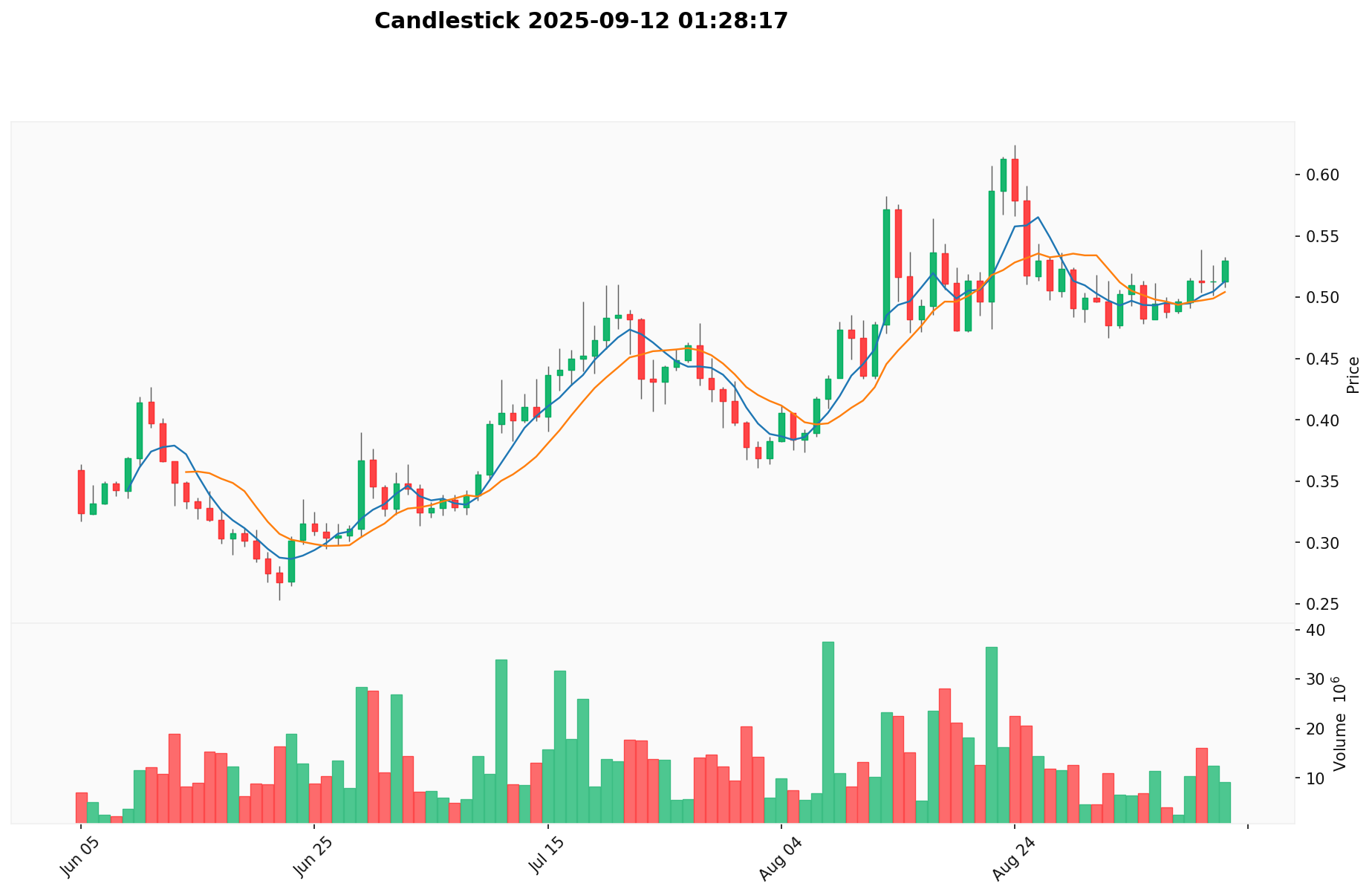
Arbitrum reached its all-time high of $4.00 on March 23, 2023, likely driven by market enthusiasm and increasing adoption of Layer 2 solutions.

Its lowest price was $0.2422, recorded on April 7, 2025, possibly due to broader market downturns or specific challenges in the Layer 2 ecosystem.

These fluctuations reflect market sentiment, adoption trends, and external factors affecting the cryptocurrency space.

Click to view the current ARB market price

price-image

On-Chain Metrics

  • Daily Transaction Volume: $5,004,613 (indicating network activity)
  • Active Addresses: 55,562 (reflecting user engagement)

Arbitrum Ecosystem Applications and Partnerships

Core Use Cases

Arbitrum's ecosystem supports various applications:

  • DeFi: Uniswap, providing decentralized trading.
  • NFT: Various projects, driving digital collectibles and blockchain gaming.

Strategic Collaborations

Arbitrum has established partnerships with Chainlink, enhancing its technical capabilities and market influence. These partnerships provide a solid foundation for Arbitrum's ecosystem expansion.

Controversies and Challenges

Arbitrum faces the following challenges:

  • Technical Issues: Scalability bottlenecks
  • Regulatory Risks: Potential regulatory scrutiny
  • Competitive Pressure: The rise of other Layer 2 solutions

These issues have sparked discussions within the community and market, driving Arbitrum's continuous innovation.

Arbitrum Community and Social Media Atmosphere

Fan Enthusiasm

Arbitrum's community is vibrant, with daily transaction volumes in the millions. On X, related posts and hashtags (like #Arbitrum) frequently trend, with monthly post volumes reaching hundreds of thousands. Price surges and new feature releases ignite community enthusiasm.

Social Media Sentiment

Sentiment on X shows polarization:

  • Supporters praise Arbitrum's high security and scalability, viewing it as the "future of Ethereum scaling".
  • Critics focus on potential centralization concerns and competition from other L2 solutions.

Recent trends show generally bullish sentiment during market uptrends.

Hot Topics

X users actively discuss Arbitrum's regulatory landscape, energy efficiency, and role in Ethereum's scaling future, showcasing its transformative potential and the challenges in mainstream adoption.


More Information Sources for Arbitrum

  • Official Website: Visit Arbitrum's official website for features, use cases, and latest updates.
  • Whitepaper: Arbitrum's whitepaper details its technical architecture, goals, and vision.
  • X Updates: On X, Arbitrum uses @arbitrum, with posts covering technical upgrades, community events, and partnership news, generating thousands of likes and retweets.

Arbitrum's Future Roadmap

  • 2026: Launch further optimizations to reduce transaction costs
  • Ecosystem Goals: Support thousands of DApps and attract millions of users
  • Long-term Vision: Become the leading Layer 2 scaling solution for Ethereum

How to Participate in Arbitrum?

  1. Purchase Channels: Buy ARB on Gate.com
  2. Storage Solutions: Use Web3 wallets for secure storage
  3. Participate in Governance: Through the Arbitrum DAO voting system
  4. Build the Ecosystem: Visit Arbitrum's developer documentation to develop DApps or contribute code

Summary

Arbitrum is redefining blockchain scalability through Layer 2 technology, offering transparency, security, and efficient transactions. Its active community, rich resources, and strong market performance make it stand out in the cryptocurrency field. Despite facing regulatory and technical challenges, Arbitrum's innovative spirit and clear roadmap secure its important position in the future of decentralized technology. Whether you're a newcomer or a seasoned player, Arbitrum is worth watching and participating in.

FAQ

What does an ARB stand for?

ARB stands for Arbitrum, a Layer 2 scaling solution for Ethereum that aims to improve transaction speed and reduce costs.

What drugs are ARB?

ARBs are medications like olmesartan, candesartan, and valsartan. They treat high blood pressure and heart failure by blocking angiotensin II to widen blood vessels.

What is the most common side effect of ARBs?

The most common side effect of ARBs is dizziness, often accompanied by fatigue and headache.

What does ARB med stand for?

ARB med stands for Angiotensin Receptor Blockers, a type of medication used to treat high blood pressure and other cardiovascular conditions.

* The information is not intended to be and does not constitute financial advice or any other recommendation of any sort offered or endorsed by Gate.
Related Articles
What is VELODROME: The Circular Track Revolutionizing Cycling Sports

What is VELODROME: The Circular Track Revolutionizing Cycling Sports

Explore the revolutionary VELODROME, a decentralized exchange and AMM protocol on Optimism, designed for efficient liquidity incentivization. Launched in 2022, Velodrome addresses inefficiencies in DeFi protocols, becoming a critical part of the Optimism ecosystem with 57,901 token holders by 2025. It ensures secure transactions and community-driven governance using a unique vote-escrowed token model. Dive into Velodrome's technical architecture, market performance, partnerships, and community dynamics to understand its role in DeFi innovation. Buy VELODROME on Gate and see its potential unfold in the crypto space.
11-18-2025, 10:41:33 AM
What is MODE: A Comprehensive Guide to Statistical Analysis

What is MODE: A Comprehensive Guide to Statistical Analysis

This article explores MODE, a cutting-edge solution in DeFi and Layer 2 scalability. It details MODE's launch, important milestones, and decentralized blockchain operations. Readers will learn about its market performance, ecosystem applications, and community dynamics while understanding its challenges and future goals. Designed for DeFi enthusiasts and developers, the article outlines how MODE stands out with its modular architecture, promising innovations, and growth trajectory, ultimately providing insights and opportunities for engagement through Gate.
11-23-2025, 2:42:00 AM
How Does a Token Economic Model Distribute Governance Rights and Utility?

How Does a Token Economic Model Distribute Governance Rights and Utility?

The article explores the distribution of governance rights and utility within a token economic model, focusing on STRK tokens. It details how Starknet allocates tokens to the team, investors, and community to ensure balanced growth and decentralization. Key mechanisms such as a deflationary design and robust governance framework empower token holders with voting rights tied to staking. The utility of STRK tokens encompasses network fees, staking rewards, and governance, making them integral to protocol sustainability. Designed for blockchain enthusiasts and investors, the article addresses strategic tokenomics and decentralized decision-making.
11-29-2025, 5:13:28 AM
How Does Boba Network's Fundamentals Support Its Multi-Chain Layer 2 Strategy?

How Does Boba Network's Fundamentals Support Its Multi-Chain Layer 2 Strategy?

The article explores Boba Network's multi-chain Layer 2 strategy, highlighting its use of the BOBA token for governance and value creation through staking and transaction fee reductions. It addresses the strategic advantages of early market entry in Layer 2, detailing its competitive edge via DAO participation, cost efficiency, and advanced infrastructure development. Emphasizing real-world impact, it showcases BOBA's attractiveness for developers seeking affordable and efficient solutions, supported by substantial ecosystem investments and enhanced functionalities. Key themes include governance, fee participation, staking, and multi-chain infrastructure alignment.
12-5-2025, 8:36:40 AM
Discover the Future: Trading on Mantle's Decentralized Exchange

Discover the Future: Trading on Mantle's Decentralized Exchange

Discover the future of trading on Mantle’s Decentralized Exchange, a pioneer in Ethereum’s scalability via its modular Layer-2 architecture. Mantle addresses the blockchain trilemma of scalability, security, and decentralization using Optimistic Rollup technology to enhance transaction speeds and cut gas fees. This article covers Mantle's system architecture, advantages, and limitations, providing ideal insights for developers and traders interested in building or utilizing decentralized exchange platforms. Critical to its ecosystem is the MNT token, essential for governance and network operations. As Mantle advances, it seeks to decentralize further, expand partnerships, and drive mainstream adoption.
12-2-2025, 8:26:37 AM
How Does a Token Economy Model Optimize Project Governance and Value Distribution?

How Does a Token Economy Model Optimize Project Governance and Value Distribution?

This article explores how a token economy model optimizes project governance and value distribution by evaluating Yei Finance’s framework. It discusses token distribution mechanisms, striking a balance among team, investor, and community interests, and highlights inflationary and deflationary designs for managing token supply. It focuses on strategic token burning mechanisms and governance rights to incentivize long-term participation. Key issues addressed include sustaining token value, enhancing ecosystem involvement, and ensuring equitable governance. It targets DeFi users, developers, and stakeholders interested in effective tokenomics practices.
11-23-2025, 2:09:57 AM
Recommended for You
Guide to Participating and Claiming SEI Airdrop Rewards

Guide to Participating and Claiming SEI Airdrop Rewards

This article guides readers through participating in the Sei ($SEI) token airdrop, emphasizing its Layer-1 blockchain designed for trading applications. Key insights include Sei's innovative architecture, the tokenomics strategy fostering ecosystem growth, and step-by-step instructions for claiming airdrop rewards. It addresses the needs of crypto enthusiasts interested in decentralized trading and rewards, and highlights strategies for maximizing participation benefits. The succinct structure facilitates easy comprehension and engagement with Sei’s ecosystem growth opportunities.
12-12-2025, 3:27:29 PM
Effective Strategies for Algorithmic Trading in Cryptocurrency

Effective Strategies for Algorithmic Trading in Cryptocurrency

The article explores algorithmic cryptocurrency trading, detailing how sophisticated bots execute trades autonomously to optimize strategies in the volatile crypto market. It addresses setting up algorithms, emphasizing thorough planning, backtesting, and continuous monitoring, suitable for traders with varying coding skills. The article reviews pros and cons, highlighting enhanced trading efficiency versus technical challenges. It guides readers in selecting the right algorithm or platform, stressing informed decision-making in a competitive environment. This content is crucial for traders seeking systematic, emotion-free trading tactics in the 24/7 crypto landscape.
12-12-2025, 3:24:25 PM
Understanding Bitcoin Valuation with the Stock-to-Flow Model

Understanding Bitcoin Valuation with the Stock-to-Flow Model

This article explores the Bitcoin Stock-to-Flow (S2F) model developed by PlanB, aiming to assist traders in understanding Bitcoin’s valuation based on scarcity. It details the model's method by evaluating Bitcoin's supply dynamics, offering insights into long-term trends and the impact of halving events. While the S2F model provides a foundational analytical framework, it is best used in conjunction with other trading strategies to account for market sentiment and external factors. Readers will find practical guidance for integrating this model into their investment analysis, enhancing their understanding of Bitcoin’s potential market trajectory. Keywords: Bitcoin, Stock-to-Flow, PlanB, trading strategy, scarcity.
12-12-2025, 3:22:11 PM
Understanding How Transaction Speed Impacts Blockchain Efficiency

Understanding How Transaction Speed Impacts Blockchain Efficiency

This article delves into the importance of transaction speed in cryptocurrency, highlighting Transactions Per Second (TPS) as a crucial performance metric within blockchain networks. It addresses the challenges posed by slow transaction rates in decentralized systems compared to traditional services, such as VISA. Readers will gain insights into how high TPS improves user experience and network scalability, with examples from networks like Solana, SUI, and BSC. It offers a detailed perspective on TPS calculation and distinguishes between transactions and requests per second. Essential for developers and users seeking efficient blockchain solutions. Keywords: TPS, blockchain efficiency, transaction speed.
12-12-2025, 3:15:12 PM
Web3 Identity Management with ENS Domains

Web3 Identity Management with ENS Domains

Learn how ENS domains streamline Web3 identity management on Ethereum. This article covers domain registration, usage, key benefits of ENS domains, and their role in enhancing network decentralization and usability.
12-12-2025, 3:11:51 PM
Understanding Flash Loans in DeFi: A Beginner's Guide

Understanding Flash Loans in DeFi: A Beginner's Guide

"Understanding Flash Loans in DeFi: A Beginner's Guide" introduces readers to the innovative concept of flash loans, a key mechanism in the decentralized finance ecosystem that allows borrowing without collateral, repayable within a single transaction block. The guide delves into how flash loans facilitate high-speed trading strategies, particularly in arbitrage, and outlines the technical process of creating such loans on the Aave protocol. It provides actionable steps in smart contract development and emphasizes the need for blockchain expertise to successfully execute these loans, catering to traders, developers, and DeFi enthusiasts looking to enhance market efficiency and leverage sophisticated financial strategies.
12-12-2025, 3:08:50 PM