BLUM vs GMX: The Battle for Dominance in Smart Home Hardware Manufacturing

Introduction: Investment Comparison of BLUM vs GMX
In the cryptocurrency market, the comparison between BLUM vs GMX has always been a topic that investors cannot ignore. The two not only have significant differences in market cap ranking, application scenarios, and price performance, but also represent different cryptocurrency asset positioning.
BLUM (BLUM): Since its launch, it has gained market recognition for its hybrid exchange offering universal token access through gamification within a Telegram mini-app.
GMX (GMX): Known as a decentralized perpetual exchange, it has become one of the cryptocurrencies with high global trading volume and market capitalization.
This article will comprehensively analyze the investment value comparison between BLUM vs GMX, focusing on historical price trends, supply mechanisms, institutional adoption, technological ecosystems, and future predictions, attempting to answer the question that investors are most concerned about:
"Which is the better buy right now?" Here is the report based on the provided information:
I. Price History Comparison and Current Market Status
BLUM and GMX Historical Price Trends
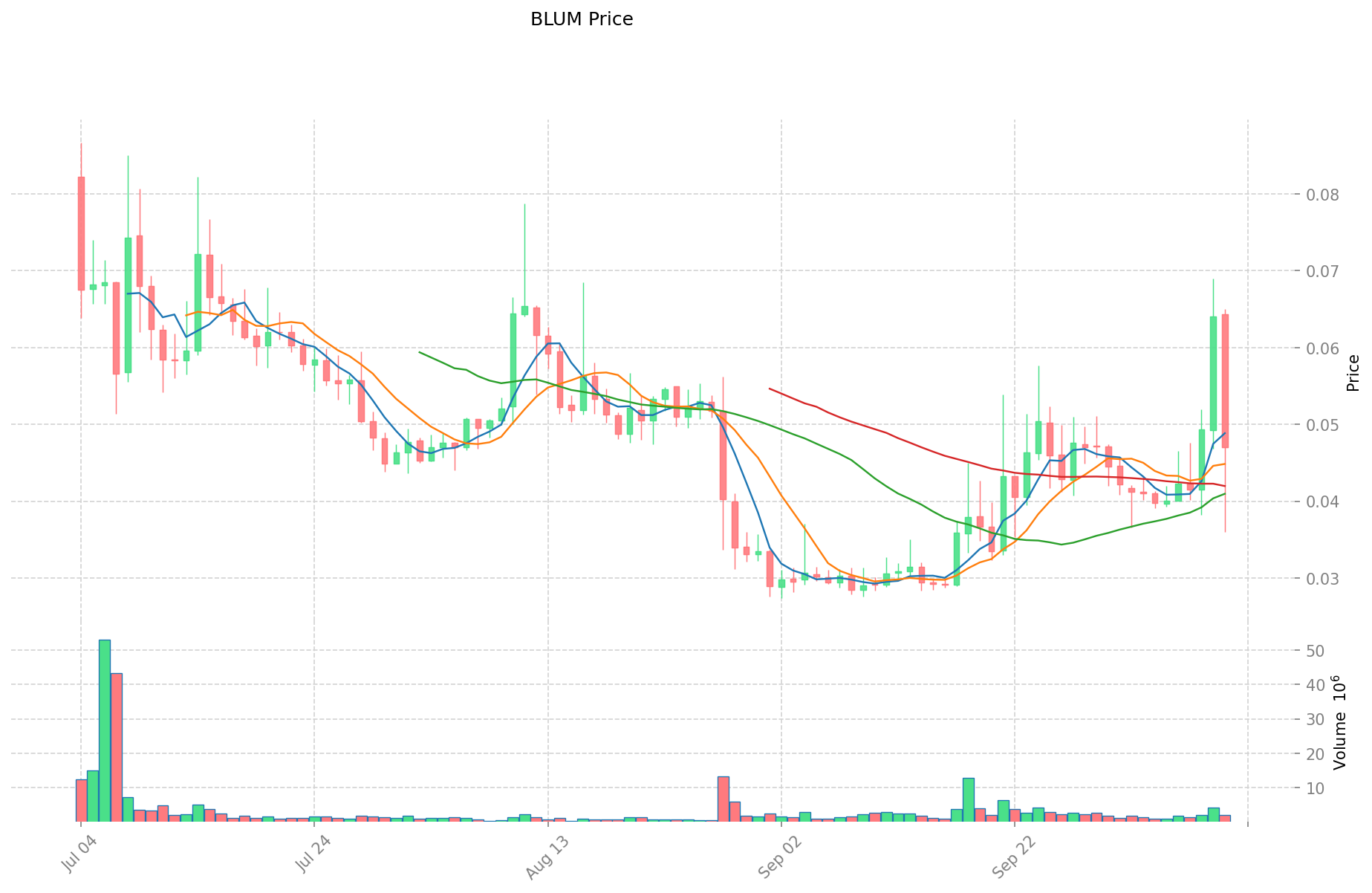
- 2025: BLUM reached its all-time high of $0.2256 on June 27, 2025.
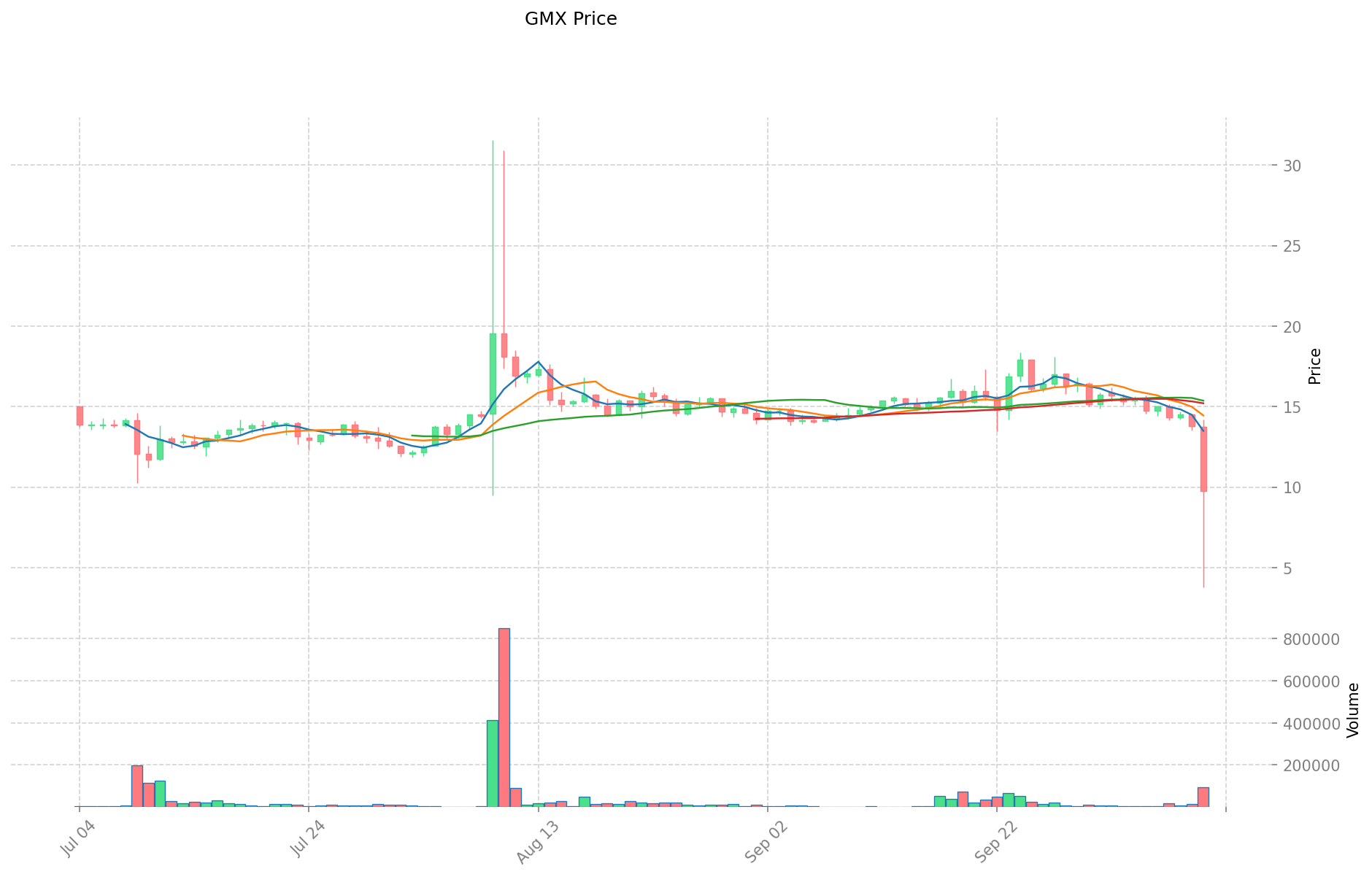
- 2025: GMX experienced a significant price decline, dropping from its all-time high of $91.07 in April 2023 to $6.92 on October 11, 2025.
- Comparative analysis: In the recent market cycle, BLUM has shown resilience by maintaining a price above its all-time low, while GMX has seen a substantial decrease from its peak.
Current Market Situation (2025-10-11)
- BLUM current price: $0.04661
- GMX current price: $9.69
- 24-hour trading volume: BLUM $112,963.98 vs GMX $1,060,024.64
- Market Sentiment Index (Fear & Greed Index): 27 (Fear)
Click to view real-time prices:
- View BLUM current price Market Price
- View GMX current price Market Price
II. Key Factors Affecting Investment Value of BLUM vs GMX
User Support and Market Competition
- BLUM: Core value depends on user support, with competition expected in Q4 during TGE (Token Generation Event)
- GMX: Faces significant competition in the perpetual contracts market from platforms like Hyperliquid
- 📌 Historical Pattern: User adoption drives competitive positioning, particularly during token launch phases
Technical Innovation and Market Positioning
- GMX: Positioned in the perpetual contracts market but with lower market share compared to competitors like Hyperliquid (which holds 74% of the market)
- Market Sentiment: Investor confidence and sentiment directly impact price trends and adoption rates
- Technical Innovation: Continuous development of blockchain technology, scaling solutions, and security enhancements provide strong support for value growth
Platform Performance and Risk Assessment
- Competition Dynamics: Both tokens will likely engage in intense competition to maintain customer base
- Market Sentiment: Positive news about widespread adoption or technological breakthroughs can significantly impact price movements
- Investment Risk Profile: Both tokens are projected to have substantial distribution during launch events, potentially limiting downside risk
III. 2025-2030 Price Prediction: BLUM vs GMX
Short-term Prediction (2025)
- BLUM: Conservative $0.0439 - $0.0472 | Optimistic $0.0472 - $0.0524
- GMX: Conservative $7.29 - $9.72 | Optimistic $9.72 - $13.80
Mid-term Prediction (2027)
- BLUM may enter a growth phase, with an estimated price range of $0.0508 - $0.0599
- GMX may enter a bullish market, with an expected price range of $8.99 - $16.72
- Key drivers: Institutional capital inflow, ETFs, ecosystem development
Long-term Prediction (2030)
- BLUM: Base scenario $0.0512 - $0.0753 | Optimistic scenario $0.0753 - $0.1107
- GMX: Base scenario $13.34 - $22.62 | Optimistic scenario $22.62 - $30.54
Disclaimer
BLUM:
| 年份 | 预测最高价 | 预测平均价格 | 预测最低价 | 涨跌幅 |
|---|---|---|---|---|
| 2025 | 0.0524031 | 0.04721 | 0.0439053 | -1 |
| 2026 | 0.0572775325 | 0.04980655 | 0.03984524 | 4 |
| 2027 | 0.0599670862 | 0.05354204125 | 0.0508649391875 | 11 |
| 2028 | 0.07661866102875 | 0.056754563725 | 0.052214198627 | 18 |
| 2029 | 0.084025131594862 | 0.066686612376875 | 0.054683022149037 | 39 |
| 2030 | 0.110773131819227 | 0.075355871985868 | 0.05124199295039 | 57 |
GMX:
| 年份 | 预测最高价 | 预测平均价格 | 预测最低价 | 涨跌幅 |
|---|---|---|---|---|
| 2025 | 13.8024 | 9.72 | 7.29 | 0 |
| 2026 | 16.348068 | 11.7612 | 7.174332 | 21 |
| 2027 | 16.72501446 | 14.054634 | 8.99496576 | 45 |
| 2028 | 22.1613468912 | 15.38982423 | 14.6203330185 | 58 |
| 2029 | 26.473575640446 | 18.7755855606 | 11.26535133636 | 93 |
| 2030 | 30.54318381070605 | 22.624580600523 | 13.34850255430857 | 133 |
IV. Investment Strategy Comparison: BLUM vs GMX
Long-term vs Short-term Investment Strategies
- BLUM: Suitable for investors focused on innovative exchange platforms and gamification potential
- GMX: Suitable for investors interested in decentralized perpetual exchanges and market volatility
Risk Management and Asset Allocation
- Conservative investors: BLUM: 30% vs GMX: 70%
- Aggressive investors: BLUM: 60% vs GMX: 40%
- Hedging tools: Stablecoin allocation, options, cross-currency portfolio
V. Potential Risk Comparison
Market Risk
- BLUM: High competition during Token Generation Event (TGE) in Q4
- GMX: Declining market share in the perpetual contracts market
Technical Risk
- BLUM: Platform scalability, network stability
- GMX: Smart contract vulnerabilities, liquidity risks
Regulatory Risk
- Global regulatory policies may have differing impacts on both tokens
VI. Conclusion: Which Is the Better Buy?
📌 Investment Value Summary:
- BLUM advantages: Innovative hybrid exchange, gamification features, potential for growth
- GMX advantages: Established presence in decentralized perpetual exchanges, higher trading volume
✅ Investment Advice:
- New investors: Consider a balanced approach, leaning towards GMX for its established market presence
- Experienced investors: Explore BLUM for potential growth, while maintaining a position in GMX
- Institutional investors: Evaluate both tokens based on risk appetite and market trends
⚠️ Risk Warning: The cryptocurrency market is highly volatile, and this article does not constitute investment advice. None
VII. FAQ
Q1: What are the main differences between BLUM and GMX? A: BLUM is a hybrid exchange offering universal token access through gamification within a Telegram mini-app, while GMX is a decentralized perpetual exchange. BLUM is newer and focuses on innovation, while GMX has an established presence in the market.
Q2: How do the current prices of BLUM and GMX compare? A: As of October 11, 2025, BLUM's price is $0.04661, while GMX's price is $9.69. GMX has a higher price per token but has experienced a significant decline from its all-time high.
Q3: What are the key factors affecting the investment value of BLUM and GMX? A: Key factors include user support, market competition, technical innovation, platform performance, and overall market sentiment. Both tokens face competition in their respective niches and are influenced by broader cryptocurrency market trends.
Q4: What are the long-term price predictions for BLUM and GMX? A: For 2030, BLUM's base scenario price range is $0.0512 - $0.0753, with an optimistic scenario of $0.0753 - $0.1107. GMX's base scenario is $13.34 - $22.62, with an optimistic scenario of $22.62 - $30.54.
Q5: How should investors approach risk management when considering BLUM and GMX? A: Conservative investors might consider allocating 30% to BLUM and 70% to GMX, while aggressive investors might opt for 60% BLUM and 40% GMX. Hedging tools such as stablecoin allocation, options, and cross-currency portfolios can also be used to manage risk.
Q6: What are the potential risks associated with investing in BLUM and GMX? A: Risks include market competition, technical vulnerabilities, regulatory uncertainties, and overall market volatility. BLUM faces high competition during its upcoming Token Generation Event, while GMX is dealing with a declining market share in the perpetual contracts market.
Q7: Which token might be more suitable for different types of investors? A: New investors might prefer a balanced approach leaning towards GMX for its established market presence. Experienced investors could explore BLUM for potential growth while maintaining a position in GMX. Institutional investors should evaluate both tokens based on their risk appetite and market trends.
Share
Content
Introduction: Investment Comparison of BLUM vs GMX
I. Price History Comparison and Current Market Status
II. Key Factors Affecting Investment Value of BLUM vs GMX
III. 2025-2030 Price Prediction: BLUM vs GMX
IV. Investment Strategy Comparison: BLUM vs GMX
V. Potential Risk Comparison
VI. Conclusion: Which Is the Better Buy?
VII. FAQ
How to Buy Cryptocurrency


Trending Cryptocurrencies



What is MYX: Understanding the Innovative Cryptocurrency Exchange Platform

What is CAKE: Understanding the Popular Cryptocurrency and DeFi Platform

How Does Aster's 300x Leverage Compare to HYPE in the DEX Market?
SOGNI vs DYDX: The Battle of Decentralized Trading Platforms Heats Up

What is PDEX: A Comprehensive Guide to the Polkadot Decentralized Exchange
How Does Aster DEX's On-Chain Data Compare to Hyperliquid in 2025?
Understanding Taproot: A Complete Guide to Bitcoin's Latest Enhancement
A Comprehensive Guide to Purchasing Virtual Land in the Metaverse
Understanding Proof of Work in Blockchain Technology

Exploring DAG Technology in Blockchain Innovation

Top Decentralized Trading Platforms for 2024