FST vs SNX: A Comparative Analysis of Two Leading Decentralized Finance Protocols

Introduction: FST vs SNX Investment Comparison
In the cryptocurrency market, the comparison between FreeStyle Classic Token (FST) and Synthetix (SNX) has been an unavoidable topic for investors. The two not only show significant differences in market cap ranking, application scenarios, and price performance but also represent different positioning in the crypto asset space.
FreeStyle Classic Token (FST): Since its launch, it has gained market recognition for its focus on cultural representation in the blockchain space.
Synthetix (SNX): Introduced in 2018, it has been hailed as a platform for creating synthetic assets, becoming one of the prominent projects in the decentralized finance (DeFi) sector.
This article will provide a comprehensive analysis of the investment value comparison between FST and SNX, focusing on historical price trends, supply mechanisms, institutional adoption, technological ecosystems, and future predictions, attempting to answer the question most crucial to investors:
"Which is the better buy right now?"
I. Price History Comparison and Current Market Status
FST and SNX Historical Price Trends
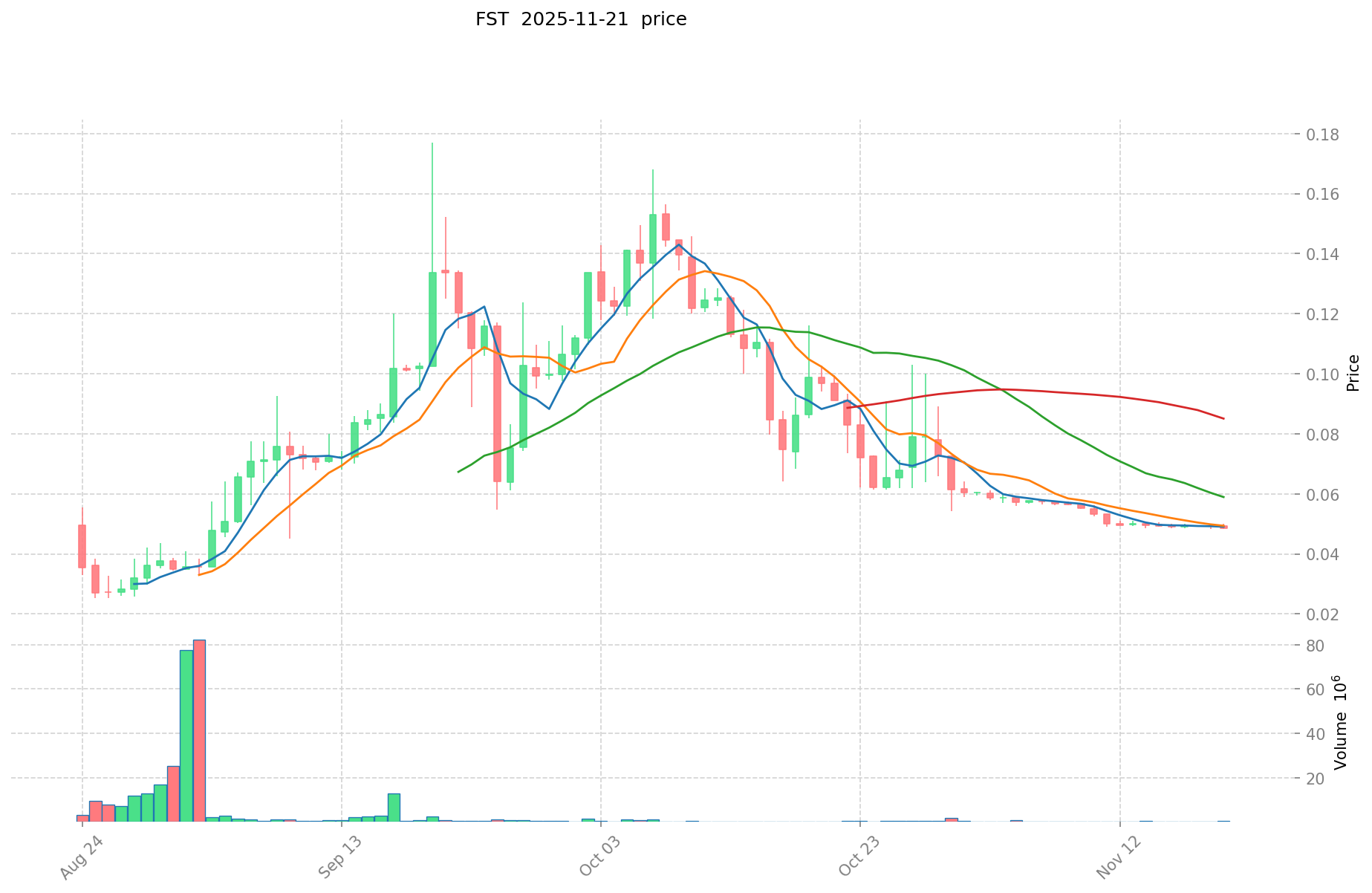
- 2025: FST reached its all-time high of $0.177 on September 20, 2025.
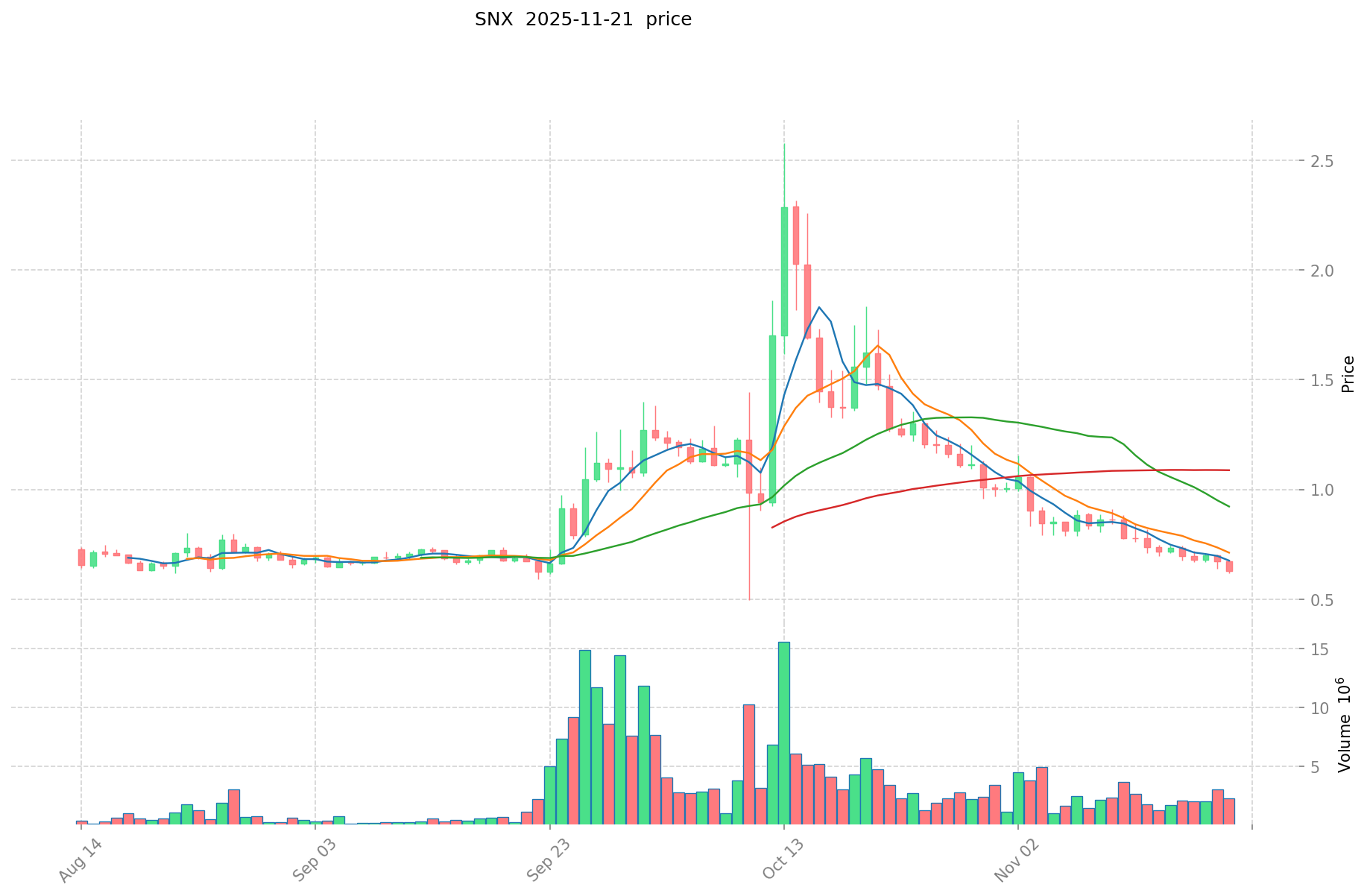
- 2025: SNX experienced a significant decline, with its price dropping by 61.18% over the past year.
- Comparative analysis: In the recent market cycle, FST dropped from its high of $0.177 to a low of $0.0252, while SNX fell from its all-time high of $28.53 to its current price of $0.6418.
Current Market Situation (2025-11-21)
- FST current price: $0.0488
- SNX current price: $0.6418
- 24-hour trading volume: FST $16,452.75538 vs SNX $1,468,907.850451
- Market sentiment index (Fear & Greed Index): 14 (Extreme Fear)
Click to view real-time prices:
- View FST current price Market Price
- View SNX current price Market Price
II. Project Overview and Technological Features
FST (FreeStyle Classic Token)
- Project introduction: FreeStyle Classic is a cultural icon reborn on-chain, bridging street culture with Web3 technology.
- Key features:
- Cultural ecosystem: Combines street culture, digital expression, and community ownership.
- Community-driven: Builds a universe driven by remix culture, memes, and community representation.
- Web3 integration: Leverages blockchain technology to create a new form of cultural participation.
SNX (Synthetix)
- Project introduction: Synthetix is designed for building decentralized and trustless networks, supporting various synthetic assets.
- Key features:
- Synthetic assets: Supports a wide range of assets including fiat currencies, precious metals, indices, and cryptocurrencies.
- Decentralized finance: Aims to create a robust DeFi ecosystem.
- Network token: SNX serves as the backbone for the Synthetix network.
III. Market Performance Analysis
FST Market Data
- Market cap: $10,736,000.0
- Circulating supply: 220,000,000 FST
- Total supply: 1,000,000,000 FST
- All-time high: $0.177 (2025-09-20)
- All-time low: $0.0252 (2025-08-25)
SNX Market Data
- Market cap: $220,436,618.06957227
- Circulating supply: 343,466,216.99839866 SNX
- Total supply: 343,889,850.0967736 SNX
- All-time high: $28.53 (2021-02-14)
- All-time low: $0.0347864 (2019-01-06)
IV. Investment Risk Analysis
-
Market volatility: Both FST and SNX have shown significant price fluctuations, with FST experiencing a 46.01% decrease in the past 30 days and SNX dropping 55.98% in the same period.
-
Project development risks:
- FST is a relatively new project in the cultural and Web3 space, which may face challenges in user adoption and community building.
- SNX, while more established, operates in the competitive DeFi sector and must continually innovate to maintain its market position.
-
Regulatory uncertainties: The crypto market, including projects like FST and SNX, may be subject to evolving regulatory frameworks which could impact their operations and value.
-
Technical risks: Both projects rely on blockchain technology and smart contracts, which may be vulnerable to bugs, hacks, or other technical issues.
-
Market sentiment: The current extreme fear in the crypto market (Fear & Greed Index: 14) indicates a highly risk-averse environment, which could affect the short-term performance of both tokens.
V. Future Outlook and Development Potential
FST (FreeStyle Classic Token)
- Cultural integration: FST's focus on bridging street culture with Web3 could attract a unique user base and create new forms of digital expression.
- Community growth: The success of FST will largely depend on its ability to build and engage a strong community of creators and enthusiasts.
- Potential challenges: Maintaining relevance in the fast-paced world of digital culture and memes while also developing a robust blockchain ecosystem.
SNX (Synthetix)
- DeFi evolution: As a key player in the DeFi space, SNX has the potential to benefit from the continued growth and maturation of decentralized finance.
- Synthetic asset expansion: The platform's ability to create and manage a wide range of synthetic assets could position it well for future financial innovation.
- Scalability and interoperability: Future development may focus on improving network efficiency and expanding cross-chain capabilities to enhance its position in the broader crypto ecosystem.
VI. Conclusion
Both FST and SNX represent different aspects of the evolving cryptocurrency and blockchain landscape. FST is pioneering the integration of cultural elements with blockchain technology, while SNX is an established player in the DeFi sector. Both face challenges in their respective niches but also have unique opportunities for growth and development. Investors should carefully consider the distinct risk profiles and potential returns of each project in the context of their overall investment strategy.
II. Core Factors Affecting FST vs SNX Investment Value
Supply Mechanisms (Tokenomics)
- FST: The supply mechanism is designed to be distributed 100% via staking rewards through the Fantasm protocol, with no initial DEX offering, private sale, or team allocation. This creates a fairer distribution model focused on participants.
- SNX: Features an inflationary model where rewards are distributed to stakers, with a declining inflation rate over time. The terminal inflation rate is targeted at 2.5%.
- 📌 Historical Pattern: Tokens with fair distribution models like FST tend to show more organic price growth, while SNX's declining inflation model has historically helped maintain staking incentives while gradually reducing market pressure.
Institutional Adoption & Market Applications
- Institutional Holdings: SNX has achieved broader institutional recognition, being included in some Grayscale products and receiving backing from Framework Ventures. FST appears to have less documented institutional backing.
- Enterprise Adoption: SNX has established itself as a foundational protocol in the derivatives sector with significant integrations across the DeFi landscape. FST, being newer, is still building its integration network.
- Regulatory Stance: Both protocols face similar regulatory challenges as DeFi synthetic asset platforms, with increased scrutiny on synthetic assets that mimic traditional securities.
Technical Development & Ecosystem Building
- FST Technical Development: Focused on addressing liquid staking inefficiencies through a protocol that offers liquid ETH staking with minimized slippage and better capital efficiency.
- SNX Technical Development: Continues to evolve with V3 improvements targeting enhanced capital efficiency, improved UI, and a redesigned staking experience, plus a multi-chain strategy spanning Ethereum and Optimism.
- Ecosystem Comparison: SNX has a more established ecosystem with extensive DeFi integrations, while FST is building its niche in the liquid staking market with a focus on the Fantom ecosystem.
Macroeconomic Factors & Market Cycles
- Inflation Performance: SNX has demonstrated longer-term resilience through multiple market cycles, while FST's newer market presence makes its inflation response less established.
- Monetary Policy Impact: Both tokens are affected by broader crypto market conditions tied to interest rates and dollar strength, though SNX's larger market presence may provide more liquidity during volatile periods.
- Geopolitical Factors: The growing need for decentralized financial instruments could benefit both protocols, with SNX's wider geographical distribution potentially offering more resilience to regional regulatory changes.
III. Price Prediction 2025-2030: FST vs SNX
Short-term Prediction (2025)
- FST: Conservative $0.0407 - $0.0490 | Optimistic $0.0490 - $0.0633
- SNX: Conservative $0.4042 - $0.6416 | Optimistic $0.6416 - $0.7699
Mid-term Prediction (2027)
- FST may enter a growth phase, with estimated prices $0.0629 - $0.0914
- SNX may enter a consolidation phase, with estimated prices $0.5014 - $0.9087
- Key drivers: Institutional inflows, ETFs, ecosystem development
Long-term Prediction (2030)
- FST: Base scenario $0.1046 - $0.1475 | Optimistic scenario $0.1475+
- SNX: Base scenario $0.5544 - $0.9726 | Optimistic scenario $0.9726 - $1.1184
Disclaimer: The above predictions are based on historical data and market analysis. Cryptocurrency markets are highly volatile and subject to rapid changes. These projections should not be considered as financial advice. Always conduct your own research before making investment decisions.
FST:
| 年份 | 预测最高价 | 预测平均价格 | 预测最低价 | 涨跌幅 |
|---|---|---|---|---|
| 2025 | 0.0632616 | 0.04904 | 0.0407032 | 0 |
| 2026 | 0.073557548 | 0.0561508 | 0.046043656 | 15 |
| 2027 | 0.09144438534 | 0.064854174 | 0.06290854878 | 32 |
| 2028 | 0.0976865995875 | 0.07814927967 | 0.0422006110218 | 60 |
| 2029 | 0.121326756687675 | 0.08791793962875 | 0.06681763411785 | 80 |
| 2030 | 0.147517510903079 | 0.104622348158212 | 0.089975219416062 | 114 |
SNX:
| 年份 | 预测最高价 | 预测平均价格 | 预测最低价 | 涨跌幅 |
|---|---|---|---|---|
| 2025 | 0.76992 | 0.6416 | 0.404208 | 0 |
| 2026 | 0.8610272 | 0.70576 | 0.5010896 | 9 |
| 2027 | 0.908736576 | 0.7833936 | 0.501371904 | 22 |
| 2028 | 1.0152781056 | 0.846065088 | 0.7614585792 | 31 |
| 2029 | 1.014432040512 | 0.9306715968 | 0.577016390016 | 45 |
| 2030 | 1.1184345914544 | 0.972551818656 | 0.55435453663392 | 51 |
IV. Investment Strategy Comparison: FST vs SNX
Long-term vs Short-term Investment Strategy
- FST: Suitable for investors focused on cultural integration and community-driven projects
- SNX: Suitable for investors interested in DeFi ecosystems and synthetic assets
Risk Management and Asset Allocation
- Conservative investors: FST: 20% vs SNX: 80%
- Aggressive investors: FST: 40% vs SNX: 60%
- Hedging tools: Stablecoin allocation, options, cross-currency portfolios
V. Potential Risk Comparison
Market Risk
- FST: Higher volatility due to smaller market cap and newer project status
- SNX: Exposure to broader DeFi market fluctuations and synthetic asset risks
Technical Risk
- FST: Scalability, network stability in the Fantom ecosystem
- SNX: Smart contract vulnerabilities, oracle dependencies
Regulatory Risk
- Global regulatory policies may impact both, with potentially higher scrutiny on SNX due to its synthetic asset offerings
VI. Conclusion: Which Is the Better Buy?
📌 Investment Value Summary:
- FST advantages: Unique cultural integration, fair distribution model, potential for community-driven growth
- SNX advantages: Established DeFi player, broader institutional recognition, diverse synthetic asset offerings
✅ Investment Advice:
- New investors: Consider a smaller allocation to FST for exposure to cultural Web3 projects, with a larger position in the more established SNX
- Experienced investors: Balance between FST and SNX based on risk tolerance and belief in respective ecosystems
- Institutional investors: SNX may be more suitable due to its market presence and integration within the DeFi landscape
⚠️ Risk Warning: The cryptocurrency market is highly volatile. This article does not constitute investment advice. None
VII. FAQ
Q1: What are the main differences between FST and SNX? A: FST focuses on cultural integration and community-driven projects in the Web3 space, while SNX is an established player in the DeFi sector, offering synthetic assets. FST has a smaller market cap and is newer, while SNX has broader institutional recognition and a more developed ecosystem.
Q2: Which token has performed better in recent market conditions? A: Based on the provided data, FST has shown better recent performance. While both tokens have experienced declines, FST dropped from its high of $0.177 to $0.0488, while SNX fell from $28.53 to $0.6418, representing a more significant percentage decrease for SNX.
Q3: What are the key risks associated with investing in FST and SNX? A: Both tokens face market volatility risks. FST may have higher volatility due to its smaller market cap and newer status. SNX faces risks related to the broader DeFi market and synthetic asset regulations. Both also have technical risks such as smart contract vulnerabilities and potential scalability issues.
Q4: How do the supply mechanisms differ between FST and SNX? A: FST has a fair distribution model with 100% of tokens distributed via staking rewards through the Fantasm protocol. SNX features an inflationary model with rewards distributed to stakers and a declining inflation rate over time, targeting a terminal inflation rate of 2.5%.
Q5: What are the long-term price predictions for FST and SNX? A: By 2030, FST is predicted to reach a base scenario of $0.1046 - $0.1475, with an optimistic scenario of $0.1475+. SNX is predicted to reach a base scenario of $0.5544 - $0.9726, with an optimistic scenario of $0.9726 - $1.1184. However, these predictions are subject to market volatility and should not be considered financial advice.
Q6: How should investors allocate their portfolio between FST and SNX? A: Conservative investors might consider allocating 20% to FST and 80% to SNX, while more aggressive investors might opt for 40% FST and 60% SNX. The exact allocation should depend on individual risk tolerance and belief in the respective ecosystems.
Q7: Which token is more suitable for institutional investors? A: SNX may be more suitable for institutional investors due to its established market presence, broader institutional recognition, and integration within the DeFi landscape. It has already achieved inclusion in some Grayscale products and received backing from major crypto investment firms.
Share
Content
Introduction: FST vs SNX Investment Comparison
I. Price History Comparison and Current Market Status
II. Project Overview and Technological Features
III. Market Performance Analysis
IV. Investment Risk Analysis
V. Future Outlook and Development Potential
VI. Conclusion
II. Core Factors Affecting FST vs SNX Investment Value
III. Price Prediction 2025-2030: FST vs SNX
IV. Investment Strategy Comparison: FST vs SNX
V. Potential Risk Comparison
VI. Conclusion: Which Is the Better Buy?
VII. FAQ
How to Buy Cryptocurrency


Trending Cryptocurrencies


2025 FISPrice Prediction: Analyzing Market Trends and Future Potential for FIS Token in the Evolving DeFi Landscape

HAEDAL vs GMX: Comparing Next-Generation Trading Protocols in DeFi Ecosystem
Is pSTAKE Finance (PSTAKE) a good investment?: Analyzing the potential returns and risks in the liquid staking sector
2025 VNOPrice Prediction: Analyzing Market Trends and Growth Potential for VNO in the Coming Year

2025 FIS Price Prediction: Analyzing Market Trends and Potential Growth Factors

2025 MILK Price Prediction: Analyzing Market Trends and Factors Shaping the Future of Dairy Commodities

Gate Pay Crypto Payment Solution: A Guide to Secure Global Payments and Web3 Integration

What Is Gate Pay? A Complete Guide to the Crypto Payment Tool

How to Stake ETH? A Complete Guide to ETH Staking in 2026

How to Mine ETH? A New Guide to ETH Mining in 2026

Is Raydium (RAY) a good investment?: A Comprehensive Analysis of the DEX Protocol's Potential Returns and Risk Factors