USTC vs SAND: A Comparative Analysis of Two Leading Research Institutions in Computer Science

Introduction: USTC vs SAND Investment Comparison
In the cryptocurrency market, the comparison between TerraUSD Classic (USTC) vs Sandbox (SAND) has been an unavoidable topic for investors. The two not only show significant differences in market cap ranking, application scenarios, and price performance, but also represent different cryptocurrency asset positioning.
TerraUSD Classic (USTC): Since its launch in 2019, it has gained market recognition as a scalable, profitable, and cross-chain decentralized stablecoin.
Sandbox (SAND): Since its inception in 2020, it has been hailed as a virtual game world, becoming one of the cryptocurrencies with high global trading volume and market capitalization.
This article will comprehensively analyze the investment value comparison between USTC vs SAND, focusing on historical price trends, supply mechanisms, institutional adoption, technological ecosystems, and future predictions, attempting to answer the question that investors care about most:
"Which is the better buy right now?" Here is the analysis based on the provided template and data:
I. Price History Comparison and Current Market Status
TerraUSD Classic (USTC) and The Sandbox (SAND) Historical Price Trends
- 2022: USTC experienced a significant crash due to the Terra/LUNA collapse, with its price plummeting from $1 to near zero.
- 2021: SAND saw a surge in price due to the metaverse hype, reaching an all-time high of $8.4.
- Comparative Analysis: During the 2022 crypto market downturn, USTC lost its peg and crashed to fractions of a cent, while SAND, though also affected, maintained a higher relative value.
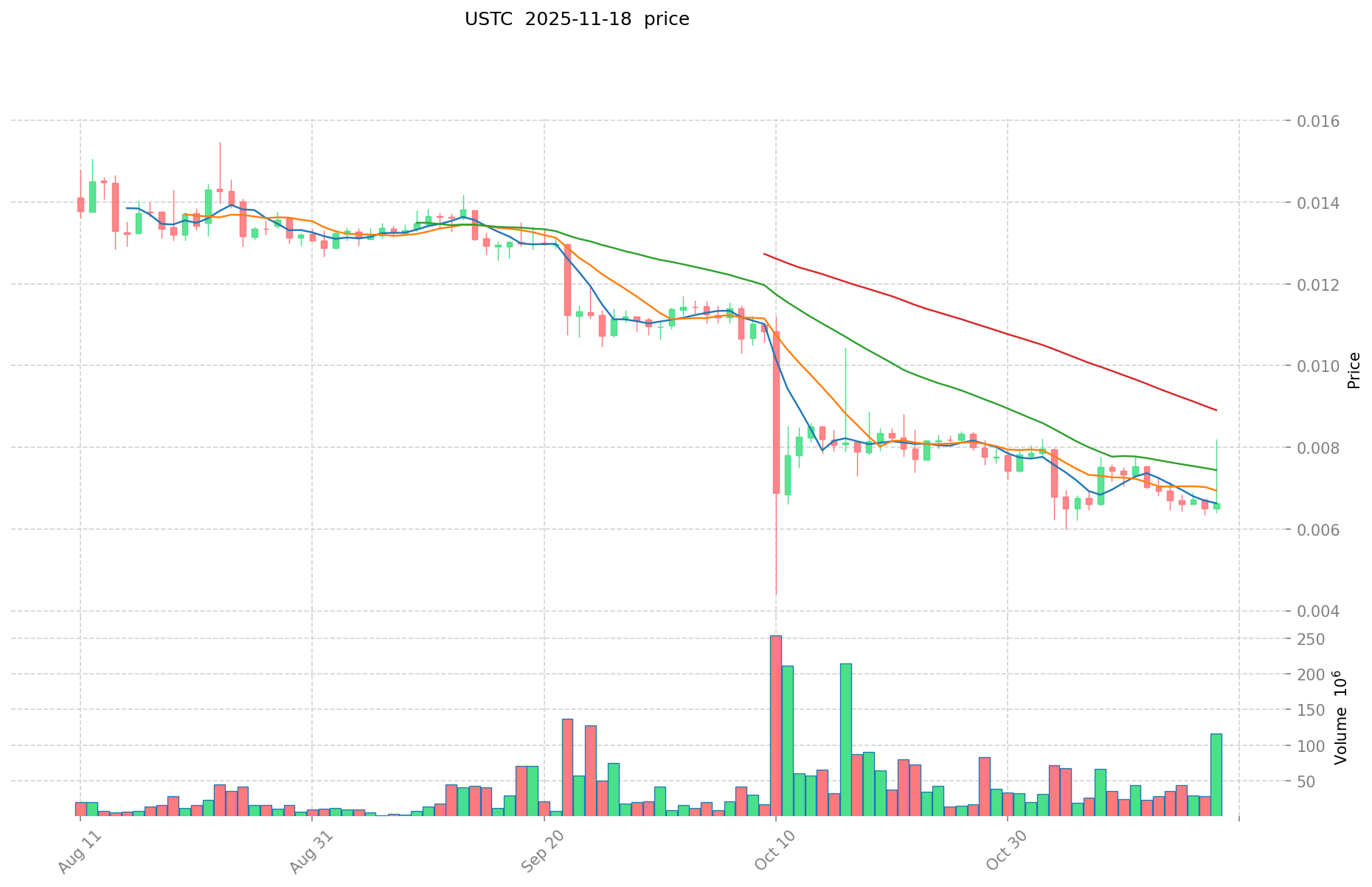
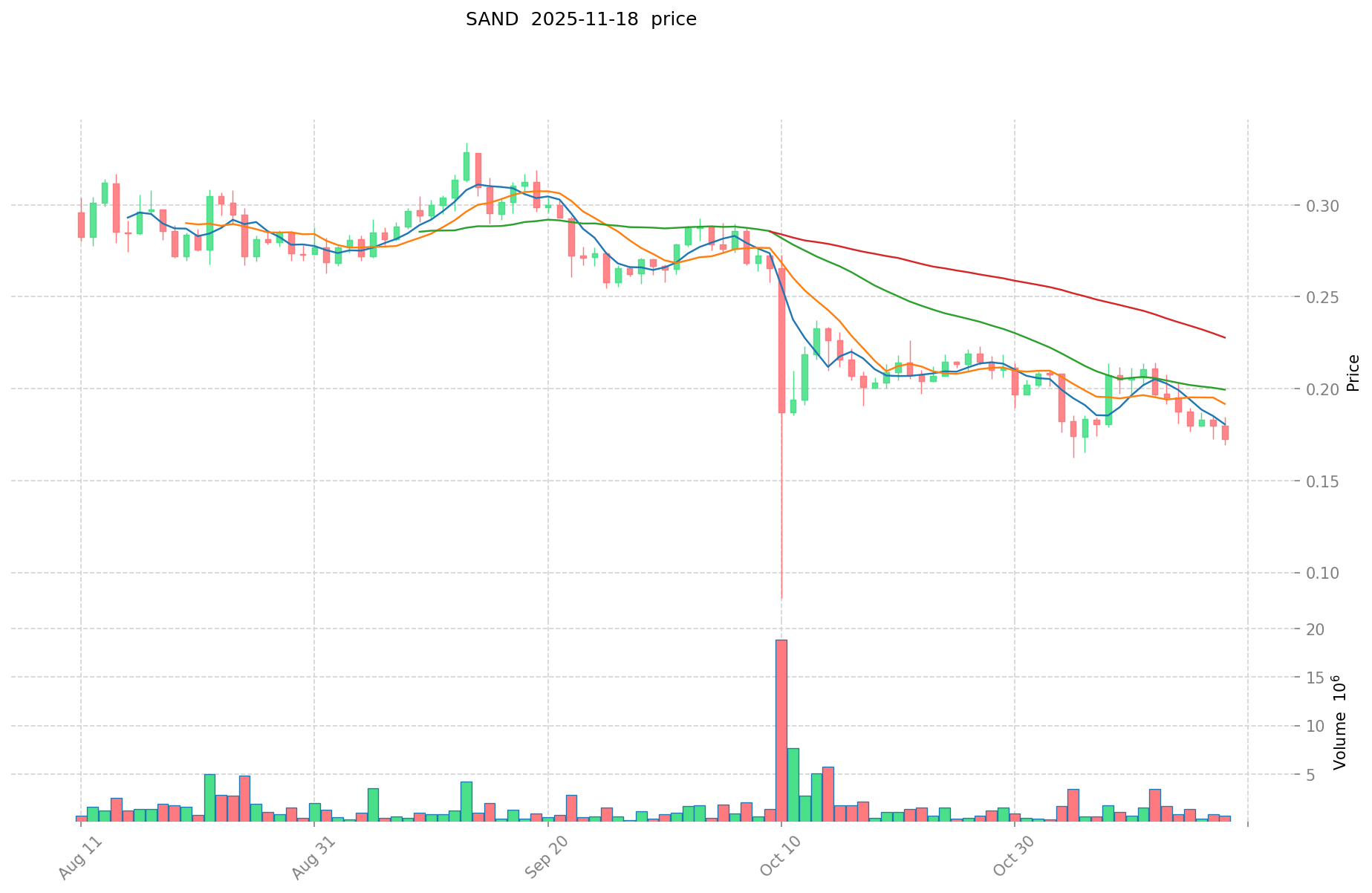
Current Market Situation (2025-11-18)
- USTC current price: $0.006581
- SAND current price: $0.1749
- 24-hour trading volume: USTC $845,843.94 vs SAND $115,068.46
- Market Sentiment Index (Fear & Greed Index): 11 (Extreme Fear)
Click to view real-time prices:
- Check USTC current price Market Price
- Check SAND current price Market Price
Impact Factors on Investment Value: USTC vs SAND
Supply Mechanism Comparison (Tokenomics)
- USTC: Limited information available about current supply mechanism after the collapse of the original algorithmic stablecoin model
- SAND: Price movements largely driven by market sentiment and community engagement, with traders focusing on technical analysis
- 📌 Historical pattern: Supply mechanisms influence price cycles differently, with SAND showing stronger correlation to market sentiment indicators
Institutional Adoption and Market Applications
- Institutional holdings: Limited information available on institutional preference between these assets
- Enterprise adoption: Research from USTC (China University of Science and Technology) contributes to technological innovation with potential long-term value
- Regulatory attitudes: Regulatory frameworks vary by region, affecting trading volumes and adoption rates
Technology Development and Ecosystem Building
- USTC technology focus: Research output and innovation in scientific domains at China University of Science and Technology
- SAND technology development: Focus on community engagement and technical improvements within its ecosystem
- Ecosystem comparison: SAND appears to have stronger community engagement metrics with news announcements and social sentiment being key price drivers
Macroeconomic Factors and Market Cycles
- Inflation environment performance: Insufficient data on comparative inflation resistance properties
- Macroeconomic policy effects: Both assets influenced by broader market dynamics and technological advancements
- Geopolitical factors: Research contributions from academic institutions like USTC may provide long-term value in technological innovation landscape
III. 2025-2030 Price Prediction: USTC vs SAND
Short-term Prediction (2025)
- USTC: Conservative $0.0041328 - $0.00656 | Optimistic $0.00656 - $0.0092496
- SAND: Conservative $0.115104 - $0.1744 | Optimistic $0.1744 - $0.181376
Mid-term Prediction (2027)
- USTC may enter a growth phase, with an estimated price range of $0.00889527144 - $0.01367767544
- SAND may enter a steady growth phase, with an estimated price range of $0.14809176 - $0.27416988
- Key drivers: Institutional capital inflow, ETFs, ecosystem development
Long-term Prediction (2030)
- USTC: Base scenario $0.017010011505564 - $0.018200712310953 | Optimistic scenario $0.018200712310953 - $0.020190745364328
- SAND: Base scenario $0.2739047157 - $0.32868565884 | Optimistic scenario $0.32868565884 - $0.32868565884
Disclaimer
USTC:
| 年份 | 预测最高价 | 预测平均价格 | 预测最低价 | 涨跌幅 |
|---|---|---|---|---|
| 2025 | 0.0092496 | 0.00656 | 0.0041328 | 0 |
| 2026 | 0.011224816 | 0.0079048 | 0.006798128 | 21 |
| 2027 | 0.01367767544 | 0.009564808 | 0.00889527144 | 47 |
| 2028 | 0.0160373135736 | 0.01162124172 | 0.0059268332772 | 78 |
| 2029 | 0.020190745364328 | 0.0138292776468 | 0.007052931599868 | 112 |
| 2030 | 0.018200712310953 | 0.017010011505564 | 0.009865806673227 | 161 |
SAND:
| 年份 | 预测最高价 | 预测平均价格 | 预测最低价 | 涨跌幅 |
|---|---|---|---|---|
| 2025 | 0.181376 | 0.1744 | 0.115104 | 0 |
| 2026 | 0.22236 | 0.177888 | 0.1600992 | 1 |
| 2027 | 0.27416988 | 0.200124 | 0.14809176 | 14 |
| 2028 | 0.284576328 | 0.23714694 | 0.2110607766 | 35 |
| 2029 | 0.2869477974 | 0.260861634 | 0.1826031438 | 49 |
| 2030 | 0.32868565884 | 0.2739047157 | 0.172559970891 | 56 |
IV. Investment Strategy Comparison: USTC vs SAND
Long-term vs Short-term Investment Strategy
- USTC: Suitable for investors focused on potential ecosystem recovery and speculative opportunities
- SAND: Suitable for investors interested in metaverse and gaming-related blockchain projects
Risk Management and Asset Allocation
- Conservative investors: USTC: 10% vs SAND: 90%
- Aggressive investors: USTC: 30% vs SAND: 70%
- Hedging tools: Stablecoin allocation, options, cross-currency portfolio
V. Potential Risk Comparison
Market Risk
- USTC: High volatility due to past collapse and uncertain recovery prospects
- SAND: Susceptible to fluctuations in metaverse and gaming market trends
Technical Risk
- USTC: Ecosystem stability, network recovery challenges
- SAND: Platform scalability, smart contract vulnerabilities
Regulatory Risk
- Global regulatory policies may have differing impacts on both assets, with potential scrutiny on USTC due to its history and SAND due to its gaming-related nature
VI. Conclusion: Which Is the Better Buy?
📌 Investment Value Summary:
- USTC advantages: Potential for high returns if ecosystem recovers
- SAND advantages: Established presence in metaverse and gaming sectors, active community engagement
✅ Investment Advice:
- Novice investors: Consider SAND for its more established ecosystem and lower risk profile
- Experienced investors: Diversify between SAND and a small allocation to USTC for potential high-risk, high-reward opportunities
- Institutional investors: Focus primarily on SAND, with cautious exploration of USTC based on thorough risk assessment
⚠️ Risk Warning: Cryptocurrency markets are highly volatile, and this article does not constitute investment advice. None
VII. FAQ
Q1: What are the main differences between USTC and SAND? A: USTC is a former stablecoin that lost its peg, while SAND is a metaverse and gaming-focused cryptocurrency. USTC has a history of significant price volatility due to its collapse, whereas SAND has maintained a more stable presence in the blockchain gaming sector.
Q2: Which asset has shown better price performance in recent years? A: SAND has shown better price performance in recent years. While USTC experienced a major crash in 2022, SAND has maintained a higher relative value despite market downturns.
Q3: What are the key factors influencing the prices of USTC and SAND? A: For USTC, potential ecosystem recovery and speculative trading are key factors. For SAND, market sentiment around metaverse projects, community engagement, and developments in the blockchain gaming industry are primary drivers.
Q4: How do the investment strategies differ for USTC and SAND? A: USTC is generally considered a high-risk, high-reward option suitable for experienced investors or those willing to speculate on its recovery. SAND is seen as a more stable investment, suitable for those interested in the metaverse and gaming sectors.
Q5: What are the main risks associated with investing in USTC and SAND? A: USTC carries high volatility risk due to its past collapse and uncertain recovery prospects. SAND faces risks related to market trends in the metaverse and gaming sectors, as well as potential technical and regulatory challenges common to blockchain projects.
Q6: How might institutional adoption affect USTC and SAND? A: Institutional adoption could significantly impact both assets, potentially providing more stability and liquidity. However, SAND may currently be more attractive to institutions due to its established presence in the metaverse sector, while USTC might face challenges due to its history.
Q7: What should investors consider when allocating their portfolio between USTC and SAND? A: Investors should consider their risk tolerance, investment goals, and market outlook. Conservative investors might allocate a larger portion to SAND, while more aggressive investors might include a higher percentage of USTC for potential higher returns, always keeping in mind the associated risks.
Share
Content
Introduction: USTC vs SAND Investment Comparison
I. Price History Comparison and Current Market Status
Impact Factors on Investment Value: USTC vs SAND
III. 2025-2030 Price Prediction: USTC vs SAND
IV. Investment Strategy Comparison: USTC vs SAND
V. Potential Risk Comparison
VI. Conclusion: Which Is the Better Buy?
VII. FAQ
How to Buy Cryptocurrency


Trending Cryptocurrencies



ALICE vs ARB: A Comparative Analysis of Layer 1 and Layer 2 Blockchain Scaling Solutions
REZ vs SAND: A Comparative Analysis of Digital Real Estate Platforms in the Metaverse Economy

Is Ultiverse (ULTI) a good investment?: Analyzing the potential and risks of this metaverse token

TRA vs SAND: Comparing Two Leading Approaches in Modern Software Architecture
KONET vs SAND: The Battle for Digital Asset Supremacy in the Metaverse
ESE vs SAND: Comparing Two Novel Approaches to Efficient Data Processing in Cloud Computing
Xenea Daily Quiz Answer December 13, 2025

Guide to Bridging Assets to the Polygon Network

Guide to Integrating Polygon Network with Your Crypto Wallet

Beginner's Guide to Secure Digital Asset Storage with BEP2

Guide to Bridging Assets to Polygon PoS Network