Die Altcoin-Saison wird wieder zum heißen Thema auf den Kryptowährungsmärkten. Die Kursdiagramme zeigen starke Schwankungen, die Anzahl der Beiträge in sozialen Medien steigt deutlich, und viele Investoren hoffen auf eine breit angelegte Kursrallye. Allerdings weist der aktuelle Zyklus andere Merkmale auf. Während einige Altcoins deutliche Gewinne verzeichnen, bleiben die meisten noch hinterher.
Die Marktdaten spiegeln eine deutliche Selektivität wider, anstatt einer allgemeinen Aufwärtsbewegung aller Altcoins. Dies hat eine wichtige Bedeutung für die Anlagestrategie in dieser Phase.
Die Altcoin-Saison tritt schrittweise auf
Üblicherweise wird die „Altcoin-Saison“ als eine Zeit verstanden, in der die Altcoins gleichzeitig steigen, sogar Bitcoin in Bezug auf die Rendite (ROI) übertreffen. Allerdings zeigen die aktuellen Daten nichts Derartiges.
Laut den Performance-Vergleichsdiagrammen der Altcoins mit Bitcoin haben nur 8 von 55 großen Altcoins in den letzten 60 Tagen eine bessere Entwicklung als Bitcoin gezeigt. Das ist eine recht bescheidene Zahl, während die meisten Altcoins noch im Minus sind, obwohl Bitcoin größtenteils seitwärts tendiert.
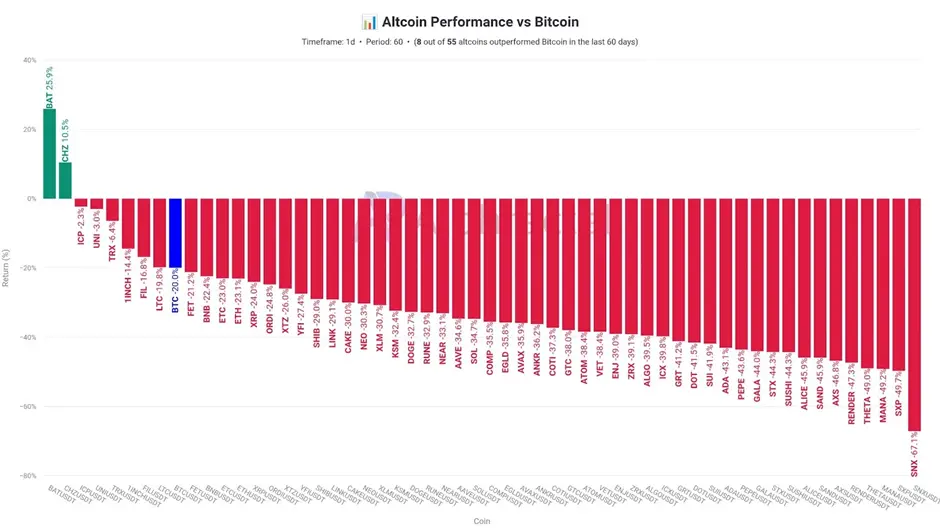 Herausragende Altcoins in dieser Saison | Quelle: XAm auffälligsten ist BAT, das etwa 25 % und CHZ, das fast 10 % im Vergleich zu Bitcoin in derselben Zeitspanne zulegten. Diese Bewegungen zeigen individuelle Stärke, aber keine breite Verbreitung. Die Mehrheit der Altcoins verzeichnet weiterhin Verluste, was auch durch den Altcoin-Saison-Index bestätigt wird.
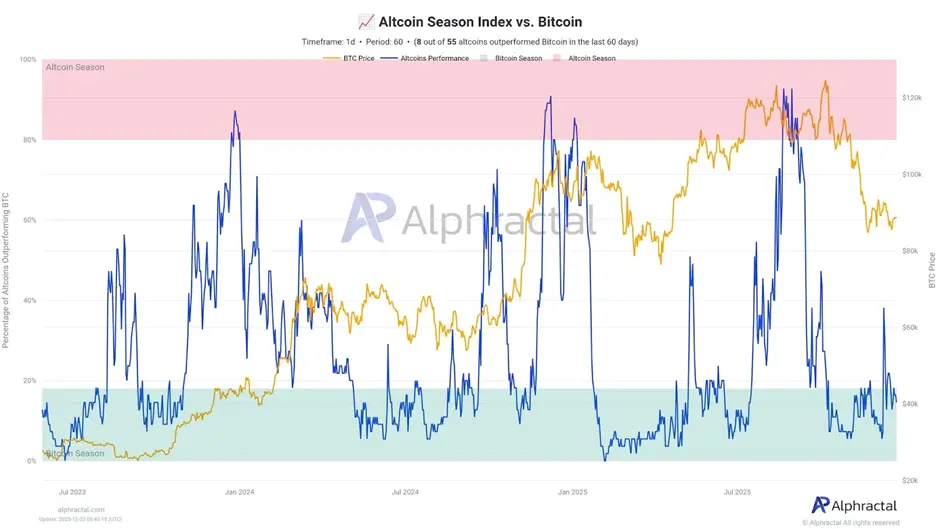 Altcoin-Saison-Index im Vergleich zu Bitcoin | Quelle: XDieser Index misst, wie viele Altcoins Bitcoin übertreffen. Ein hoher Index deutet auf eine starke Verbreitung der Altcoins hin. Ein niedriger Index bedeutet, dass Bitcoin noch dominiert, auch bekannt als „Bitcoin-Dominanz“. Derzeit liegt dieser Index noch auf einem niedrigen Niveau, obwohl er nicht mehr sinkt, was die Stabilität der Altcoins widerspiegelt, aber noch keinen breiten Durchbruch.
Daher ist es noch mit Risiken verbunden, diese Phase als „vollständige Altcoin-Saison“ zu bezeichnen. Der Markt bevorzugt derzeit nur bestimmte Tokens, nicht das gesamte Altcoin-Ökosystem.
Die Dominanz von Bitcoin erklärt die Theorie einer schwachen Altcoin-Saison
Der Bitcoin-Dominanzindex spiegelt den Anteil des Bitcoin-Werts am Gesamtmarktwert der Kryptowährungen wider. Ist dieser Index hoch, konzentriert sich das Kapital hauptsächlich auf Bitcoin. Sinkt er, fließt neues Kapital eher in die Altcoins.
Derzeit liegt die Bitcoin-Dominanz bei etwa 60 %, was zeigt, dass Bitcoin weiterhin die Marktführerschaft behält. Das bestätigt, dass das Kapital noch nicht vollständig in alle Altcoins fließt, und Investoren vorsichtig und selektiv vorgehen.
Laut früheren Zyklen beginnt die Altcoin-Saison meist, nachdem Bitcoin eine starke Wachstumsphase durchlaufen hat und sich dann stabilisiert. Zu diesem Zeitpunkt verschiebt sich das Kapital breit auf die Altcoins.
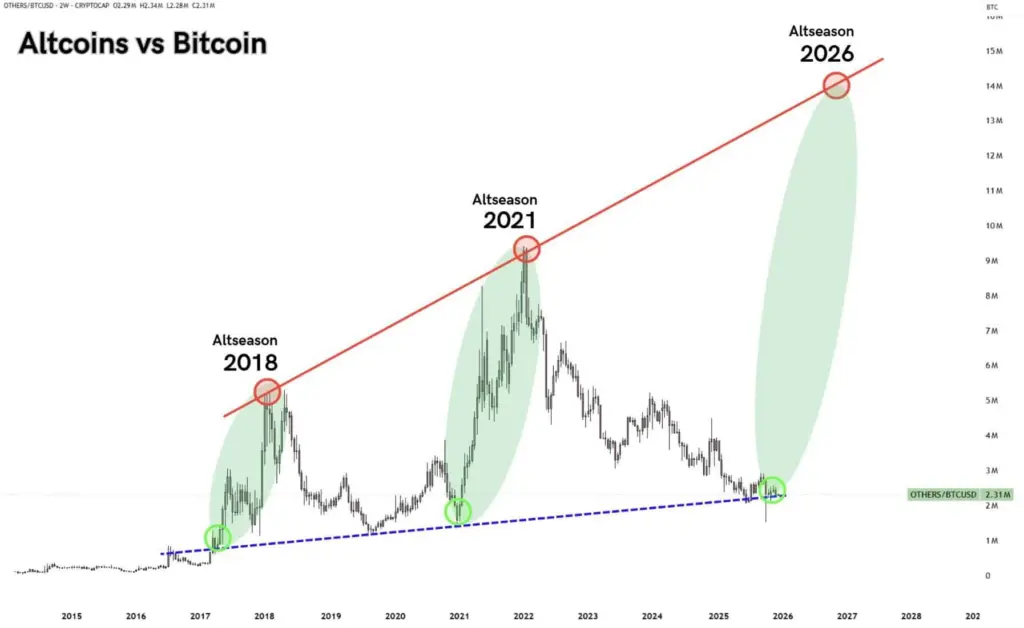 Der Zusammenhang zwischen BTC und der Geschichte der Altcoin-Saison | Quelle: XIn diesem Zyklus wächst Bitcoin zwar, aber die Kapitalbewegungen verlaufen noch uneinheitlich. Einige Altcoins erhalten frühzeitig Aufmerksamkeit, aber die meisten zeigen noch keine deutlichen Veränderungen.
Dies erklärt die Zurückhaltung vieler Trader: Sie sehen die starken Kursanstiege in den sozialen Medien, ihr eigenes Portfolio bleibt jedoch relativ stabil.
Warum warnt Raoul Pal davor, in dieser Saison blind den Altcoin-Trends zu folgen?
Die Marktsegmentierung führt dazu, dass erfahrene Investoren vorsichtig bleiben. Ein prominentes Beispiel ist Raoul Pal, ehemaliger Hedgefonds-Manager und Gründer von Real Vision – einer Plattform für makroökonomische und Kryptowährungsanalysen.
Mit über 35 Jahren Erfahrung im Finanzmarkt konzentriert sich Raoul Pal auf langfristige Zyklen statt auf kurzfristige Trades. Er warnt oft, dass die Altcoin-Saison die Phase ist, in der die meisten Kleinanleger am anfälligsten für Verluste sind.
Der Grund ist einfach: Während der Altcoin-Saison sind soziale Medien voll von Beiträgen, die enorme Gewinne preisen, was viele in FOMO (Angst, Chancen zu verpassen) treiben und sie zu spät in den Markt eintreten lassen, wenn die Preise bereits stark gestiegen sind.
Raoul Pal empfiehlt weiterhin, in Qualitätswerte wie Bitcoin oder Ethereum zu investieren, anstatt kurzfristigen Schwankungen hinterherzujagen. Besonders betont er, dass man auf keinen Fall Hebel einsetzen sollte, vor allem im volatilen Kryptomarkt, wo schnelle Kursbewegungen und hohe Verlustrisiken herrschen.
In diesem Zyklus wird diese Warnung noch wichtiger. Die Realität zeigt, dass die Altcoin-Saison nur selektiv stattfindet, einige Tokens steigen, während die Mehrheit noch schwach ist. Das bedeutet, dass Geduld und sorgfältige Auswahl wichtiger sind als Geschwindigkeit.
Die Altcoin-Saison könnte sich noch entwickeln, aber die aktuellen Daten zeigen, dass sich die Bewegungen nur bei einer kleinen Gruppe vollziehen, noch keine breit angelegte Welle auf dem gesamten Markt. Dies ist noch keine Saison, in der alle Coins gleichzeitig steigen.
Disclaimer: The information on this page may come from third parties and does not represent the views or opinions of Gate. The content displayed on this page is for reference only and does not constitute any financial, investment, or legal advice. Gate does not guarantee the accuracy or completeness of the information and shall not be liable for any losses arising from the use of this information. Virtual asset investments carry high risks and are subject to significant price volatility. You may lose all of your invested principal. Please fully understand the relevant risks and make prudent decisions based on your own financial situation and risk tolerance. For details, please refer to
Disclaimer.


