Original Title: Market Byte: Tariffs, Stagflation, and Bitcoin
Original author: Zach Pandl
Original compilation: Asher, Odaily Planet Daily
Editor’s Note: This article analyzes the recent changes in U.S. global tariff policies and their impact on the financial markets, particularly the unique performance of Bitcoin during this process; it explores the long-term effects of tariffs on the economy, especially in terms of asset allocation choices during stagflation, and the performance of Bitcoin and gold in such an environment; it analyzes the current trade tensions’ impact on the U.S. dollar and the potential adoption of Bitcoin, and finally, it provides a forecast for the economic outlook in the coming years, pointing out that Bitcoin and other scarce commodity assets like gold may receive more attention and demand in a high inflation environment.
Since the United States announced a new global tariff policy on April 2, global asset prices have fallen sharply, until the tariff policy suspension announced by Trump this morning (excluding China) gradually warmed up. However, the initial tariff announcement affected almost all assets. During this period, in terms of risk-adjusted benchmarks, Bitcoin’s decline was relatively small. Therefore, if Bitcoin’s correlation with stock market returns is 1:1, the decline of the S&P 500 should mean a 36% drop in Bitcoin’s price. However, the reality is that Bitcoin only fell by 10%, highlighting that even during deep market pullbacks, holding Bitcoin as part of a portfolio can still provide significant diversification benefits.
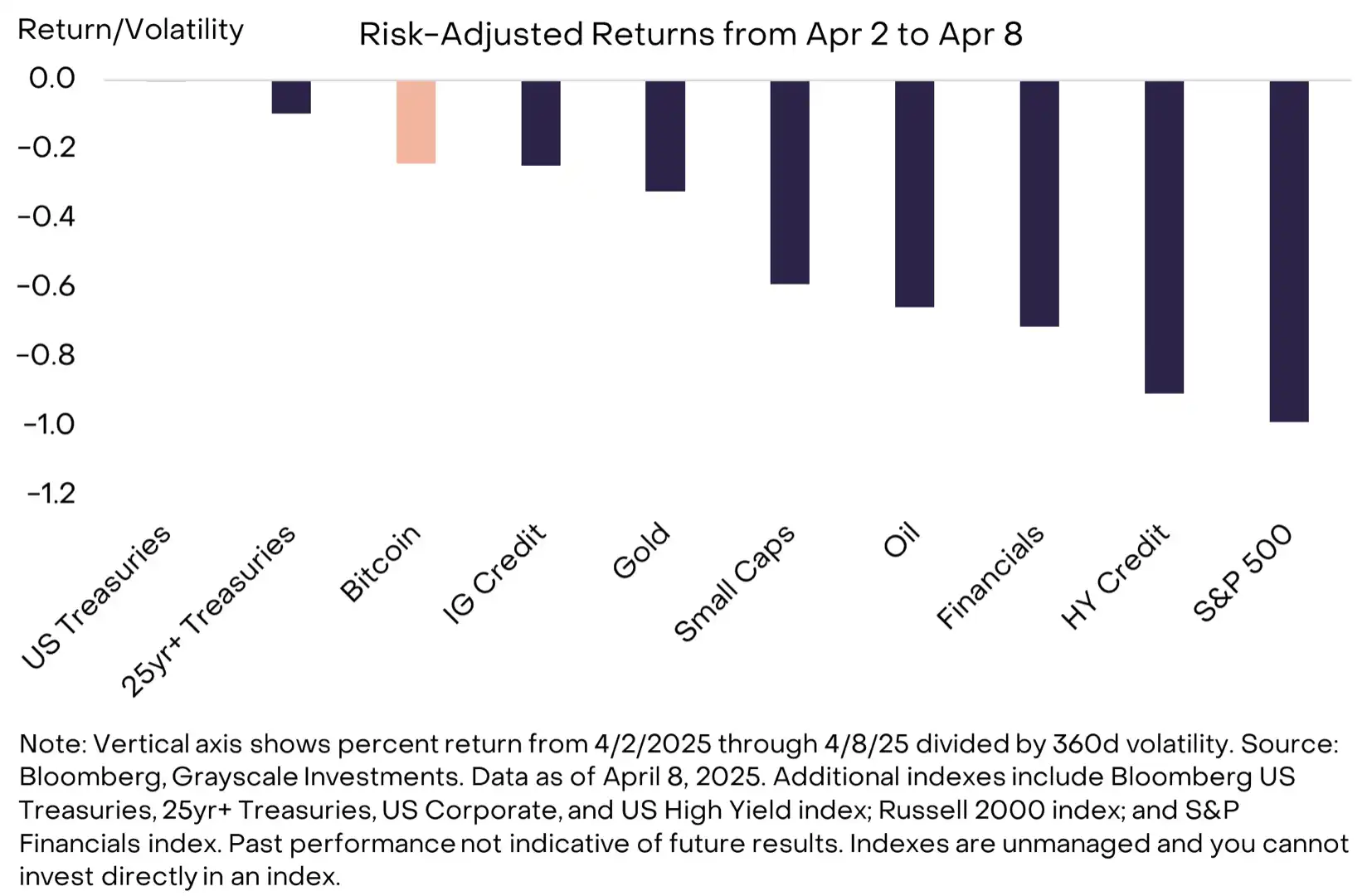
After risk adjustment, the decline in Bitcoin price is relatively small.
In the short term, the outlook for global markets may depend on trade negotiations between the White House and other countries. While the negotiations may lead to tariff reductions, setbacks in the negotiations could also trigger more retaliatory actions, and the actual and implied volatility in traditional markets remains high, making it difficult to predict how the trade conflict will evolve in the coming weeks. Therefore, investors should exercise caution in adjusting their positions in a high-risk market environment. In addition, Bitcoin’s price volatility has increased much less than that of equities, and multiple indicators suggest that speculative traders’ positions in the crypto market are relatively low, and if macro risks ease in the coming weeks, the crypto’s market capitalization should be expected to rebound.
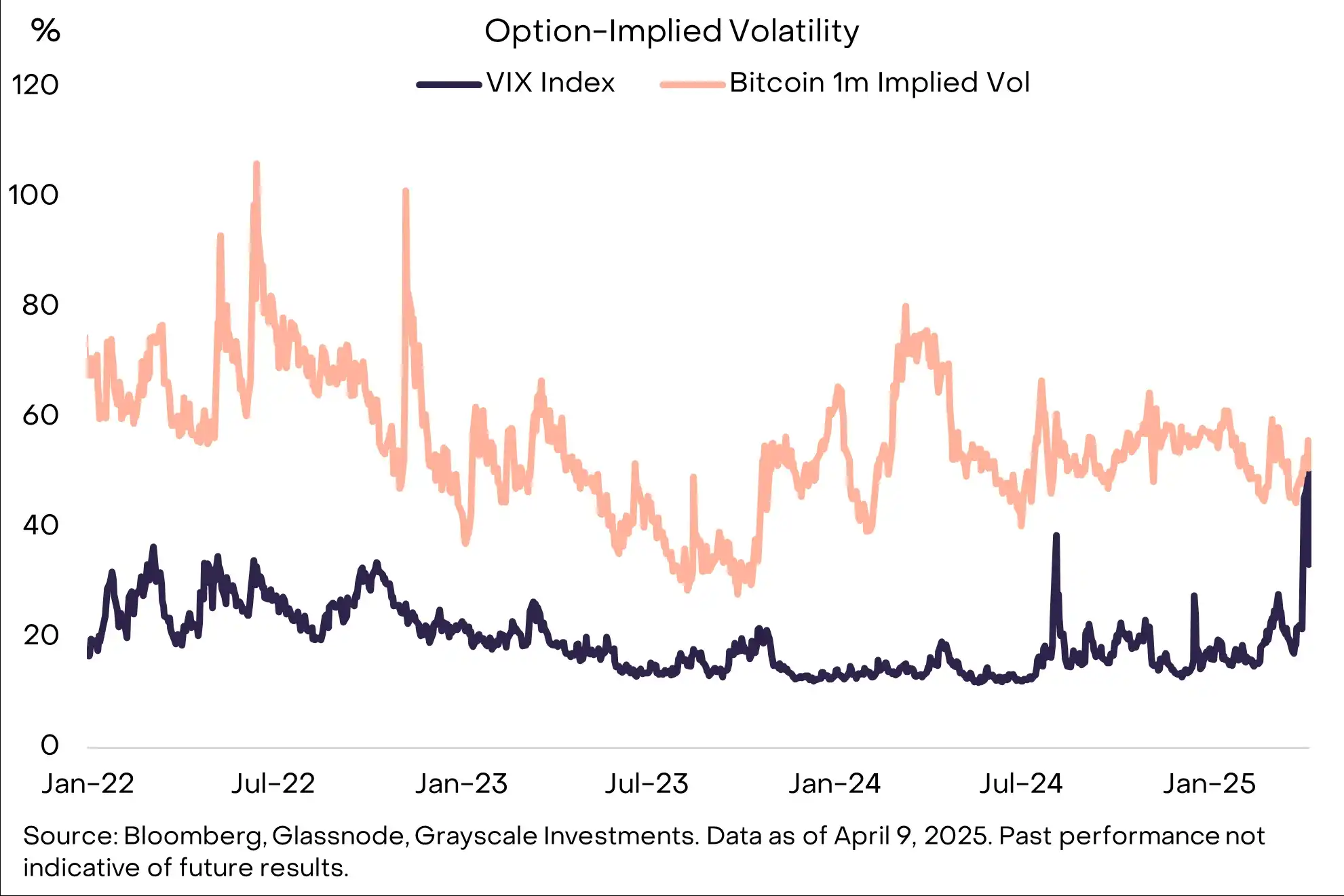
The implied volatility of stocks is close to that of Bitcoin
Regarding Bitcoin, although its price has decreased over the past week, from a longer-term perspective, the impact of higher tariffs on Bitcoin will depend on their effect on the economy and international capital flows. Tariffs (along with changes in related non-tariff trade barriers) may lead to “stagflation” and could result in structural weakness in dollar demand. Therefore, in this context, the increase in tariffs and changes in global trade patterns may be positive factors for the adoption of Bitcoin in the medium to long term.
Asset Allocation in Stagflation
Stagflation refers to an economic state characterized by slow or declining economic growth, along with high or accelerating inflation rates. Tariffs have raised the prices of imported goods, which will lead to rising inflation (at least in the short term). At the same time, tariffs may also slow economic growth due to the reduction of real income for residents and the adjustment costs faced by businesses. In the long term, this impact may be partially offset by increased domestic manufacturing investment, and most economists expect that these new tariffs will continue to be a drag on the economy for at least the next year.
From a historical perspective, the asset returns of the 1970s vividly demonstrate the impact of stagflation on financial markets (the existence of Bitcoin has been too short to backtest its performance). During that decade, the annualized return of U.S. stocks and long-term bonds was around 6%, below the average inflation rate of 7.4% at the time, whereas the price of gold increased at an annualized rate of about 30%, far exceeding the inflation rate.
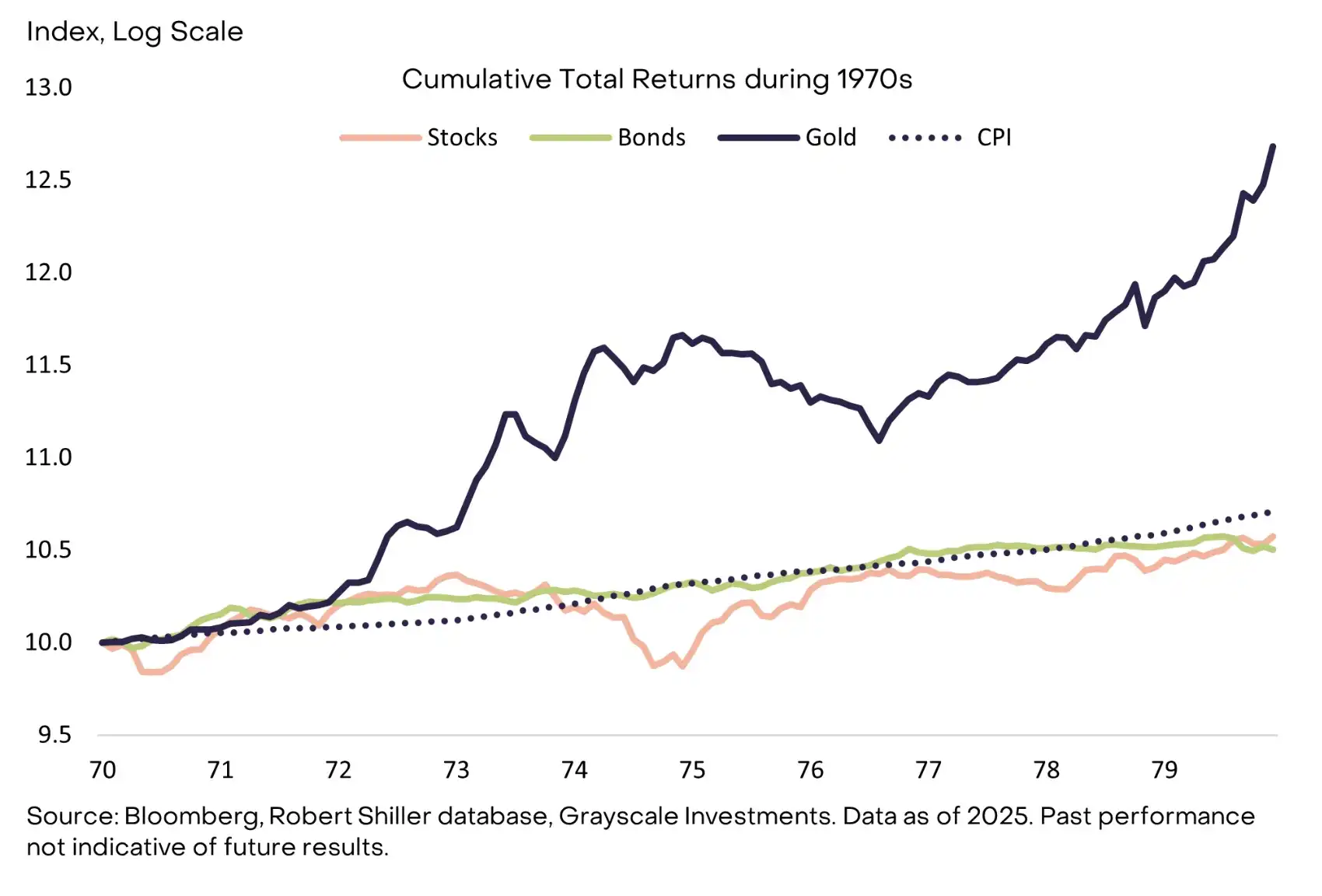
The real returns on traditional assets in the 1970s were negative
In general, extreme situations during stagflation are relatively rare, but their impact on asset returns tends to be consistent over time. The chart below shows the average annual returns of U.S. stocks, government bonds, and gold across different economic growth and inflation cycles from 1900 to 2024.
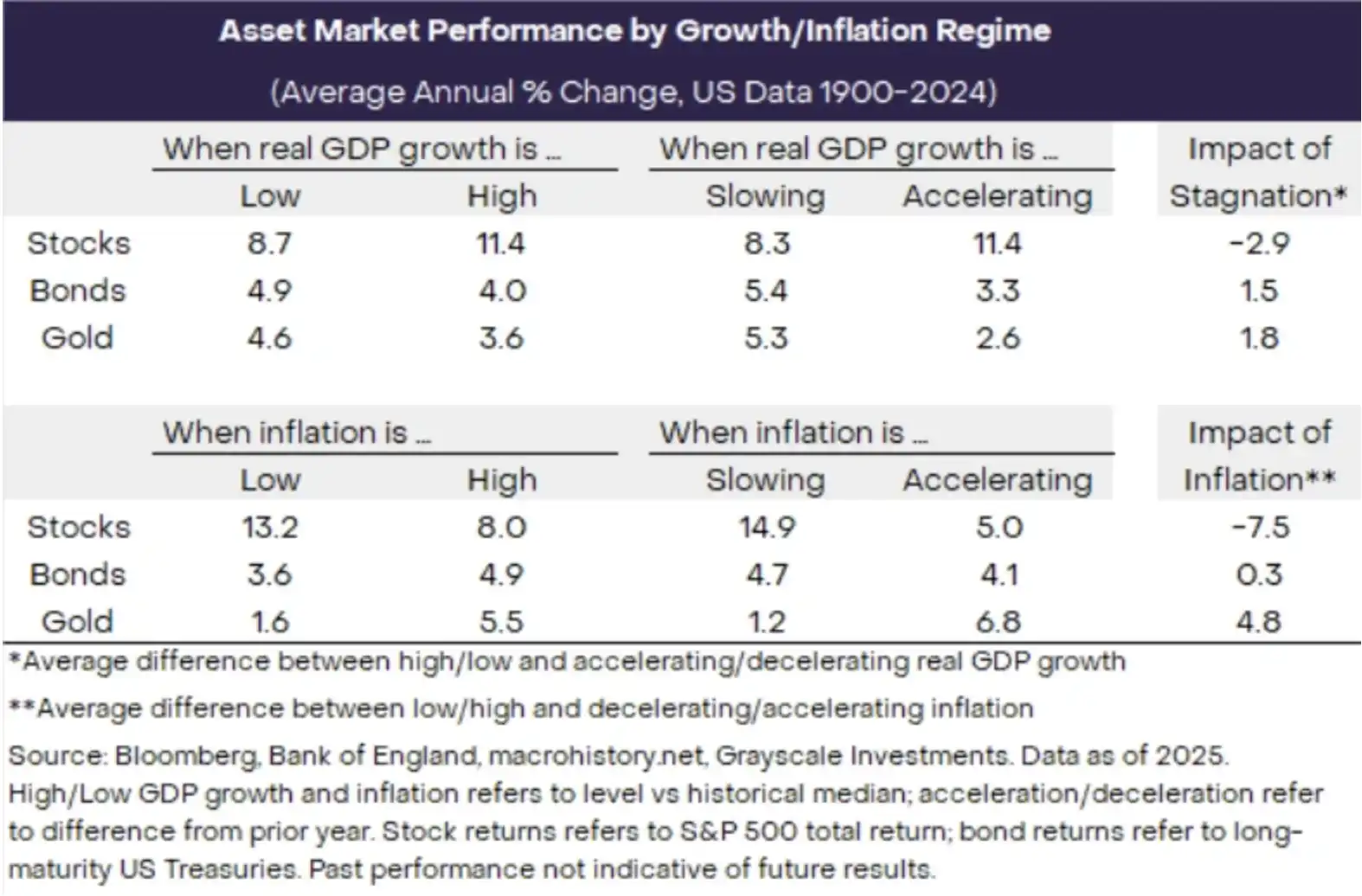
Stagflation reduces stock returns and increases gold returns
Historical data reveals three key points:
When GDP is high or accelerating and inflation is low or slowing, stock market returns typically increase. Therefore, during stagflation, stock market returns are expected to decline, and investors may need to reduce their equity allocation;
Gold tends to perform better when economic growth is sluggish and inflation rises, especially during periods of stagflation, when gold becomes the main hedge against inflation. This suggests that gold is generally a more attractive investment option in this environment;
The performance of bonds is closely related to changes in inflation. When inflation is low, bond yields are usually better, while when inflation rises, the performance of bonds typically worsens. Therefore, during periods of rising inflation, bond investors may face the risk of declining returns.
In summary, different assets perform differently during economic cycles, and investors should adjust their asset allocation based on the macroeconomic environment. The period of stagflation is particularly important, as it often has a negative impact on stocks, while gold may experience growth.
Bitcoin and US Dollar
Tariffs and trade tensions may drive the adoption of Bitcoin in the medium term, one reason being the pressure on the demand for the dollar. Specifically, if the overall trade flow with the United States decreases, and most of the trade flow is priced in dollars, then the demand for trading in dollars will decline. Furthermore, if increased tariffs also lead to conflicts with other major countries, they may weaken the demand for the dollar as a store of value.
The share of the US dollar in global foreign exchange reserves far exceeds its share in global economic output. There are many reasons for this situation, but network effects play an important role: countries trade with the United States, borrow in the dollar markets, and typically price commodities in dollars. If trade tensions lead to a weakening of the connection with the US economy and dollar-based financial markets, countries may accelerate the diversification of their foreign exchange reserves.
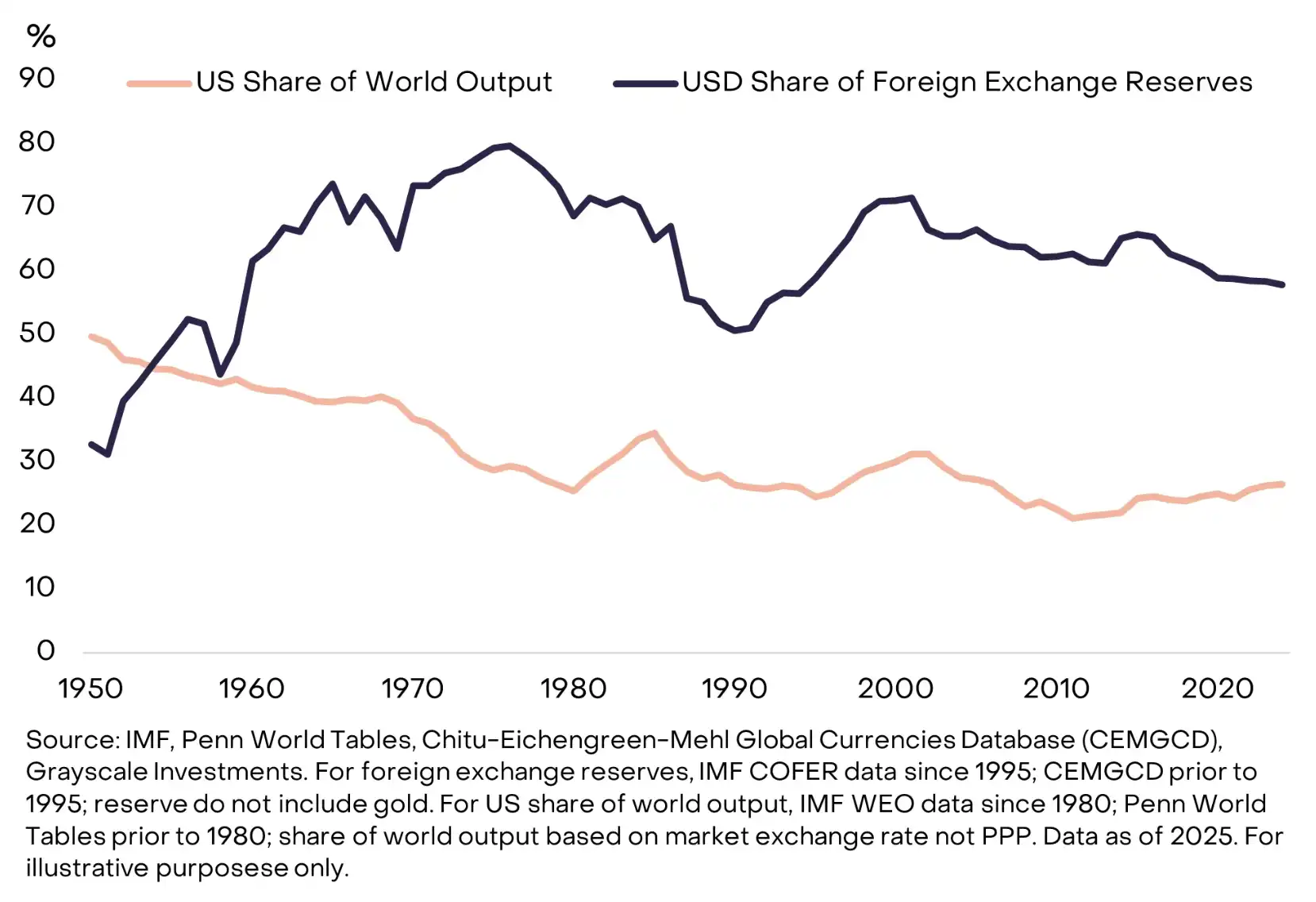
The proportion of the US dollar in global reserves far exceeds its share in the global economy.
Many central banks have increased gold purchases after facing Western sanctions in Russia. It is understood that, apart from Iran, no other country’s central bank currently holds Bitcoin on its balance sheet. However, the Czech National Bank has begun exploring this option, the United States has also established strategic Bitcoin reserves, and some sovereign wealth funds have publicly announced investments in Bitcoin. In our view, the disruptions to the dollar-centered international trade and financial system may lead central banks to further diversify their reserves, including investments in Bitcoin.
The moment in American history most similar to President Trump’s “Day of Liberation” statement may be the “Nixon Shock” on August 15, 1971. That evening, President Nixon announced a comprehensive 10% tariff and ended the system of dollar convertibility into gold—a system that had underpinned the global trade and financial system since the end of World War II. This action sparked diplomatic activities between the United States and other countries, ultimately leading to the Smithsonian Agreement in December 1971, where other countries agreed to revalue their currencies against the dollar. The dollar ultimately depreciated by 27% between the second quarter of 1971 and the third quarter of 1978. Over the past 50 years, there have been several rounds of trade tensions followed by (partially negotiated) instances of dollar weakness.
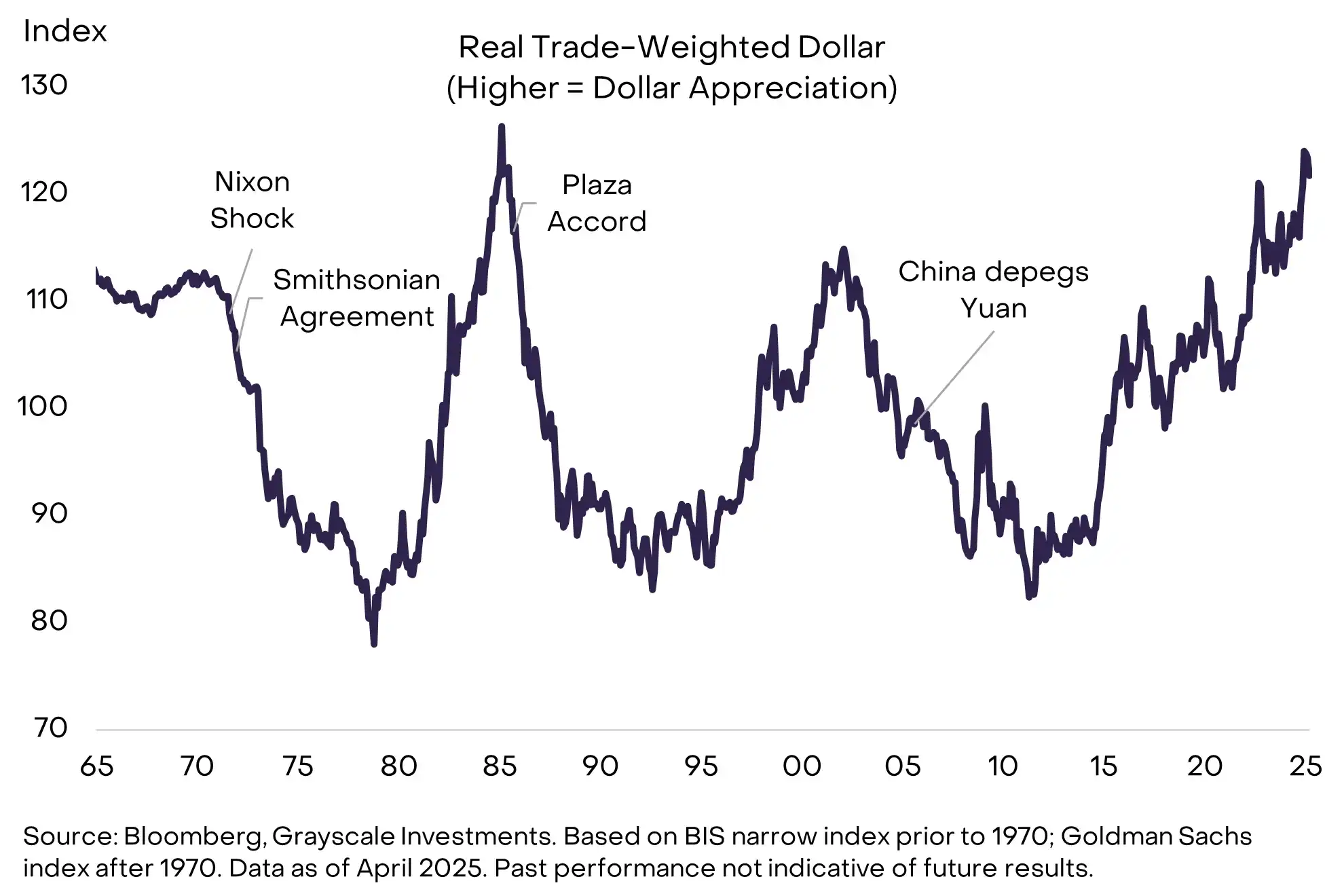
The recent trade tensions are expected to again lead to a sustained weakening of the US dollar. According to relevant indicators, the US dollar has been overvalued, and the Federal Reserve has room to lower interest rates, while the White House hopes to reduce the US trade deficit. Although tariffs will alter effective import and export prices, the depreciation of the dollar may gradually achieve a rebalancing of trade flows through market mechanisms, thereby reaching the desired effect.
Child of the Era - Bitcoin
The abrupt changes in U.S. trade policy are causing adjustments in the financial markets, which will have a short-term negative impact on the economy. However, the market conditions of the past week are unlikely to become the norm for the next four years. The Trump administration is implementing a series of policy measures that will have different effects on GDP growth, inflation, and trade deficits. For instance, while tariffs may reduce economic growth and increase inflation (i.e., causing stagflation), certain types of deregulation may enhance growth and lower inflation (i.e., reducing stagflation). The ultimate outcome will depend on the extent to which the White House implements its policy agenda in these areas.
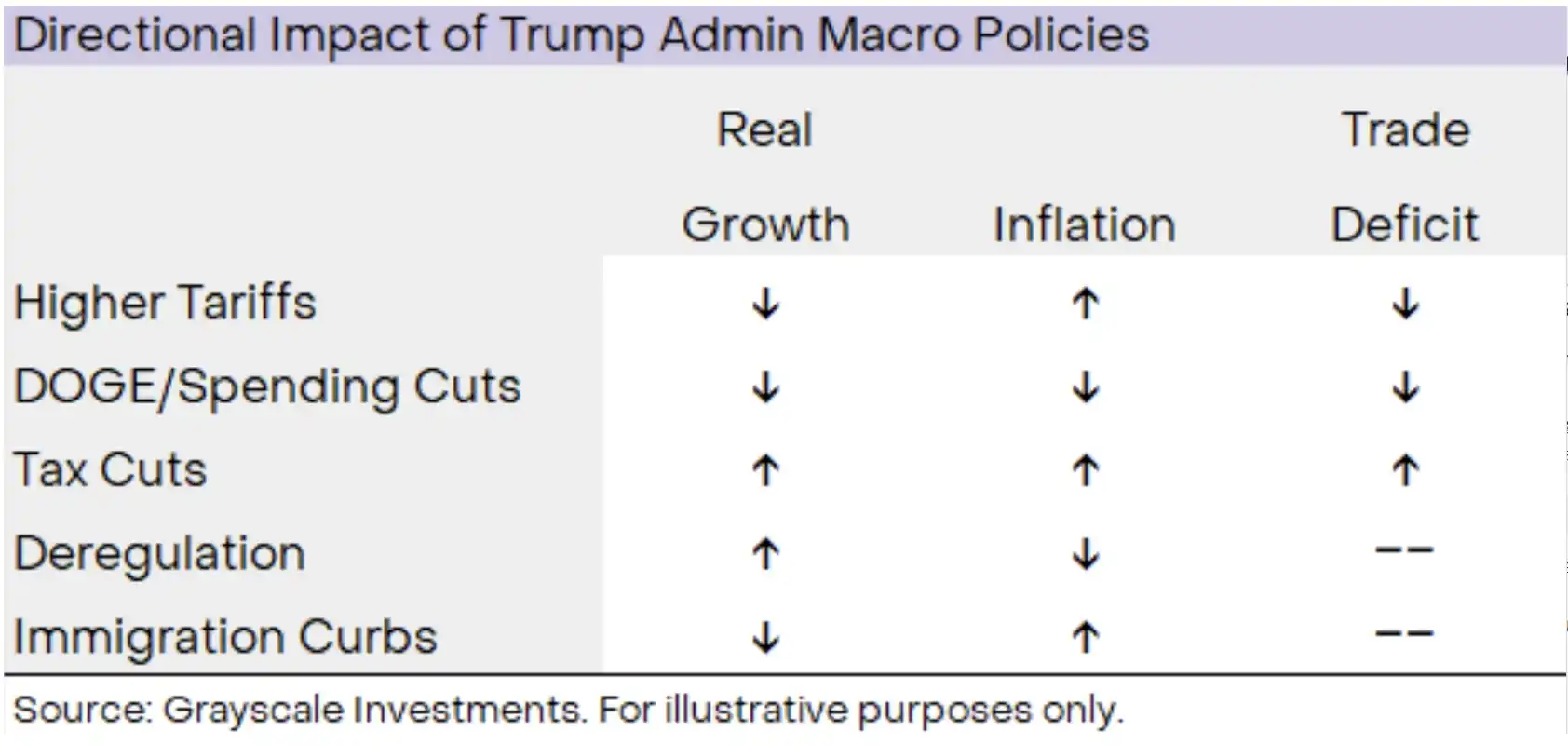
The macroeconomic policy of the United States will have a series of impacts on growth and inflation.
Despite the uncertainty in the outlook, the best guess is that U.S. government policies will lead to a continued weakening of the dollar and overall inflation above target in the next 1 to 3 years. Tariffs themselves may slow growth, but this effect could be partially offset by tax cuts, deregulation, and dollar depreciation. If the White House also actively implements other growth-promoting policies, GDP growth may still remain relatively strong despite the initial impact of tariffs. Regardless of whether actual growth is robust, history shows that sustained inflationary pressures over a period can be beneficial for scarce commodities like Bitcoin and gold.
Additionally, similar to gold in the 1970s, Bitcoin now has a rapidly improving market structure—supported by changes in U.S. government policy. Since the beginning of this year, the White House has implemented a series of broad policy changes that should support investment in the digital asset industry, including the dismissal of a series of lawsuits, ensuring asset applicability to traditional commercial banks, and allowing regulated entities (such as custodians) to offer cryptocurrency services. This, in turn, has triggered a wave of mergers and acquisitions and other strategic investments. New tariffs represent a short-term disadvantage for the valuation of digital assets like Bitcoin, but the Trump administration’s cryptocurrency-specific policies have consistently supported the industry. Overall, the rising demand for scarce commodity assets in the macro economy and the improvement of the investor operating environment may be a powerful combination for the widespread adoption of Bitcoin in the coming years.
Original link
:


