Michael Saylor đã phát hành một biểu đồ vào ngày 26 tháng 10, chỉ ra sự tăng lên liên tục trong kho dự trữ của Strategy, kèm theo một tiêu đề châm biếm: “Hôm nay là ngày điểm cam”. Đây là ám chỉ tinh vi mà ông đã lặp đi lặp lại trước khi chính thức công bố tin mua, cho thấy câu trả lời có thể là “có” cho việc liệu Strategy có mua thêm Bitcoin trong tuần trước.
Michael Saylor gợi ý mua sắm liên tục
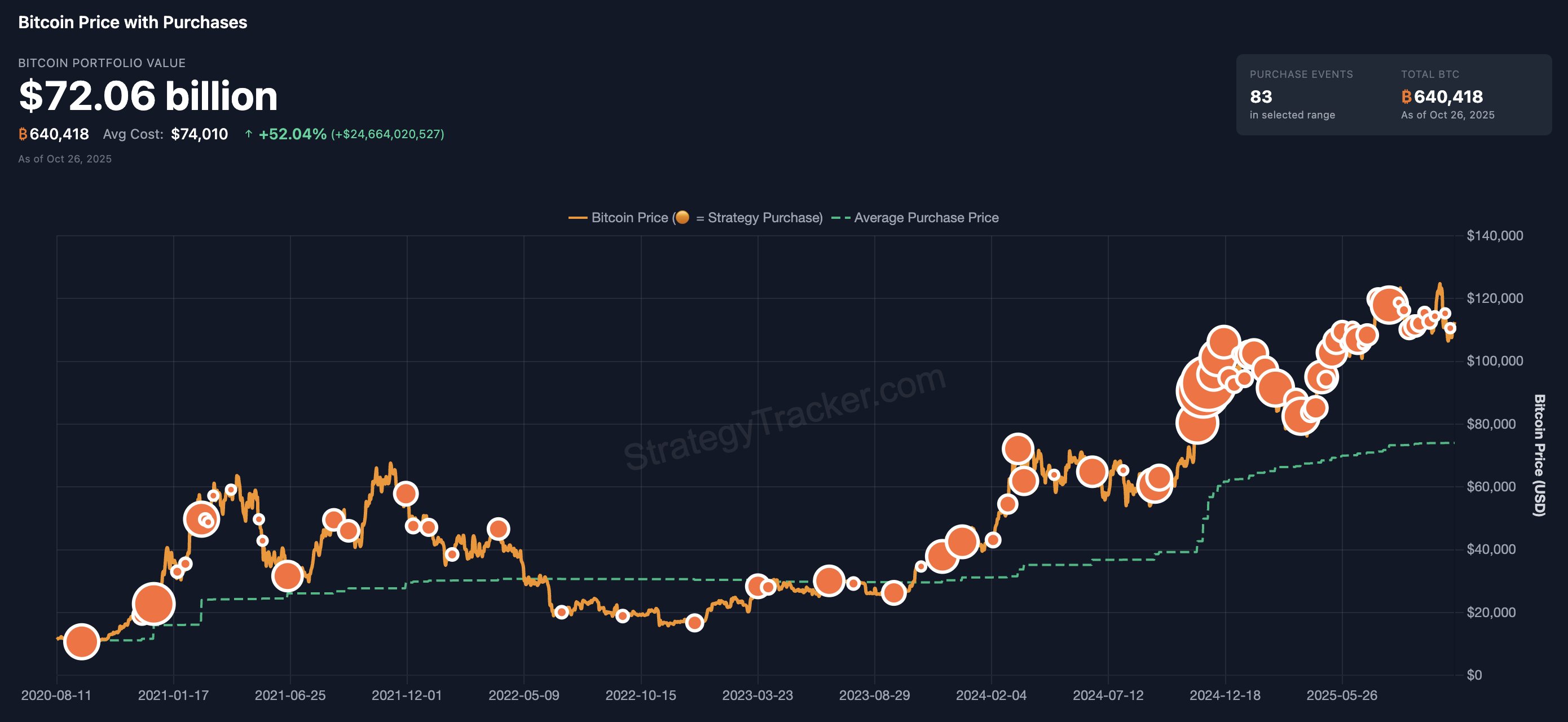
(Nguồn: SaylorTracker)
Như thường lệ, Michael Saylor đã ngụ ý về việc mua Bitcoin mới vào Chủ nhật. Vào ngày 26 tháng 10, người ủng hộ tiền điện tử mạnh mẽ nhất trong giới doanh nghiệp đã công bố một biểu đồ, chỉ ra kho dự trữ đang tăng lên của Strategy, kèm theo một tiêu đề châm biếm: “Hôm nay là ngày điểm cam”. Biểu đồ của Saylor nổi bật với các vòng tròn cam chỉ ra mỗi lần mua vào, tương ứng với giá Bitcoin, điểm mới nhất cho thấy xu hướng phân phối hàng tuần nhỏ hơn trong tháng 10 vẫn tiếp tục.
Mặc dù Strategy chưa công bố quy mô mua Bitcoin mới, nhưng bài đăng cho thấy, ngay cả khi nỗi sợ hãi, sự không chắc chắn và nghi ngờ bao trùm thị trường, hoạt động mua vào của Saylor & Co. vẫn không ngừng lại. “Ngày điểm cam” đã trở thành cách biểu thị mang tính biểu tượng của Saylor, mỗi khi anh ấy phát hành loại biểu đồ có điểm tròn màu cam này, thị trường biết rằng Strategy lại tăng thêm Bitcoin. Mô hình giao tiếp có thể dự đoán này, cung cấp cho thị trường tín hiệu về sự tự tin trong việc Strategy tiếp tục mua vào.
Mặc dù thị trường vẫn đang chờ xác nhận, nhưng giao dịch mua gần đây nhất mà công ty công bố diễn ra trong khoảng thời gian từ 13 đến 20 tháng 10, khi đó Strategy đã tăng cường sở hữu 387 Bitcoin. Điều này đã đưa tổng số lượng nắm giữ của họ lên 640,418 Bitcoin, với giá mua trung bình là 74,010 USD. So với tháng 9, quy mô phân phối lần này nhỏ hơn, khi đó công ty đã hấp thụ hơn 7,000 BTC thông qua một số hành động quy mô lớn.
Từ 387 đồng xuống khoảng 200 đến 400 đồng như dự kiến, câu trả lời cho việc liệu Strategy có mua thêm Bitcoin trong tuần trước hay không rất có thể là có, nhưng quy mô thì nhỏ hơn nhiều so với đỉnh lịch sử. Sự giảm sút về lượng mua này không phải vì Strategy mất niềm tin vào Bitcoin, mà là do sự thay đổi của môi trường tài chính. Khi cổ phiếu không còn chênh lệch giá, khả năng của Strategy trong việc huy động vốn thông qua phát hành cổ phiếu mới giảm mạnh, điều này trực tiếp hạn chế quy mô mua Bitcoin của họ.
Với giá Bitcoin gần 114,000 đô la Mỹ hiện tại, danh mục đầu tư Bitcoin của Strategy có giá trị khoảng 72 tỷ đô la Mỹ, với lợi nhuận trên giấy tờ vượt quá 25 tỷ đô la Mỹ và lợi suất vượt quá 53% kể từ khi kế hoạch này được khởi động vào năm 2020, với tổng chi phí cơ bản đạt 47.4 tỷ đô la Mỹ. Mức lợi nhuận đầu tư đáng kinh ngạc này đã xác minh tính đúng đắn của chiến lược “Bitcoin như một tài sản doanh nghiệp” của Saylor. 640,418 Bitcoin tương đương khoảng 3.2% tổng số Bitcoin đang lưu hành, và Strategy đã trở thành chủ sở hữu Bitcoin lớn nhất trong các doanh nghiệp, có ảnh hưởng thậm chí lớn hơn nhiều quốc gia có chủ quyền.
Khối lượng mua hàng tuần của chiến lược giảm mạnh từ 55,500 coin xuống còn 200 coin
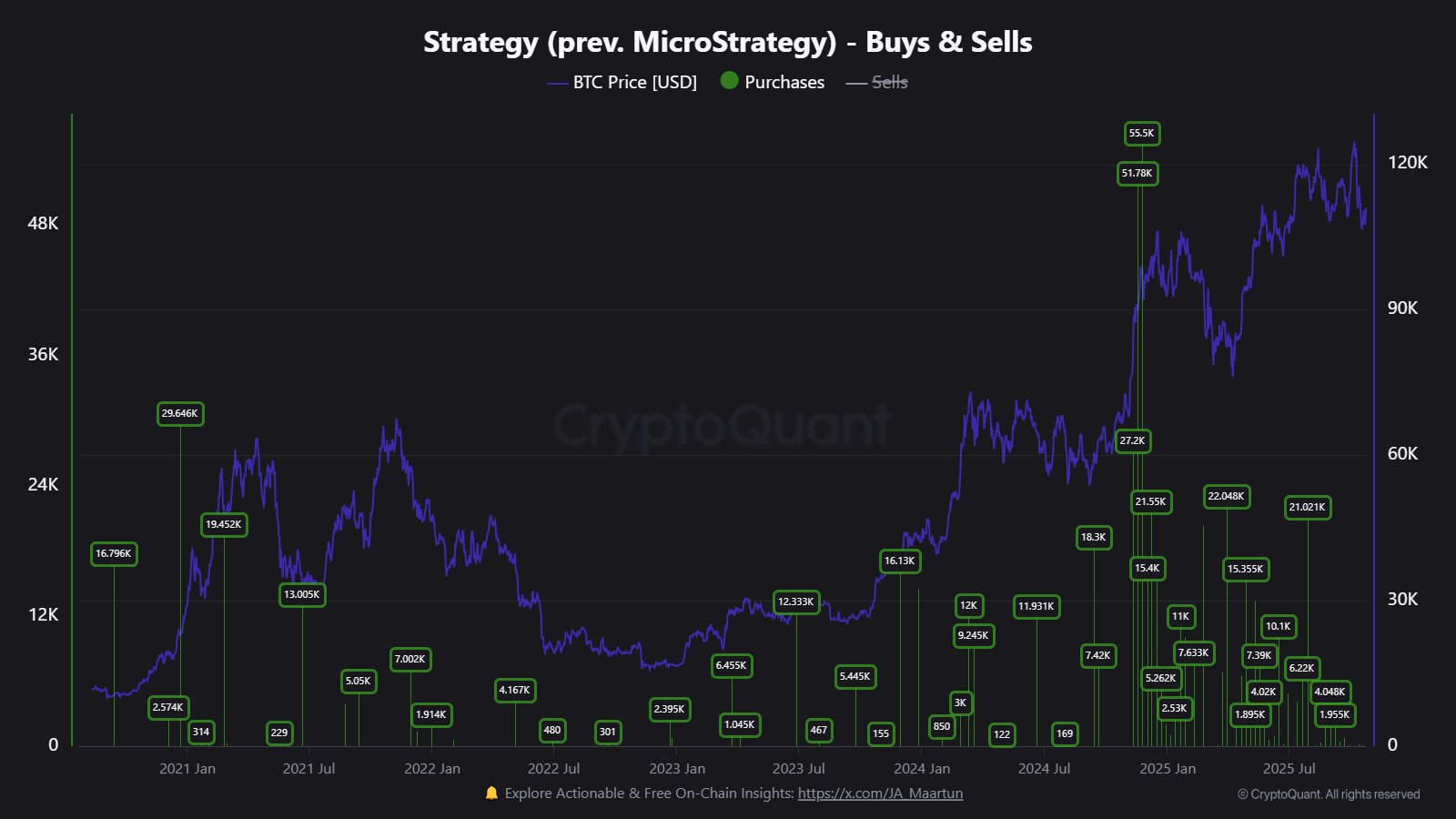
(Nguồn: CryptoQuant)
Vào ngày 26 tháng 10, nhà phân tích CryptoQuant J. Maartunn báo cáo rằng khối lượng mua Bitcoin hàng tuần của Strategy đã giảm mạnh. Theo ông, khối lượng mua của công ty đã giảm từ hàng chục nghìn BTC mỗi tuần vào cuối năm 2024 xuống còn khoảng 200 BTC trong vài tuần gần đây. Cụ thể, công ty đã từng mua hơn 10,000 BTC trong một tuần, trong đó đỉnh điểm đã thiết lập kỷ lục 55,500 BTC.
Từ 55,500 đồng đến 200 đồng, mức giảm 270 lần này thật sự gây kinh ngạc. Sự chậm lại này không có nghĩa là niềm tin giảm sút, mà chỉ ra rằng môi trường tài chính đang thắt chặt, giới hạn việc triển khai vốn mới. Mức chênh lệch phát hành cổ phiếu của Strategy (tức là khoảng cách giữa giá cổ phiếu của nó và giá trị sổ sách của lượng Bitcoin nắm giữ) đã giảm mạnh từ 208% xuống còn 4%. Sự sụp đổ này khiến việc phát hành cổ phiếu mới trở thành cách huy động vốn để mua Bitcoin ít hiệu quả.
Chiến lược thay đổi khối lượng mua hàng hàng tuần:
Đỉnh điểm cuối năm 2024: hàng chục ngàn BTC mỗi tuần, cao nhất trong một tuần là 55,500枚
Đầu năm 2025: Giữ mua vào mạnh mẽ hơn 10,000 coin mỗi tuần
Tháng 9 năm 2025: Mua hàng tháng vượt quá 7,000 BTC
Tháng 10 năm 2025: Giảm xuống khoảng 200 đến 400 coin mỗi tuần
Trong khi đó, giá cổ phiếu của công ty đã giảm khoảng 50% so với mức cao nhất trong lịch sử, trong khi giá giao dịch Bitcoin đã giảm khoảng 16% so với mức cao nhất lịch sử 126.000 USD, tính đến thời điểm phát hành đang dao động quanh mức 111.000 USD. Sự chênh lệch giữa giá cổ phiếu và giá Bitcoin này là nguyên nhân trực tiếp dẫn đến sự sụp đổ của MSTR. Khi giá cổ phiếu MSTR giảm mạnh hơn nhiều so với chính Bitcoin, điều này có nghĩa là thị trường đang mất niềm tin vào mô hình kinh doanh Strategy.
Giá trị thị trường thấp hơn và ít lựa chọn tài trợ hơn đã vô tình buộc Strategy phải làm chậm lại tốc độ mua. Sự thay đổi dữ liệu này đã trả lời câu hỏi liệu Strategy có mua thêm Bitcoin nào vào tuần trước không: có thể đã mua, nhưng quy mô nhỏ hơn nhiều so với mức lịch sử. Chiến lược tài trợ của Strategy chủ yếu phụ thuộc vào hai phương thức: phát hành cổ phiếu mới và phát hành trái phiếu chuyển đổi. Khi chênh lệch giá cổ phiếu biến mất, việc phát hành cổ phiếu mới sẽ làm pha loãng nghiêm trọng quyền lợi của các cổ đông hiện tại, do đó con đường này đã bị chặn. Trái phiếu chuyển đổi mặc dù vẫn có thể sử dụng, nhưng trong môi trường lãi suất cao, chi phí cao hơn, hạn chế quy mô có thể tài trợ.
Chiến lược vẫn là nhà đầu tư tổ chức tích cực nhất, tỷ lệ nắm giữ 3.2%
Mặc dù thị trường đầy bất định, nhưng giá giao dịch của cổ phiếu Strategy (MSTR) vẫn cao hơn giá trị tài sản ròng, phản ánh sự tin tưởng của các nhà đầu tư vào công ty này. Hiện tại đã ghi nhận 83 sự kiện mua độc lập, chiến lược của họ vẫn có thể dự đoán được: mua theo kế hoạch, công bố sau đó, và để sự biến động của Bitcoin quyết định bảng cân đối kế toán của họ. Sự có thể dự đoán này tự nó là một giá trị, thị trường biết rằng Strategy sẽ tiếp tục mua vào, điều này cung cấp hỗ trợ nhu cầu cấu trúc cho Bitcoin.
Mặc dù nền kinh tế đang chậm lại, Saylor vẫn cho rằng Bitcoin vẫn là cốt lõi của chiến lược tài chính công ty. Trên X, ông đã đăng một ảnh chụp màn hình về công cụ theo dõi Bitcoin của Strategy, kèm theo câu “Hôm nay là ngày điểm cam”. Đáng chú ý, những bài đăng như vậy thường được công bố trước khi nộp hồ sơ chính thức, điều này cho thấy một cuộc mua lại khác có thể sắp xảy ra. Saylor chưa bao giờ thay đổi niềm tin của mình rằng “Bitcoin là tài sản doanh nghiệp tốt nhất”, ngay cả khi tốc độ mua sắm chậm lại, ông vẫn tích cực quảng bá Bitcoin ở nơi công cộng.
Tuy nhiên, ngay cả khi tần suất giảm, Strategy vẫn là một trong những nhà đầu tư tổ chức tích cực nhất trên thị trường. Chỉ riêng trong năm 2025, công ty đã chi khoảng 19,5 tỷ USD vào Bitcoin, chỉ đứng sau 21,7 tỷ USD vào năm 2024. Con số này trên phạm vi toàn cầu là vô cùng ấn tượng, 19,5 tỷ USD tương đương với GDP của nhiều quốc gia nhỏ, khoản đầu tư của một công ty như Strategy vào Bitcoin vượt quá hầu hết các quốc gia và tổ chức.
Những khoản mua này giúp lượng nắm giữ của Strategy đạt 640,418 BTC, tương đương với khoảng 3.2% tất cả Bitcoin đang lưu hành. Tỷ lệ này có tầm quan trọng hệ thống, quyết định mua bán của Strategy có thể ảnh hưởng thực chất đến thị trường Bitcoin. Quan trọng hơn, chiến lược nắm giữ của Strategy là giữ lâu dài không bán ra, điều này có nghĩa là 3.2% Bitcoin này thực chất đã được “khóa vĩnh viễn”, giảm bớt nguồn cung lưu thông trên thị trường.
Từ góc độ ảnh hưởng thị trường, câu hỏi liệu Strategy có mua thêm Bitcoin vào tuần trước hay không là quan trọng, vì hoạt động mua vào của Strategy cung cấp một nền tảng nhu cầu ổn định cho Bitcoin. Ngay cả trong thời gian thị trường hoảng loạn, việc mua vào liên tục của Strategy cũng có thể ổn định giá cả, ngăn ngừa sự giảm giá quá mức. “Ngày điểm cam” của Saylor ám chỉ rằng, mặc dù quy mô mua vào có thể nhỏ, nhưng tính liên tục không thay đổi, điều này đã tiêm vào thị trường sự tự tin.
Từ góc độ lâu dài, việc mua của Strategy có thể chỉ là tạm thời. Một khi mức giá cổ phiếu MSTR phục hồi, hoặc giá Bitcoin vượt qua mức cao mới mang lại lợi nhuận lớn hơn trên sổ sách, Strategy có thể tăng tốc mua lại. Saylor đã nhiều lần chỉ ra rằng mục tiêu của Strategy là giữ càng nhiều Bitcoin càng tốt, hoạt động mua bán không bao giờ dừng lại, chỉ là nhịp độ sẽ được điều chỉnh theo môi trường tài chính. Do đó, câu trả lời cho việc liệu Strategy có mua thêm Bitcoin vào tuần trước hay không mặc dù quy mô nhỏ, nhưng hướng chiến lược vẫn không thay đổi.


