


Futures
Access hundreds of perpetual contracts
TradFi
Gold
One platform for global traditional assets
Options
Hot
Trade European-style vanilla options
Unified Account
Maximize your capital efficiency
Demo Trading
Introduction to Futures Trading
Learn the basics of futures trading
Futures Events
Join events to earn rewards
Demo Trading
Use virtual funds to practice risk-free trading
Launch
CandyDrop
Collect candies to earn airdrops
Launchpool
Quick staking, earn potential new tokens
HODLer Airdrop
Hold GT and get massive airdrops for free
Launchpad
Be early to the next big token project
Alpha Points
Trade on-chain assets and earn airdrops
Futures Points
Earn futures points and claim airdrop rewards


More

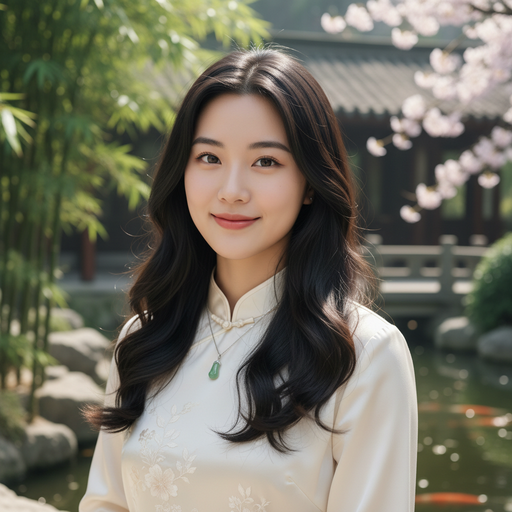



Liang Zaibing's Mother: Lin Huiyin's Postpartum Moment and Ancient Architecture Dream
Liang Zaibing is Lin Huiyin’s eldest daughter. When she was born in 1929, her father, Liang Sicheng, was constantly pressing the shutter of his camera. This was not just a simple family record but a tribute to life itself. Young Lin Huiyin had not fully recovered physically but voluntarily asked her husband to document this moment. Several years later, when Liang Zaibing had a younger brother, Liang Congjie, Liang Sicheng did the same again.
Love and Persistence Behind Postpartum Photos
Many might misunderstand this as a husband’s insensitivity, but the truth is quite the opposite. Lin Huiyin believed that childbirth was an important turning point for women to transform from girls into mothers. This authentic mark of life should be cherished and preserved. Her obsession with beauty and self-understanding continued to shine during this special postpartum moment. Liang Sicheng always fully supported his wife’s idea, using his camera to witness every moment of her as a mother.
These postpartum photos later became treasured family memories. In these images, Liang Zaibing can see her mother’s love for life and also feel her father’s understanding and companionship. For Lin Huiyin, these photos are not only records of appearance but also reflections of spiritual elevation.
From Encounter to Partnership: Liang Sicheng and Lin Huiyin’s Architectural Journey
Lin Huiyin and Liang Sicheng’s acquaintance was not accidental but rooted in deep family connections. Lin Huiyin was born in 1904 in Hangzhou. Her father, Lin Changmin, had close ties with Liang Sicheng’s father, Liang Qichao. The two boys knew each other from childhood, and later, through Liang Qichao’s matchmaking, they studied together at Songpo Library, strengthening their friendship.
1925 was a turning point—Lin Changmin faced a tragedy, and Liang Sicheng became her most steadfast companion during this painful time. Two years later, they went to the United States to study abroad. Lin Huiyin initially wanted to study architecture, but since her department did not admit women, she switched to art but never gave up taking architecture electives. Her persistence foreshadowed her legendary life.
In 1928, they held their wedding in Canada. After marriage, they examined European ancient buildings together, accumulating first-hand data for their upcoming academic research. After returning to China, Liang Sicheng founded the Department of Architecture at Northeast University, and Lin Huiyin became his most capable collaborator.
Mother and Scholar in Ancient Architecture Exploration
Shortly after marriage, the couple joined the Chinese Society of Construction, beginning long-term investigations of ancient architecture. In 1932, they examined Dule Temple in Jizhou, Hebei; the following year, they visited the Yungang Grottoes in Shanxi. These investigations were arduous and dangerous, but they pressed on without hesitation.
In 1937, at Foguang Temple on Mount Wutai, they discovered precious Tang Dynasty inscriptions, a find that overturned Japanese scholars’ claim that there was no Tang wooden architecture in China. This was not only an academic breakthrough but also a powerful affirmation of Chinese culture.
After the outbreak of the war, conditions worsened. Lin Huiyin, carrying her children—including eldest daughter Liang Zaibing and son Liang Congjie—migrated south with her husband to Kunming and Lijiang. Even under such harsh conditions, her lung illness often recurred, but their research never stopped. Growing up in this environment, Liang Zaibing witnessed her parents’ dedication to scholarship and their sense of responsibility toward national culture.
Designers in the Memory of the Nation
After the victory of the war, Lin Huiyin and Liang Sicheng returned to Beijing and engaged in work at Tsinghua University’s Department of Architecture. After the founding of New China, although her health was fragile, Lin Huiyin bravely participated in the design of the national emblem. Her proposals for core elements like the jade disc and five stars were ultimately adopted, becoming important symbols of New China.
In addition, she was involved in the design of the monument to the People’s Heroes’ relief. She was not only a designer but also a promoter of modernizing traditional cloisonné craftsmanship. Lin Huiyin used her talent and life to make indelible contributions to China’s cultural development.
The Warmest Imprints of the Years
In 1955, Lin Huiyin passed away from tuberculosis at the age of 51. Liang Sicheng personally designed her tombstone, engraving her floral wreath pattern created by Lin Huiyin herself. This was her husband’s deepest tribute to his wife. Seventeen years later, in 1972, Liang Sicheng also passed away.
Those postpartum photos now seem to record not only Lin Huiyin’s youthful years but also a love story of mutual support. From these photos, Liang Zaibing and Liang Congjie can see how their parents endured hardships and accompanied each other in pursuit of their dreams. Lin Huiyin and Liang Sicheng pioneered the exploration of Chinese ancient architecture and made significant contributions to cultural heritage preservation. Those postpartum photos are like the warmest witnesses of time, telling the full story of a woman, a mother, and a designer.