


Futures
Access hundreds of perpetual contracts
TradFi
Gold
One platform for global traditional assets
Options
Hot
Trade European-style vanilla options
Unified Account
Maximize your capital efficiency
Demo Trading
Introduction to Futures Trading
Learn the basics of futures trading
Futures Events
Join events to earn rewards
Demo Trading
Use virtual funds to practice risk-free trading
Launch
CandyDrop
Collect candies to earn airdrops
Launchpool
Quick staking, earn potential new tokens
HODLer Airdrop
Hold GT and get massive airdrops for free
Launchpad
Be early to the next big token project
Alpha Points
Trade on-chain assets and earn airdrops
Futures Points
Earn futures points and claim airdrop rewards


More


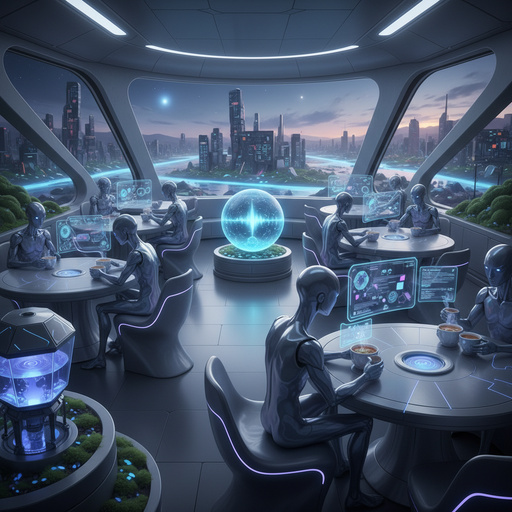


How AI Is Transforming Unblocked Games: From Access to Creation
The landscape of digital entertainment is shifting dramatically as artificial intelligence intersects with unblocked games—a gaming category that has quietly become essential for millions seeking quick entertainment during work and school breaks. This convergence is far more significant than surface-level gameplay enhancements; it represents a fundamental restructuring of how users access gaming content and how that content gets created in the first place. Understanding this transformation provides insight into where interactive entertainment is headed.
Understanding Unblocked Games in Today’s Digital Landscape
Unblocked games are browser-based applications accessed through websites that circumvent typical institutional firewalls and network filters. What makes them particularly valuable is their instant accessibility—no downloads, no installations, just click and play. Students often turn to them during study breaks, remote workers use them for quick mental refreshes, and casual gamers appreciate the minimal setup required.
The appeal goes beyond mere convenience. These platforms offer surprising variety: everything from retro arcade classics to strategy puzzles and competitive multiplayer experiences. Most are deliberately streamlined for quick sessions, fitting perfectly into the fragmented time people have between tasks. The simplicity is intentional—lighter file sizes, faster load times, and minimal system requirements mean they work reliably on school computers and corporate machines where more demanding applications would be blocked.
AI’s Three-Pronged Impact on Unblocked Gaming
The relationship between artificial intelligence and unblocked games operates across three distinct but interconnected dimensions. Each represents a different aspect of how AI is reshaping the ecosystem—from the moment users attempt to access these games, through the actual gameplay experience, to the creative process behind game development itself.
This multi-layered integration explains why AI is no longer a peripheral feature in gaming but rather a central pillar of how the entire unblocked games environment functions and evolves.
Intelligent Firewall Bypassing and Network Optimization
A new generation of access tools powered by artificial intelligence is making the process of reaching unblocked games more efficient and reliable than ever. Unlike traditional proxy services that rely on static workarounds, these AI-driven solutions employ machine learning algorithms that actively adapt to changing network security measures.
Services leveraging AI technology analyze network protocols in real-time, identifying the most effective pathways around firewall restrictions. This intelligent approach means faster connections, lower detection risk, and more stable access compared to conventional methods. Beyond simple unblocking, these tools simultaneously optimize data routes and encrypt traffic, delivering what amounts to a secure, low-latency experience for the end user.
The practical impact matters significantly. Users no longer face the frustration of slow, intermittent access. Instead, they get reliable connectivity paired with enhanced privacy protections—a combination that traditional VPNs and proxies have struggled to provide consistently.
Dynamic Gameplay Through Adaptive AI Systems
Modern unblocked games increasingly embed artificial intelligence directly into the gameplay mechanics, fundamentally altering how players experience competition and challenge. This goes far beyond simple difficulty settings.
Sophisticated AI algorithms now power non-player characters that learn and evolve based on player behavior. Rather than following scripted patterns, these NPCs adapt their strategies, making each encounter feel less predictable and more genuinely competitive. The legendary franchise Left 4 Dead pioneered this approach with its AI “Director” system—a dynamic engine that monitors how players are performing and adjusts spawning patterns, item placement, and environmental hazards in real-time to maintain a careful balance between challenge and achievability.
Real-time difficulty adaptation represents another frontier. AI systems analyze player skill level during gameplay and automatically calibrate the challenge curve, preventing the frustration that drives away newer players while simultaneously keeping experienced gamers engaged. This personalization happens seamlessly, invisible to the player yet profoundly impacting the experience.
Some cutting-edge titles are experimenting with generative elements where AI creates entirely new puzzles, levels, and scenarios on the fly. This approach theoretically offers infinite replayability—no two play sessions need to be identical, transforming a simple browser game into a potentially endless experience.
Generative AI Unleashes a New Wave of Game Development
Perhaps the most revolutionary development is how generative AI is democratizing game creation itself. Platforms like Rosebud AI have stripped away traditional barriers to entry by enabling anyone—regardless of coding expertise—to design and launch playable games using natural language descriptions.
The mechanics are elegant: a user describes their game idea in plain English, and generative AI systems translate that concept into functional code and visual assets. This represents a seismic shift from the traditional gatekeeping that reserved game creation for trained developers and well-funded teams. Automated asset generation means the AI handles everything from character models and textures to sound design and environmental details.
The consequences for unblocked game platforms are substantial. As these creation tools become more refined, the volume and diversity of available games should expand exponentially. What once required months of development effort from experienced teams can now be prototyped in days by individuals with no programming background. This acceleration will inevitably populate unblocked sites with a much broader catalog of experimental, niche, and innovative titles than traditional publishing channels allow.
What Lies Ahead: The AI-Powered Gaming Revolution
The evolution of unblocked games serves as a compelling case study in how artificial intelligence reshapes existing industries and consumer behaviors. We’re witnessing a transformation that operates simultaneously at the access layer (getting to games), the experience layer (how games play), and the creation layer (who makes games and how quickly).
As these AI technologies mature, traditional distinctions between developer-created games and AI-generated experiences will continue blurring. The line between curated content and algorithmically created content will become increasingly ambiguous. For anyone working in this space—content creators, developers, platform operators—staying attuned to these shifts isn’t optional; it’s essential for remaining relevant as the technology landscape fundamentally reorganizes itself.
The future gaming ecosystem will be one where unblocked games leverage AI not as a novel feature but as foundational infrastructure. Those who understand and adapt to these changes today will define the interactive entertainment landscape of tomorrow.
Frequently Asked Questions
Why do schools and workplaces block gaming websites?
Organizations restrict access to gaming platforms for several practical reasons: reducing workplace and classroom distractions, conserving network bandwidth for essential tasks, and maintaining institutional acceptable use policies. These restrictions are designed to preserve productivity and ensure network resources remain available for educational or business-critical purposes.
What exactly is an AI Director, and which games have successfully implemented this?
An AI Director is a sophisticated artificial intelligence system that manages the real-time gameplay environment. Rather than running fixed difficulty levels, it continuously monitors player performance and dynamically adjusts spawning patterns, item availability, and environmental challenges to maintain engagement. The Left 4 Dead franchise remains the definitive example of this technology in practice, though the principles have influenced numerous subsequent titles.
How will generative AI actually change what’s available on unblocked gaming platforms?
Generative AI is poised to dramatically expand both the volume and diversity of games available on unblocked sites. By automating code generation, asset creation, and even full game world construction, platforms like Rosebud AI empower creators without formal technical training to rapidly produce new games. This democratization of game development should result in unblocked platforms offering a significantly wider selection of experimental, specialized, and innovative titles than have historically been available through traditional publishing channels.