
SkyBridge Investment Partner Anthony Scaramucci stated in an interview with the “Wolf of All Streets” podcast that the four-year Bitcoin halving cycle remains valid, and the current bear market is merely a normal correction within this cycle. He predicts that Bitcoin prices will mostly remain volatile until the fourth quarter of 2026, when a new bull market is expected to begin.
The Logic Behind the Bitcoin Halving Cycle: Self-Fulfilling Market Mechanism
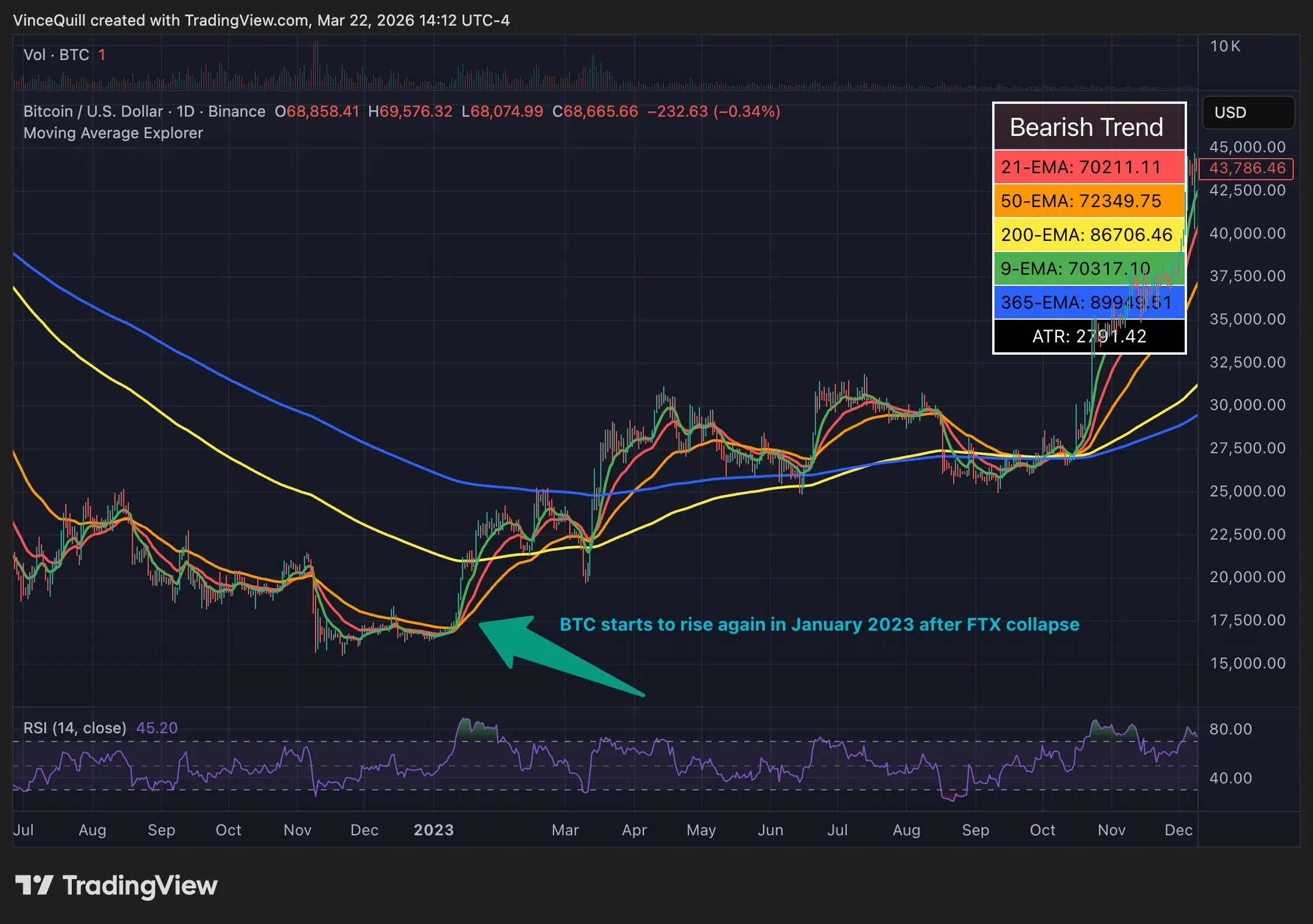 (Source: Trading View)
Scaramucci offers a unique perspective on the Bitcoin halving cycle that differs from technical analysis. He emphasizes that the cycle’s persistence is driven by the collective belief of market participants.
“We are in a four-year cycle. Some traditional whales and veteran players believe in this four-year cycle. Guess what happens when you believe in something? You create a self-fulfilling prophecy.”
This logic suggests that the effectiveness of the Bitcoin halving cycle is not solely based on supply fundamentals—such as the halving of block rewards approximately every four years, which reduces new Bitcoin issuance—but also partly on the collective actions of large holders who act based on this belief. When many institutional investors and long-term holders believe in the cycle’s existence, the cycle tends to continue to self-fulfill.
Current Bear Market Interpretation: Normal Adjustment After the $126,000 All-Time High
Scaramucci admits that the market previously expected Bitcoin to rise to $150,000 in 2025, driven by pro-cryptocurrency policies and improved regulation under Trump. However, the market crash in October caused Bitcoin to plummet sharply from the all-time high of around $126,000 to a low of $60,000, breaking market consensus.
Bitcoin is currently trading around $67,724. Last week, Bitcoin fell below $69,000 amid ongoing geopolitical tensions in Iran, and the S&P 500 closed below its 200-day moving average for the first time in 10 months. Some analysts warn that if Bitcoin continues to maintain a strong correlation with the S&P 500, its price could further decline by 50% by 2026.
In response, Scaramucci references early 2023 history: after the collapse of the FTX exchange in November 2022, Bitcoin bottomed during the market’s most pessimistic period and began rising again in January 2023. “It was precisely during times of extreme apathy and disinterest in Bitcoin that the bull market restarted,” he said, characterizing the current bear market as a “normal” correction similar to past cycles.
Conditions for Q4 Rebound and Potential Risks
Scaramucci’s Confidence in Q4
Historical Pattern of the Halving Cycle: Bitcoin generally follows a four-year cycle of “three years up, one year down,” with peaks typically occurring 12 to 18 months after the 2024 halving.
Long-term ETF Capital Inflows: Continuous inflows of institutional investment via Bitcoin ETFs have smoothed out the volatility of individual cycles but have also established a higher capital base for each cycle.
Contrarian Market Sentiment Indicator: The current market pessimism resembles the lows of the 2022-2023 bear market, which historically has been an optimal entry point.
However, this forecast is not without controversy. Industry analysts, fund managers, and market participants continue debating whether the four-year halving cycle has been permanently altered by institutionalization; macro risks such as the Iran war, U.S. inflation pressures, and shifts in global central bank policies could delay or compress the Q4 rebound window.
FAQs
What exactly is the Bitcoin halving cycle?
Bitcoin halving occurs approximately every four years, reducing the block reward for miners by 50%, directly decreasing the rate of new Bitcoin supply. Historically, about 12 to 18 months after each halving, Bitcoin tends to enter a rapid price increase phase, forming the so-called four-year halving cycle.
Why does Scaramucci believe the current bear market does not signal the end of the cycle?
He cites early 2023 history: the extreme pessimism following the FTX collapse was characteristic of the period before a bull market begins. He believes that the current market’s apathy and sell-off are normal profit-taking behaviors by long-term holders at the $100,000 psychological level, not signs of a structural cycle collapse.
Has institutionalization weakened the effectiveness of the Bitcoin halving cycle?
Scaramucci acknowledges that large inflows from institutional investors and Bitcoin ETFs have made cycle fluctuations “more subdued,” reducing extreme swings within individual cycles. However, he believes this has not entirely erased the cycle structure, especially since veteran whale players who believe in the four-year cycle continue to act collectively, reinforcing the self-fulfilling mechanism.
Disclaimer: The information on this page may come from third parties and does not represent the views or opinions of Gate. The content displayed on this page is for reference only and does not constitute any financial, investment, or legal advice. Gate does not guarantee the accuracy or completeness of the information and shall not be liable for any losses arising from the use of this information. Virtual asset investments carry high risks and are subject to significant price volatility. You may lose all of your invested principal. Please fully understand the relevant risks and make prudent decisions based on your own financial situation and risk tolerance. For details, please refer to
Disclaimer.


