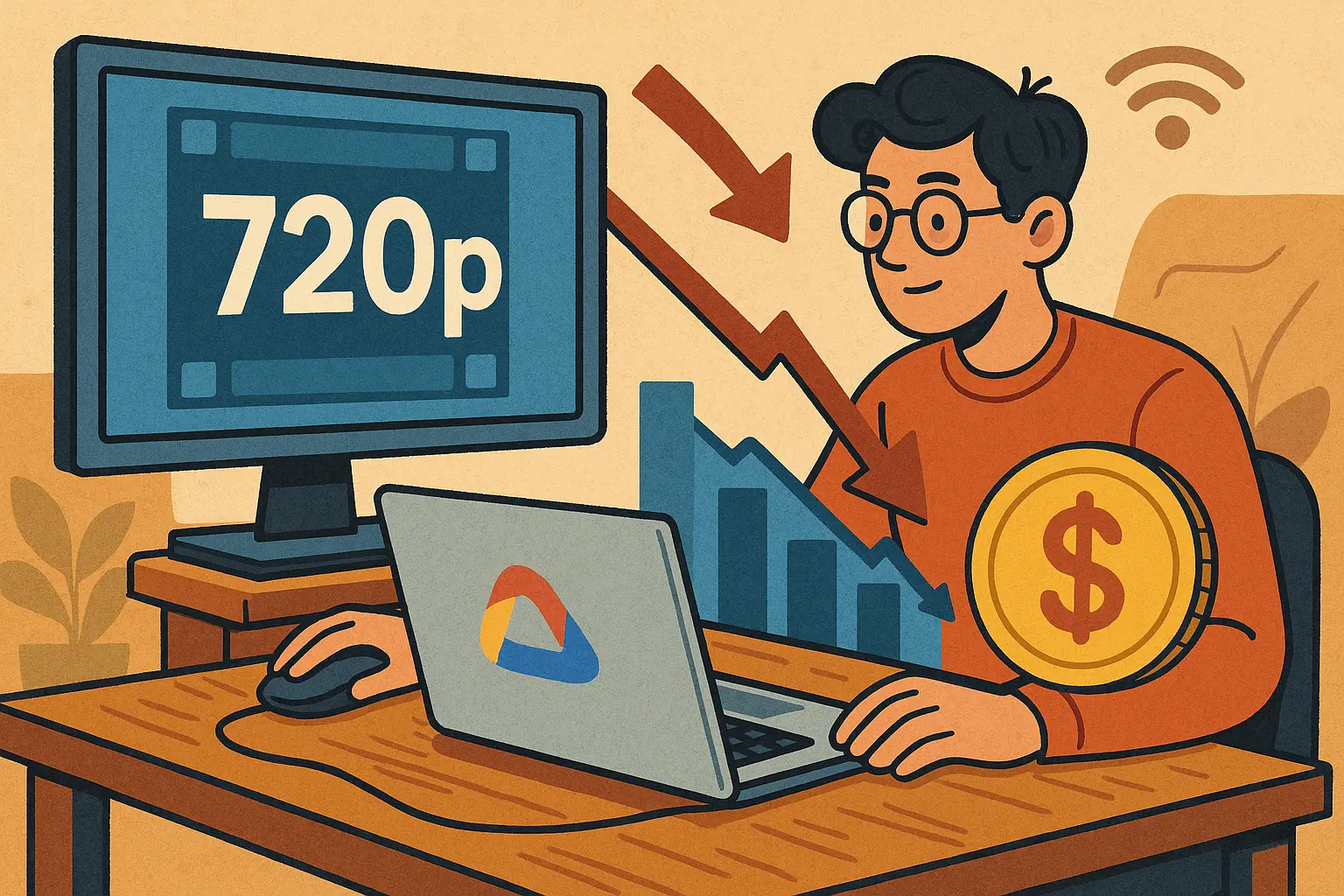
Google officially launches Veo 3.1 Lite, positioned as the lowest-cost video generation model in the Veo 3.1 series. Veo 3.1 Lite is priced at $0.05 per second at 720p resolution. Its generation speed is the same as Veo 3.1 Fast, but its cost is less than one-third; Google also announced that starting April 7, it will reduce Veo 3.1 Fast’s pricing across the board.
Veo 3.1 Lite Full Specifications: Cost, Resolution, and Features at a Glance
The core value proposition of Veo 3.1 Lite is to achieve the same generation speed as the Fast version through a significantly reduced cost:
720p pricing: $0.05 per second (full cost for an 8-second video: $0.40)
1080p pricing: $0.08 per second
Supported resolutions: 720p and 1080p; does not support 4K output
Video duration: choose 4 seconds, 6 seconds, or 8 seconds; the cost is calculated proportionally to duration
Aspect ratio formats: two options—landscape (16:9) and portrait (9:16)
Input modes: supports both text-to-video and image-to-video
Audio: includes audio generation by default; no additional configuration required
Taking an 8-second 720p video as an example: the full cost of Veo 3.1 Lite is $0.40, while Veo 3.1 Fast’s current price is $1.20 ($0.15 × 8), meaning the cost difference reaches three times. Google says this version “enables developers to build high-volume video applications at less than half the cost of Veo 3.1 Fast.”
Price cut in sync on April 7: Veo 3.1 Fast pricing lowered across the board
Google also announced that starting April 7, it will lower the pricing for all resolutions of Veo 3.1 Fast, as follows:
720p: $0.15 → $0.10 per second (about a 33% drop) 1080p: $0.15 → $0.12 per second (about a 20% drop) 4K: $0.35 → $0.30 per second (about a 14% drop)
After the adjustment, Veo 3.1 Lite (720p $0.05/sec) is still half the price of the discounted Fast version (720p $0.10/sec). The positioning differences between the two models are even clearer: the Lite edition targets cost-sensitive high-frequency usage scenarios, while the Fast edition targets applications with higher requirements for output quality.
Developer selection guide: Suitable scenarios for three Veo 3.1 versions
Google’s official statement notes that the release of Veo 3.1 Lite “rounds out the Veo 3.1 model series and provides developers with flexible solutions to choose based on their needs.” From a practical selection perspective, different application scenarios map to different optimal choices. For high-frequency usage scenarios such as bulk generation of social media content and e-commerce advertising video tools, as well as large-scale production of educational videos, the low unit cost of Veo 3.1 Lite greatly improves commercial viability; for professional scenarios with strict video quality requirements—such as brand advertising and movie-level previews—the discounted Veo 3.1 Fast or the 4K version provides higher output standards.
Frequently Asked Questions
What is the core difference between Veo 3.1 Lite and Veo 3.1 Fast?
The two models have the same generation speed. The core differences are cost and maximum resolution: the Lite version’s 720p price is $0.05 per second, and after April 7 the Fast version drops to $0.10 per second—there is still a 2x gap between them. The Lite version supports up to 1080p and does not offer 4K output, making it suitable for cost-sensitive applications with resolution needs within 1080p.
How do you integrate and use Veo 3.1 Lite?
Veo 3.1 Lite is now officially available through the Gemini API and the paid tier of Google AI Studio. Developers can consult Google’s developer documentation to get the full API specifications and usage instructions. It supports immediate integration and does not require any additional qualification.
What impact will this pricing adjustment have on the AI video generation market?
Google simultaneously launches a lower-cost Lite version and lowers the Fast version’s price, showing that the marginal cost of AI video generation is declining rapidly. This pricing push may put pressure on competitors such as Runway and Sora, while also significantly lowering the barrier for small and medium-sized developers to integrate AI video features into products—potentially accelerating the adoption of this application scenario across a broader market.
Disclaimer: The information on this page may come from third parties and does not represent the views or opinions of Gate. The content displayed on this page is for reference only and does not constitute any financial, investment, or legal advice. Gate does not guarantee the accuracy or completeness of the information and shall not be liable for any losses arising from the use of this information. Virtual asset investments carry high risks and are subject to significant price volatility. You may lose all of your invested principal. Please fully understand the relevant risks and make prudent decisions based on your own financial situation and risk tolerance. For details, please refer to
Disclaimer.


