On April 29, 2025, the global cryptocurrency market experienced a slight wave of liquidation. According to Coinglass data, a total of 108,119 investors around the world were liquidated in the past 24 hours, with a total liquidation amount of $257 million. While the data is not shocking, it is a reminder that investors need to pay more attention to risk management in volatile markets.
This article will conduct a multi-level data analysis to delve into the main characteristics of this liquidation event, the major cryptocurrencies involved, the market driving factors, and the implications for investors. We hope that a comprehensive analysis of market dynamics will provide investors with practical risk management advice and insights into future market trends.
Check liquidation data immediately:
Liquidation Overview: General Data Analysis
In the past 24 hours, there have been a total of 108,119 liquidation events in the global cryptocurrency derivatives market, with a total liquidation amount reaching 257 million USD.
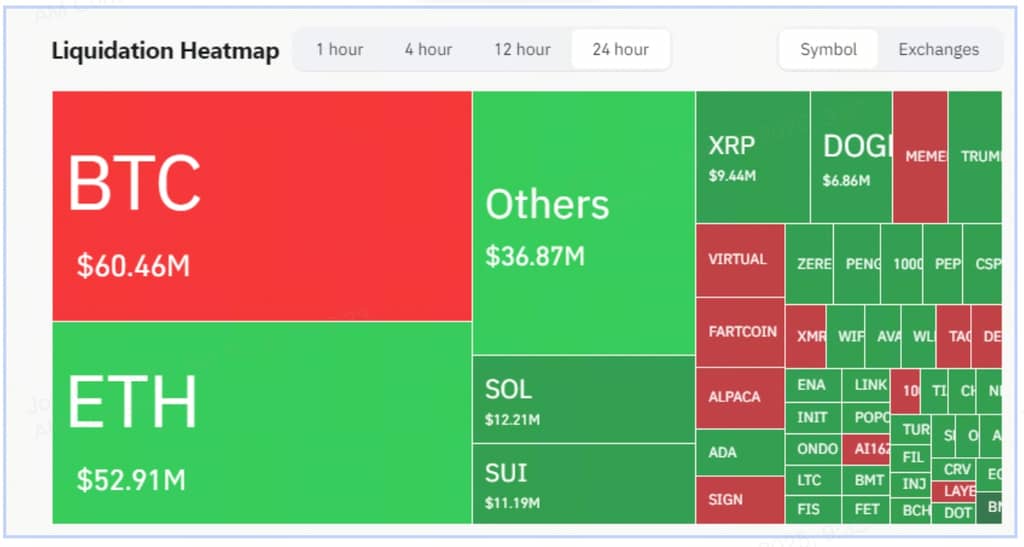
In this liquidation wave, the distribution of the liquidation amounts for major cryptocurrencies is as follows:
BTC: The liquidation amount is $60.46 million, accounting for 23.5% of the total liquidation amount. As the market leader, BTC has the largest trading volume and open interest, and its price fluctuations directly impact market sentiment. Recently, the price of BTC has been oscillating near key resistance levels, which may have triggered a large number of leveraged order liquidations.
ETH: Liquidation amount of $52.91 million, accounting for 20.6%. The liquidation scale of ETH is close to that of BTC, reflecting its high activity in the derivatives market. Market expectations for ETH’s technical upgrades (such as the Pectra upgrade) may lead some investors to become over-leveraged.
SOL: Liquidation amount of $12.21 million, accounting for 4.4%. The liquidation amount of SOL is relatively low, but it indicates its appeal in the high-performance blockchain sector. The recent growth of the SOL ecosystem may have attracted more leveraged traders.
XRP: $9.44 million in liquidation, accounting for 3.7%. The liquidation of XRP is closely related to the recent decision of the US SEC to approve three XRP ETFs. Judging from the specific data, the liquidation amount of the long chase order is more than 1 times that of the short order, indicating that the market’s reaction to the ETF approval has been priced in advance, resulting in a price correction triggering liquidation.
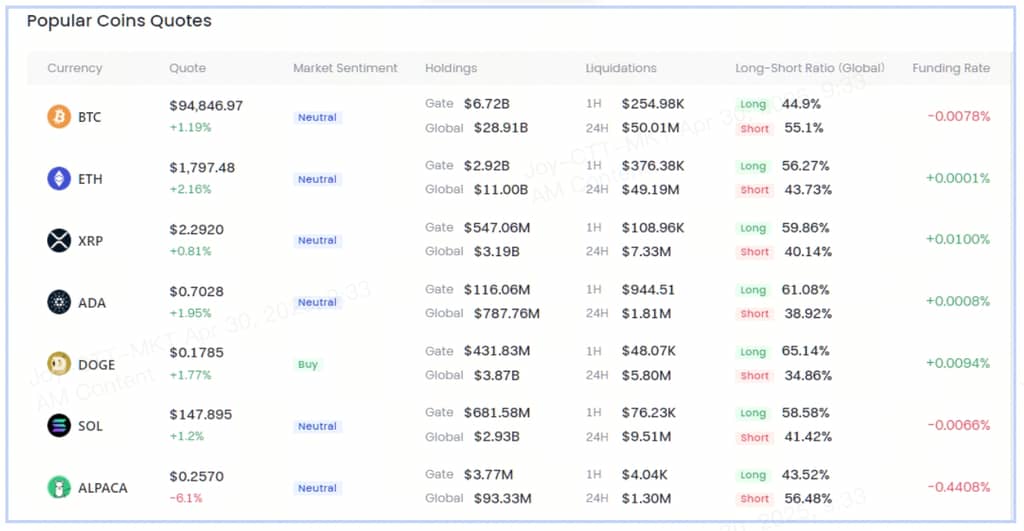
Specifically for Gate.io, the liquidation data is shown in the figure below, which is basically consistent with the overall network data ratio.
Analysis of Market Volatility and Liquidation Reasons
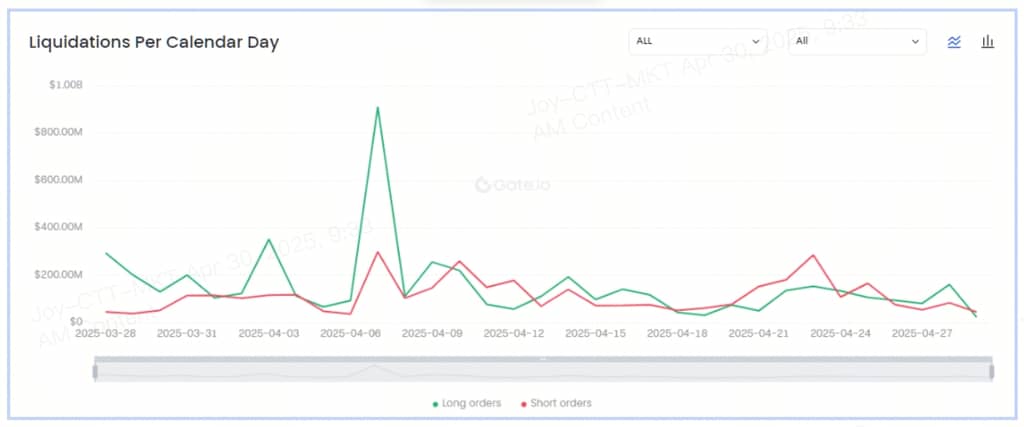
The occurrence of liquidation events is usually related to market volatility and specific event-driven factors. Although the overall market has seen relatively small fluctuations in the past 24 hours, localized price jumps and event-driven speculation have intensified the scale of liquidations.
XRP ETF Event: The US SEC approved 3 XRP ETFs on April 28, and this positive news should have driven up the price of XRP. However, the market seemed to have already priced in this expectation, leading to a price correction after the event. The liquidation amount of long orders significantly exceeded that of short orders, indicating that some investors were overly optimistic before the event and failed to adjust their positions in time.
Market Dominance of BTC and ETH: The liquidation amount of BTC and ETH accounts for nearly 50% of the total amount, reflecting their role as market barometers. When the price of BTC or ETH reaches key technical levels (such as support or resistance), market sentiment may quickly shift, leading to a chain liquidation.
Technical Trigger: Analysis from the Coinglass heatmap shows that liquidation events are often concentrated during periods of rapid price fluctuations. Leverage orders accumulate near key price points, and once the price breaks through, it triggers a chain liquidation.
In addition, the rapid changes in market sentiment have also intensified liquidations. For example, some investors may leverage due to short-term positive news (such as XRP ETF), but fail to foresee the complexity of market dynamics, resulting in their positions being liquidated.
In the face of frequent liquidation events, investors need to adopt the following risk management strategies to reduce losses:
Control leverage multiples: High leverage amplifies profits but also increases risks. It is recommended that investors choose low to medium leverage multiples (such as 2-5 times) based on their risk tolerance.
Set stop-loss and take-profit: Set clear stop-loss and take-profit points when opening a position to avoid total loss due to sudden market fluctuations.
Diversified Investment: Avoid concentrating funds on a single cryptocurrency or a single directional order; diversifying investments can effectively reduce systemic risk.
Pay attention to market dynamics: Track market clearing trends through Coinglass futures liquidation data and adjust positions in a timely manner.
Use hedging tools: Hedge potential risks through options or inverse contracts, especially before and after significant events (such as ETF approvals).
Future Outlook: Market Trend Forecast
The volatility of the cryptocurrency market is expected to continue, especially the volatility of AI, Meme, and SUI ecosystem-related tokens may far exceed that of other sectors, and liquidation events will remain a norm in derivatives trading. Here are a few key predictions for future market trends:
Short-term volatility: The price movements of BTC and ETH will continue to dominate market sentiment, and investors should pay attention to key technical levels and macroeconomic events (such as Federal Reserve interest rate decisions).
Event-Driven Opportunities: Regulatory events such as XRP ETFs are likely to continue to fuel the market, and investors need to be wary of deviations between expectations and actual results.
Long-term stability: As institutional investors increase and the regulatory framework improves, market liquidity may improve, but short-term volatility still needs to be handled with caution.
Conclusion
The cryptocurrency market is known for its high leverage and high volatility, and liquidation is the norm. Through data analysis, we found that market fluctuations, event-driven factors, and leveraged trading are the main reasons for liquidations. In the future, investors need to cope with market uncertainties by controlling leverage, setting stop-loss orders, and diversifying investments.
Risk Warning: The content of this article is for reference only and does not constitute any investment advice. Investing in cryptocurrency derivatives involves high risk and may result in financial loss. Investors should bear the risk themselves.
Author: Charle A., Gate.io researcher
*This article only represents the author’s views and does not constitute any trading advice. Investing involves risks, and decisions should be made with caution.
*The content of this article is original and the copyright belongs to Gate.io. If reprinted, please indicate the author and source, otherwise legal responsibility will be pursued.
View Original
This page may contain third-party content, which is provided for information purposes only (not representations/warranties) and should not be considered as an endorsement of its views by Gate, nor as financial or professional advice. See Disclaimer for details.
Get Liquidated analysis: Over 100,000 people globally were liquidated within 24 hours, with a total amount reaching $257 million.
Introduction
On April 29, 2025, the global cryptocurrency market experienced a slight wave of liquidation. According to Coinglass data, a total of 108,119 investors around the world were liquidated in the past 24 hours, with a total liquidation amount of $257 million. While the data is not shocking, it is a reminder that investors need to pay more attention to risk management in volatile markets.
This article will conduct a multi-level data analysis to delve into the main characteristics of this liquidation event, the major cryptocurrencies involved, the market driving factors, and the implications for investors. We hope that a comprehensive analysis of market dynamics will provide investors with practical risk management advice and insights into future market trends.
Check liquidation data immediately:
Liquidation Overview: General Data Analysis
In the past 24 hours, there have been a total of 108,119 liquidation events in the global cryptocurrency derivatives market, with a total liquidation amount reaching 257 million USD.
In this liquidation wave, the distribution of the liquidation amounts for major cryptocurrencies is as follows:
Specifically for Gate.io, the liquidation data is shown in the figure below, which is basically consistent with the overall network data ratio.
Analysis of Market Volatility and Liquidation Reasons
The occurrence of liquidation events is usually related to market volatility and specific event-driven factors. Although the overall market has seen relatively small fluctuations in the past 24 hours, localized price jumps and event-driven speculation have intensified the scale of liquidations.
In addition, the rapid changes in market sentiment have also intensified liquidations. For example, some investors may leverage due to short-term positive news (such as XRP ETF), but fail to foresee the complexity of market dynamics, resulting in their positions being liquidated.
Investor Coping Strategies: Risk Management Recommendations
In the face of frequent liquidation events, investors need to adopt the following risk management strategies to reduce losses:
Future Outlook: Market Trend Forecast
The volatility of the cryptocurrency market is expected to continue, especially the volatility of AI, Meme, and SUI ecosystem-related tokens may far exceed that of other sectors, and liquidation events will remain a norm in derivatives trading. Here are a few key predictions for future market trends:
Conclusion
The cryptocurrency market is known for its high leverage and high volatility, and liquidation is the norm. Through data analysis, we found that market fluctuations, event-driven factors, and leveraged trading are the main reasons for liquidations. In the future, investors need to cope with market uncertainties by controlling leverage, setting stop-loss orders, and diversifying investments.
Risk Warning: The content of this article is for reference only and does not constitute any investment advice. Investing in cryptocurrency derivatives involves high risk and may result in financial loss. Investors should bear the risk themselves.
Author: Charle A., Gate.io researcher *This article only represents the author’s views and does not constitute any trading advice. Investing involves risks, and decisions should be made with caution. *The content of this article is original and the copyright belongs to Gate.io. If reprinted, please indicate the author and source, otherwise legal responsibility will be pursued.