

Trade
Trading Type
Spot
Trade crypto freely
Pre-Market
Trade new tokens before they are officially listed
Margin
Magnify your profit with leverage
Convert & Block Trading
0 Fees
Trade any size with no fees and no slippage
Alpha
Points
Get promising tokens in streamlined on-chain trading
Leveraged Tokens
Get exposure to leveraged positions simply
Futures
Futures
Hundreds of contracts settled in USDT or BTC
Options
HOT
Trade European-style vanilla options
Unified Account
Maximize your capital efficiency
Demo Trading
Futures Kickoff
Get prepared for your futures trading
Futures Events
Participate in events to win generous rewards
Demo Trading
Use virtual funds to experience risk-free trading
Earn
Launch
CandyDrop
Collect candies to earn airdrops
Launchpool
Quick staking, earn potential new tokens
HODLer Airdrop
Hold GT and get massive airdrops for free
Launchpad
Be early to the next big token project
Alpha Points
NEW
Trade on-chain assets and enjoy airdrop rewards!
Futures Points
NEW
Earn futures points and claim airdrop rewards
Investment
Simple Earn
Earn interests with idle tokens
Auto-Invest
Auto-invest on a regular basis
Dual Investment
Buy low and sell high to take profits from price fluctuations
Soft Staking
Earn rewards with flexible staking
Crypto Loan
0 Fees
Pledge one crypto to borrow another
Lending Center
One-stop lending hub
VIP Wealth Hub
Customized wealth management empowers your assets growth
Private Wealth Management
Customized asset management to grow your digital assets
Quant Fund
Top asset management team helps you profit without hassle
Staking
Stake cryptos to earn in PoS products
BTC Staking
HOT
Stake BTC and earn 10% APR
GUSD Minting
Use USDT/USDC to mint GUSD for treasury-level yields


More
Promotions
Activity Center
Join activities and win big cash prizes and exclusive merch
Referral
20 USDT
Earn 40% commission or up to 500 USDT rewards
Announcements
Announcements of new listings, activities, upgrades, etc
Gate Blog
Crypto industry articles
VIP Services
Huge fee discounts
Proof of Reserves
Gate promises 100% proof of reserves

Trending Topics
View More144K Popularity
14.53K Popularity
91.49K Popularity
1.59K Popularity
2.12K Popularity




Pin
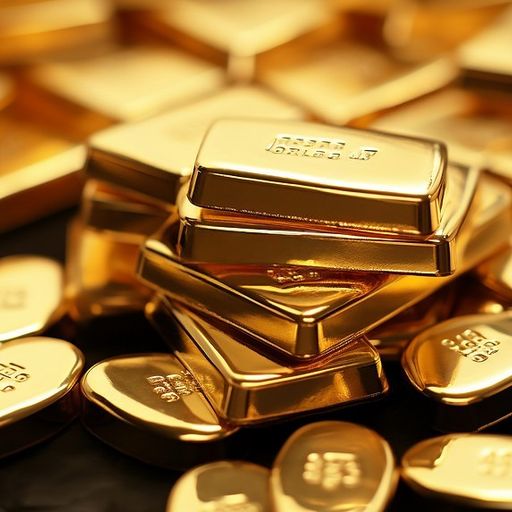
Bitcoin's Decade of Victory: Data Analysis of "Top Assets," but Are Gold and Silver Not Losers?
When traditional safe-haven assets like gold shine brightly and hit new highs in 2025, a challenger from the digital world—Bitcoin—has long been writing a stunning return legend over a longer investment cycle.
Crypto analyst Adam Livingston recently pointed out that over the past decade, Bitcoin’s performance has significantly outperformed gold and silver, earning it the title of “top asset.” Who truly wins in this race across new and old asset classes? How should investors interpret these differences? This article will provide an in-depth analysis.
Data Speaks: A “Dimensionality Reduction” in a Different Context
The most straightforward way to understand Bitcoin’s rise is to examine the data. Crypto analyst Adam Livingston provided a key comparison: since 2015, Bitcoin’s cumulative increase has reached an astonishing approximately 27,701%. In contrast, the so-called “ever-lasting” hard currency gold has increased by about 283% over the same period; silver, which has both industrial and financial attributes, has risen by approximately 405%. From a pure multiple growth perspective, Bitcoin’s returns are dozens to hundreds of times greater than those of traditional precious metals.
More specifically, according to data from the leading global trading platform Gate as of December 29, the Bitcoin price is approximately $89,784, with a market cap of $1.79 trillion. In comparison, although gold prices soared to a historic high of about $4,533 per ounce in 2025, even at its current price of around $4,471 per ounce, its scale and growth remain in a different league from Bitcoin. Silver recently approached a historic threshold of $80 per ounce but has fallen back to around $75.90 per ounce.
Fundamental Difference: The Root of Scarcity Logic
Why is there such a huge long-term performance gap? The key lies in the fundamentally different value logic between Bitcoin and gold, silver.
Matt Golliher, co-founder of wealth management firm Orange Horizon Wealth, clarified the core: traditional commodities (like gold and silver) tend to converge in price toward their production costs over the long term. When prices rise, it stimulates more exploration and mining investments, increasing supply and ultimately exerting downward pressure on prices. This is a supply-demand balance mechanism constrained by physical world resources.
However, Bitcoin’s design completely overturns this paradigm. Its total supply is pre-set at 21 million coins and is immutable. This “absolute scarcity” is a mathematical fact encoded in the protocol, unaffected by any mining output or technological advances. This means Bitcoin’s price discovery process is entirely driven by market demand, and its scarcity does not change with price increases. This unique attribute has led many investors to see it as the ultimate store of value amid the macro backdrop of continuous fiat currency issuance.
Controversies and Counterarguments: How to View Different Time Windows?
Of course, this view is not without controversy. Peter Schiff, a well-known gold advocate and Bitcoin critic, countered that comparisons should focus on more recent periods. He argued that if only the past four years’ performance is considered, the conclusion might be very different, claiming “the era of Bitcoin is over.”
This controversy precisely reveals the characteristics of different asset classes. Take 2025 as an example: gold performed extremely strongly, with an annual increase of over 70%, potentially marking its best year since 1979. Silver soared about 166% within the year, with astonishing momentum. In contrast, Bitcoin’s price during the same period was relatively stagnant, even slightly declining within the year.
Short-term performance differences are often driven by macroeconomic conditions during specific periods. In 2025, geopolitical tensions, ongoing central bank gold purchases, and market expectations of Fed rate cuts jointly fueled a super bull market for precious metals. Meanwhile, the crypto market may be digesting previous gains and waiting for new catalysts.
Macro Consensus: Weakening US Dollar, Long-term Tailwinds for Scarce Assets?
Despite short-term divergences, from a broader macro perspective, Bitcoin and gold, silver may share a long-term favorable environment.
Market observers like Arthur Hayes, co-founder of BitMEX, believe that the Fed’s loose monetary policy and the resulting dollar weakening will serve as long-term drivers for all scarce assets. In 2025, the US dollar index (DXY) fell nearly 10% within the year, marking one of its worst annual performances in a decade. Under the expectation of dollar credit dilution, both the historically established gold and the digitally native Bitcoin will highlight their attributes as non-sovereign, inflation-resistant assets.
Conclusion and Outlook: Complementary rather than Replacing, Start Your Allocation Journey on Gate
A decade of data comparison clearly shows that Bitcoin, as an emerging asset class, demonstrates unprecedented growth potential and disruptive qualities. Its mathematically encoded absolute scarcity offers a value narrative entirely different from physical commodities.
However, this does not mean Bitcoin will simply “replace” gold. The strong performance of gold in 2025 proves its unshakable status as a “safe harbor” during global financial turbulence. The relationship between the two is more complementary than conflicting: gold represents a store of tangible wealth tested over thousands of years, while Bitcoin symbolizes a new exploration of monetary sovereignty and value storage in the digital age.
For savvy investors, understanding the different logic and driving cycles of these two assets is crucial. Against the backdrop of a weakening dollar and global pursuit of high-quality scarce assets, both gold, silver, and Bitcoin may play important roles in the future.
If you wish to personally track, analyze, and trade these assets of the era, Gate platform offers you professional, secure, one-stop services. You can conveniently access real-time prices, depth charts, and market data for Bitcoin, while also monitoring global macro dynamics to lay a solid foundation for your investment decisions.