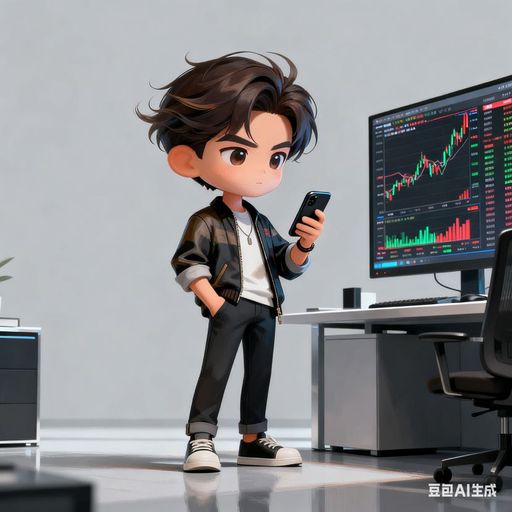
Getting into the circle to trade, I initially thought that a few indicators and some understanding of K-line charts would be enough. Only after struggling in the market for a few years did I realize that this is not a technical issue at all—those losing moments are often when your own mind is fighting against itself.
Let me say something heartfelt. People who make money are never technical masters; they are those who can control their hands and stick to discipline. The biggest enemy in this market is your own emotions.
**Trading Driven by Emotions Has the Highest Cost**
When I first entered the circle, my biggest mistake was following the herd. When the market rose, all I saw were calls like "Get on board quickly," and I impulsively chased after them—only to get caught at a high position. When the market reversed, panic would instantly overwhelm reason, and cutting losses became the only option. Entering and exiting, paying fees along the way, and my mindset was completely ruined.
Conversely, during sharp declines, everyone shouted even louder, and I would panic along with them. But if I had calmed down and looked carefully at that time, many times it was actually an opportunity. However, I had already run out. Emotional trading is like going all-in in mahjong—winning is truly joyful, but losing can bankrupt you.
**Full Position is the Biggest Betrayal to Yourself**
I’ve seen too many people who, when a certain coin rises nicely, throw all their assets into it. What kind of strategy is that? That’s gambling. Once your position is full, your entire mindset collapses—any little wind or wave can keep you awake at night.
The problem is, in this state of mind, your judgment is greatly impaired. Trends that were clear before become doubtful after you go all-in. And the market never lacks opportunities; what’s missing? What’s missing is whether you still have money left to catch the real opportunity when it comes.
My current logic is simple: always leave enough ammunition for yourself. That way, when the market is good, you have the capacity to add positions; when the market is bad, you won’t be forced to liquidate. This is the way to survive longer in the crypto market.
**If You Don’t Know What Will Happen, Don’t Make Random Moves**
The most亏损 (biggest losses) often happen during these times: sideways at high levels,震荡 (oscillations) at low levels, market in a very ambiguous state. At this point, you don’t know whether it’s a false breakout or a real breakout, nor whether it will continue downward or rebound.
Retail traders are most prone to making the mistake of guessing the direction. Instead of wasting time on “I think it should do this or that,” it’s better to admit: there’s not enough information now, I don’t understand. Stay out of the market, wait and see the trend, let it tell you what to do. This choice is much smarter than gambling on luck.
I have a friend who particularly hates missing out on opportunities. As a result, he keeps entering and exiting during a very ambiguous sideways market, trading every day. It looks busy, but in reality, he’s just paying fees to the exchange. When the market finally clarifies, he’s already been worn out and has no patience left.
**During Sideways Markets, the Most Advanced Operation Is Not to Operate**
I’ve noticed an interesting phenomenon: in many people’s loss records, the densest losses happen during sideways periods. Why? Because sideways is essentially a standoff between bulls and bears, with no clear advantage. Repeatedly entering and exiting during this time, you pay enough fees to turn a potentially profitable trade into a loss.
Moreover, every entry and exit disrupts your trading rhythm. Your original plan gets thrown off by these small moves, and your mindset fluctuates accordingly. Someone who plays sideways for a long time finds that not only did they not make money, but they also lost some. But when asked, they can’t even clearly explain what went wrong—it's just that in unconscious tinkering, the market’s liquidity ate them up.
**Final Words**
Looking back at these years of trading, the moments when I made money often came with the most boring processes. Less action, fewer emotions, more thinking—this sounds boring, but it’s the real nature of this market. Bitcoin and the entire crypto market fluctuate daily, opportunities are constantly emerging, but the prerequisite is that you are still alive in this market—and the first key to survival is controlling your own hands.
This page may contain third-party content, which is provided for information purposes only (not representations/warranties) and should not be considered as an endorsement of its views by Gate, nor as financial or professional advice. See Disclaimer for details.
15 Likes
Reward
15
6
Repost
Share
Comment
0/400
rugpull_survivor
· 01-06 13:51
The moment I cut my full position was truly awakening; the trading fees ate up all the profits.
Fighting in sideways markets is the most亏损; it's better to stay calm and see clearly before acting.
The most profitable years were actually the days when I did nothing.
People whose gambling instincts can't be changed will eventually be taught a lesson by the market.
Waiting for the opportunity to become clear before taking action is much more reliable than messing around all day.
When the mindset collapses, judgment is completely lost; losing money has never been a technical issue.
Being fully out of the market and waiting is really uncomfortable, but it's much better than blindly chasing highs.
Being emotionally hijacked is like giving away money; we've been repeatedly beaten by the market.
The key is to keep ammunition; running out of money is when the real panic sets in.
Friends who trade every day end up破产 due to trading fees, and now they have completely lost confidence.
View OriginalReply0
TestnetFreeloader
· 01-03 20:40
Exactly right, going all-in is just courting death.
Listen, this guy says that sideways trading without moving is the real trick; reckless hands are the root of losing money.
Really, I've seen too many people go bankrupt because of fees.
Waiting in cash is the true way of professional traders.
Controlling your hands is the key to longevity; this phrase must be engraved in your mind.
View OriginalReply0
OldLeekMaster
· 01-03 15:55
Honestly, I've also gone all-in before, and it was a disaster.
Controlling your hands is the hardest thing of all, I admit it.
Not trading during sideways periods can really help you survive longer, and that’s a hard lesson.
Chasing into high positions and taking losses, paying fees until it hurts, is a bloody lesson.
Waiting for the market to really clarify before acting, and the opportunity is gone—it's truly heartbreaking.
Keeping some ammunition now, I believe in it, or else getting forcibly liquidated and wiped out is just over.
The worst is wanting to gamble when you can't see clearly, and often that one gamble is all it takes to lose everything.
Once, during a three-day sideways market, I traded five times, and in the end, I found that the fees ate up all my profits—I was really convinced by myself.
Controlling your hands is a thousand times harder than understanding K-line charts, and I believe that now.
View OriginalReply0
SpeakWithHatOn
· 01-03 15:52
Bro, that really hits home, especially the part about being fully invested.
I used to have this problem too—whenever I saw a rise, I would go all in, and ended up being locked out for three months.
Consolidation phases are indeed a trap; the fees can eat you alive.
I agree, it's really not a technical issue, it's just that you can't control your hands.
That's why I only keep 30% of my position now—having some discipline is the key to survival.
You're right, emotions are the biggest enemy, harder to guard against than any K-line pattern.
View OriginalReply0
MissedAirdropAgain
· 01-03 15:48
This is the real talk, more reliable than those promoting overnight riches.
Controlling your hands is really the hardest part. I'm the kind of person who loses money every day on surgery fees.
How are those who are fully invested doing now? They should be almost liquidated.
Sideways trading without movement is really uncomfortable. Missing opportunities actually saves money for yourself.
Haha, my friend is the same. Daily trading results in most of the fees eaten up.
No doubt about it, but when it comes to execution, no one can really bear it.
It's never the skill that makes money, but the mindset.
I just want to ask, does your theory work in a bear market?
View OriginalReply0
FastLeaver
· 01-03 15:37
Honestly, I’ve also been all-in during that wave, and I really couldn’t sleep at night.
Controlling your hands is more important than any technical skill; I realized this too late.
Sideways trading is the most torturous; constantly entering and exiting is just working for the exchange for free.
Once emotions take over, it’s all over. I used to lose the most when chasing gains and cutting losses.
Waiting with an empty position is really difficult, but it seems to be the way to live the longest.
Haha, that friend is busy every day, and as a result, all profits are eaten up by fees.
The biggest lesson in these years is to learn to keep quiet; doing nothing actually makes money.
The moment I went all-in, I knew it was GG, but I still couldn’t control myself.
What’s the use of understanding K-line patterns? If you can’t get past your mindset, it’s all pointless.
There are so many opportunities, but the real question is whether you’re still alive to seize that day.
Getting into the circle to trade, I initially thought that a few indicators and some understanding of K-line charts would be enough. Only after struggling in the market for a few years did I realize that this is not a technical issue at all—those losing moments are often when your own mind is fighting against itself.
Let me say something heartfelt. People who make money are never technical masters; they are those who can control their hands and stick to discipline. The biggest enemy in this market is your own emotions.
**Trading Driven by Emotions Has the Highest Cost**
When I first entered the circle, my biggest mistake was following the herd. When the market rose, all I saw were calls like "Get on board quickly," and I impulsively chased after them—only to get caught at a high position. When the market reversed, panic would instantly overwhelm reason, and cutting losses became the only option. Entering and exiting, paying fees along the way, and my mindset was completely ruined.
Conversely, during sharp declines, everyone shouted even louder, and I would panic along with them. But if I had calmed down and looked carefully at that time, many times it was actually an opportunity. However, I had already run out. Emotional trading is like going all-in in mahjong—winning is truly joyful, but losing can bankrupt you.
**Full Position is the Biggest Betrayal to Yourself**
I’ve seen too many people who, when a certain coin rises nicely, throw all their assets into it. What kind of strategy is that? That’s gambling. Once your position is full, your entire mindset collapses—any little wind or wave can keep you awake at night.
The problem is, in this state of mind, your judgment is greatly impaired. Trends that were clear before become doubtful after you go all-in. And the market never lacks opportunities; what’s missing? What’s missing is whether you still have money left to catch the real opportunity when it comes.
My current logic is simple: always leave enough ammunition for yourself. That way, when the market is good, you have the capacity to add positions; when the market is bad, you won’t be forced to liquidate. This is the way to survive longer in the crypto market.
**If You Don’t Know What Will Happen, Don’t Make Random Moves**
The most亏损 (biggest losses) often happen during these times: sideways at high levels,震荡 (oscillations) at low levels, market in a very ambiguous state. At this point, you don’t know whether it’s a false breakout or a real breakout, nor whether it will continue downward or rebound.
Retail traders are most prone to making the mistake of guessing the direction. Instead of wasting time on “I think it should do this or that,” it’s better to admit: there’s not enough information now, I don’t understand. Stay out of the market, wait and see the trend, let it tell you what to do. This choice is much smarter than gambling on luck.
I have a friend who particularly hates missing out on opportunities. As a result, he keeps entering and exiting during a very ambiguous sideways market, trading every day. It looks busy, but in reality, he’s just paying fees to the exchange. When the market finally clarifies, he’s already been worn out and has no patience left.
**During Sideways Markets, the Most Advanced Operation Is Not to Operate**
I’ve noticed an interesting phenomenon: in many people’s loss records, the densest losses happen during sideways periods. Why? Because sideways is essentially a standoff between bulls and bears, with no clear advantage. Repeatedly entering and exiting during this time, you pay enough fees to turn a potentially profitable trade into a loss.
Moreover, every entry and exit disrupts your trading rhythm. Your original plan gets thrown off by these small moves, and your mindset fluctuates accordingly. Someone who plays sideways for a long time finds that not only did they not make money, but they also lost some. But when asked, they can’t even clearly explain what went wrong—it's just that in unconscious tinkering, the market’s liquidity ate them up.
**Final Words**
Looking back at these years of trading, the moments when I made money often came with the most boring processes. Less action, fewer emotions, more thinking—this sounds boring, but it’s the real nature of this market. Bitcoin and the entire crypto market fluctuate daily, opportunities are constantly emerging, but the prerequisite is that you are still alive in this market—and the first key to survival is controlling your own hands.