

Trade
Basic
Futures
Futures
Hundreds of contracts settled in USDT or BTC
Options
HOT
Trade European-style vanilla options
Unified Account
Maximize your capital efficiency
Demo Trading
Futures Kickoff
Get prepared for your futures trading
Futures Events
Participate in events to win generous rewards
Demo Trading
Use virtual funds to experience risk-free trading
Earn
Launch
CandyDrop
Collect candies to earn airdrops
Launchpool
Quick staking, earn potential new tokens
HODLer Airdrop
Hold GT and get massive airdrops for free
Launchpad
Be early to the next big token project
Alpha Points
NEW
Trade on-chain assets and enjoy airdrop rewards!
Futures Points
NEW
Earn futures points and claim airdrop rewards
Investment
Simple Earn
Earn interests with idle tokens
Auto-Invest
Auto-invest on a regular basis
Dual Investment
Buy low and sell high to take profits from price fluctuations
Soft Staking
Earn rewards with flexible staking
Crypto Loan
0 Fees
Pledge one crypto to borrow another
Lending Center
One-stop lending hub
VIP Wealth Hub
Customized wealth management empowers your assets growth
Private Wealth Management
Customized asset management to grow your digital assets
Quant Fund
Top asset management team helps you profit without hassle
Staking
Stake cryptos to earn in PoS products
Smart Leverage
NEW
No forced liquidation before maturity, worry-free leveraged gains
GUSD Minting
Use USDT/USDC to mint GUSD for treasury-level yields

More



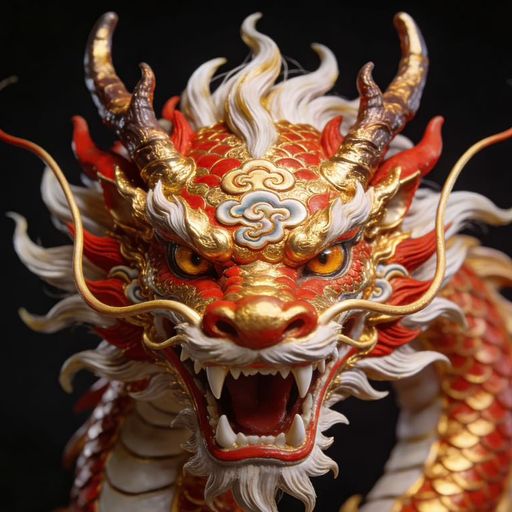

Meme Coins: The Digital Age and Compatibility with Islamic Financial Principles
Understanding the Nature of Meme Coins in the Context of Ethical Finance
Meme coins represent a distinct category of digital assets, emerging from internet culture, viral images on social media, and fleeting trends. Unlike traditional cryptocurrencies, these tokens rely primarily on community excitement, speculative spirit rather than substantive technological foundations. Inspired by humorous symbols like frogs or dogs, their value stems from social media attention, endorsements by influencers, and collective enthusiasm. However, these tokens lack genuine intrinsic utility or practical applications on blockchains.
For Muslim investors, a pressing question arises: are meme coins compatible with Islamic financial principles? These principles emphasize ethical integrity, fair risk sharing, and prohibit behaviors akin to gambling. A deeper exploration reveals that the volatile nature of these assets, coupled with the absence of tangible value creation, contradicts Shariah guidance. This calls for caution during a crypto market promising quick profits.
Shariah Standards and Evaluation of Digital Assets
Islamic finance is governed by Shariah principles derived from the Quran and Sunnah, establishing strict criteria for asset legitimacy. These include:
Pure origin - Assets must originate from halal sources, free from haram elements.
Proven economic value - Must have tangible utility or real productivity.
Legitimate utility - Applications should benefit society without harm.
Clear ownership structure - Rights and obligations must be transparent.
Organizations such as the Accounting and Auditing Organization for Islamic Financial Institutions (AAOIFI) evaluate digital assets based on these standards. They reject assets that evoke maisir (gambling) or gharar (excessive uncertainty).
Meme coins fail significantly in this regard. Their value is almost entirely derived from speculative trading, lacking real utility beyond price volatility. This mechanism resembles a casino, where profits for one come at the expense of another’s losses. Excessive volatility—often exceeding 100% in a single day—exacerbates the problem, encouraging reckless behavior and emotional trading, contrary to Islamic cautionary principles.
Red flags abound in the branding of these projects, with disrespectful memes that mock sacred values or promote excessive consumerism. Unlike Shariah-compliant tokens backed by tangible assets, meme coins lack real backing, making them high-risk investments for a Muslim portfolio.
Analysis of Prominent Meme Tokens’ Compliance
Top meme tokens clearly illustrate their incompatibility with Islamic standards through core speculation and lack of utility.
PEPE token, inspired by the Pepe the Frog meme, functions merely as a trading medium on Ethereum-compatible chains, with no real-world application or smart contract utility. It lacks economic productivity. Its documentation, if any, emphasizes community-driven excitement rather than intrinsic value, failing all Shariah tests for genuine worth.
Dogecoin (DOGE) started as a parody of Bitcoin in 2013, featuring the Shiba Inu meme but lacking a core purpose. Although occasional charitable donations occur, its fundamental mechanism remains inflationary and driven by speculation, inviting parallels to gambling through unlimited supply and pump-and-dump schemes.
WAWA Coin, positioning itself as community-focused, reflects a similar model. According to project details, it prioritizes social engagement over practical functions like payments or DeFi integration, making it another volatile game without halal utility.
None of these examples meet AAOIFI criteria. PEPE’s pure speculation evokes maisir, Dogecoin’s parody origin raises questions about purity, and WAWA’s community excitement lacks clear ownership rights.
Smart Meme and the Evolution of Token Technology
Some modern meme projects have attempted to incorporate “smart meme” elements—combining real utility with the appeal of meme imagery. However, even these efforts rarely meet strict Shariah standards. Any smart meme still relies on speculative mechanisms if utility is secondary, and the primary value remains driven by price fluctuations rather than practical application.
For a meme token to be considered compliant with Islamic principles, it must ensure: genuine and independently verifiable utility, economic value not dependent on temporary excitement, backing by real assets or cash flows, and third-party Shariah audits.
Addressing Common Misconceptions
Question: Will branded Pepe tokens automatically be certified Halal?
Answer: No. Only projects that undergo rigorous third-party Shariah audits, verifying utility, asset backing, and ethical compliance, qualify. While some tokens linked to gold or other tangible assets may obtain certification through transparent reserves, standard Pepe variants remain speculative memes without such validation.
Question: Does charitable history of Dogecoin confer Halal status?
Answer: No. Occasional donations do not compensate for the gambling-like trading incentives of the entire system.
Question: Are there any meme coins with genuine Shariah potential?
Answer: Rarely. Community-driven excitement seldom aligns with fair risk-sharing objectives and the creation of real value.
Recommendations for Muslim Investors
Meme coins, exemplified by PEPE, Dogecoin, and WAWA Coin, are clearly unsuitable as Halal investments due to their speculative architecture, lack of intrinsic economic value, extreme volatility, and direct violation of Islamic teachings against gambling and uncertainty. Shariah scholars, including fatwas from organizations like the Fiqh Council of North America, classify such assets as Haram when they lack utility and are dominated by volatility.
Promoting ideas of quick wealth undermines taqwa (God-consciousness) and fair risk sharing, which are core to Islamic finance.
Muslim investors should:
Ultimate responsibility lies with the individual—independent verification, avoiding decisions driven by FOMO, and prioritizing long-term ethical compliance over short-term profits. This due diligence preserves faith and financial integrity amid volatile markets.