
Futures
Access hundreds of perpetual contracts
TradFi
Gold
One platform for global traditional assets
Options
Hot
Trade European-style vanilla options
Unified Account
Maximize your capital efficiency
Demo Trading
Introduction to Futures Trading
Learn the basics of futures trading
Futures Events
Join events to earn rewards
Demo Trading
Use virtual funds to practice risk-free trading
Launch
CandyDrop
Collect candies to earn airdrops
Launchpool
Quick staking, earn potential new tokens
HODLer Airdrop
Hold GT and get massive airdrops for free
Launchpad
Be early to the next big token project
Alpha Points
Trade on-chain assets and earn airdrops
Futures Points
Earn futures points and claim airdrop rewards


More

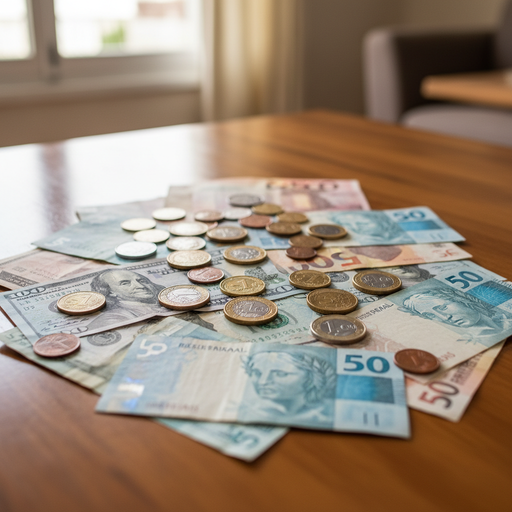


# LidoDAOProposes20MBuyback
💠 — The Strategic Alchemy of Tokenomics and
Decentralized Governance
By DragonKing143
In the ever-evolving topography of decentralized finance, where
innovation is both incessant and disruptive, certain developments
transcend routine protocol updates and emerge as emblematic of deeper
strategic intent. The proposition by LidoDAO to initiate a $20 million
token buyback is one such phenomenon—a decision that reverberates far
beyond the immediate implications of price dynamics and ventures into
the sophisticated realm of tokenomics, governance philosophy, and
long-term ecosystem sustainability.
At its superficial stratum, a buyback may appear as a conventional
financial maneuver, reminiscent of traditional corporate strategies
employed to enhance shareholder value. Yet, within the decentralized
paradigm, it acquires a multifaceted significance—intersecting with
community consensus, protocol incentives, and the intricate equilibrium
of supply and demand.
This is not merely a fiscal adjustment.
It is a declaration of strategic confidence.
________________________________________
🧠 The Ontological Foundations of Token Buybacks
To truly appreciate the profundity of LidoDAO’s proposal, one must first
interrogate the ontological foundations of token buybacks within
decentralized ecosystems.
In traditional finance, buybacks are executed by centralized entities
with unilateral authority. They serve to reduce circulating supply,
ostensibly increasing the value of remaining shares while signaling
corporate robustness.
In contrast, within a decentralized autonomous organization (DAO), such
decisions are inherently communal.
They are proposed, debated, and ratified through governance
mechanisms—reflecting the collective will of stakeholders. This
democratization transforms the buyback from a mere financial tactic into
a governance-driven instrument of alignment.
Thus, the proposed $20M buyback is not simply about acquiring tokens; it
is about reinforcing trust, synchronizing incentives, and affirming the
protocol’s long-term vision.
________________________________________
⚙️ Tokenomics Recalibrated: Supply, Demand, and Perception
At the heart of the buyback lies the principle of tokenomics—the
economic architecture governing the creation, distribution, and
utilization of tokens.
By reducing circulating supply, a buyback exerts upward pressure on
scarcity. However, its true impact extends beyond arithmetic.
It influences perception.
Market participants interpret buybacks as indicators of confidence. They
suggest that the protocol possesses sufficient resources and foresight
to reinvest in its own ecosystem.
This perception can catalyze a virtuous cycle:
• Enhanced confidence attracts new participants.
• Increased participation drives demand.
• Elevated demand reinforces value.
In this manner, the buyback operates as both a quantitative and
psychological lever.
________________________________________
🚀 Strategic Signaling in a Competitive Landscape
The decentralized finance ecosystem is characterized by intense
competition, rapid innovation, and perpetual evolution.
Protocols vie for liquidity, users, and developer engagement. In such an
environment, strategic signaling becomes paramount.
LidoDAO’s buyback proposal serves as a potent signal:
• It communicates financial resilience.
• It underscores commitment to token holders.
• It differentiates the protocol within a crowded marketplace.
This signaling effect is particularly significant in periods of market
uncertainty, where confidence can be as valuable as capital.
________________________________________
🌐 Governance in Action: The Power of Collective Intelligence
One of the most compelling aspects of this proposal is the role of
governance.
Unlike centralized entities, where decisions are confined to executive
hierarchies, DAOs operate through collective intelligence. Stakeholders
participate in deliberation, contribute insights, and ultimately
determine the outcome.
This process embodies the ethos of decentralization.
It ensures that decisions are not only strategic but also representative
of community interests. Moreover, it fosters a sense of ownership among
participants—transforming passive holders into active contributors.
The buyback proposal, therefore, is as much a governance exercise as it
is a financial initiative.
________________________________________
🔥 The Interplay of Incentives and Alignment
In any economic system, alignment of incentives is crucial.
Misaligned incentives lead to inefficiencies, conflicts, and stagnation.
Conversely, well-aligned incentives drive growth, innovation, and
sustainability.
The proposed buyback contributes to alignment in several ways:
• It rewards long-term holders by potentially enhancing token value.
• It reinforces confidence among contributors and developers.
• It signals prudent treasury management.
This alignment is not incidental; it is the result of deliberate
strategic design.
________________________________________
🧩 Risks, Nuances, and Strategic Prudence
While the benefits are compelling, it is imperative to approach the
buyback with a nuanced perspective.
⚖️ Opportunity Cost
Allocating $20M to a buyback entails foregoing alternative
investments—such as development, marketing, or ecosystem expansion.
📊 Market Dynamics
The impact of the buyback may be influenced by broader market
conditions, including volatility and liquidity.
🔐 Execution Complexity
Ensuring transparency and efficiency in execution is essential to
maintain trust.
These considerations underscore the importance of strategic prudence.
A successful buyback is not merely about intent; it is about meticulous
execution and contextual awareness.
________________________________________
🌱 The Philosophy of Sustainable Growth
Beyond immediate implications, the buyback reflects a broader philosophy
of sustainable growth.
In the nascent stages of many protocols, emphasis is placed on rapid
expansion—often at the expense of long-term stability. However, as
ecosystems mature, the focus shifts toward consolidation, optimization,
and resilience.
The buyback embodies this transition.
It signifies a move from growth at all costs to growth with intention—a
recalibration of priorities that emphasizes sustainability and value
creation.
________________________________________
⚡ Psychological Momentum and Market Narratives
Markets are not purely rational constructs; they are influenced by
narratives, sentiment, and collective psychology.
The announcement of a buyback can generate momentum—shaping narratives
that attract attention and participation.
This momentum is self-reinforcing:
• Positive sentiment drives engagement.
• Engagement amplifies visibility.
• Visibility attracts further participation.
In this context, the buyback serves as a catalyst for narrative
formation—an essential component of market dynamics.
________________________________________
🧭 Lessons for the Astute Participant
For individuals navigating the decentralized landscape, LidoDAO’s
proposal offers valuable insights:
1. Understand Tokenomics
A comprehensive understanding of economic structures is essential for
informed participation.
2. Value Governance
Active engagement in governance processes enhances both individual and
collective outcomes.
3. Think Strategically
Short-term fluctuations should be contextualized within long-term
trajectories.
4. Embrace Complexity
The decentralized ecosystem is multifaceted; success requires
intellectual adaptability.
________________________________________
🏗️ The Convergence of Tradition and Innovation
Interestingly, the concept of buybacks represents a convergence of
traditional financial strategies and decentralized innovation.
It illustrates how established principles can be recontextualized within
new paradigms—yielding hybrid models that leverage the strengths of
both domains.
This convergence is indicative of a broader trend: the synthesis of
legacy systems with emergent technologies.
________________________________________
🏆 Confidence as a Catalyst
At its core, the buyback proposal is an expression of confidence.
Confidence in the protocol’s fundamentals.
Confidence in its community.
Confidence in its future.
This confidence is not merely symbolic; it is actionable—manifested
through tangible commitment of resources.
Such conviction is contagious. It inspires trust, galvanizes
participation, and propels growth.
________________________________________
🌌 Conclusion: The Art of Strategic Evolution
The proposed $20M buyback by LidoDAO is more than a financial maneuver;
it is an exemplar of strategic evolution within decentralized finance.
It encapsulates the interplay of tokenomics, governance, and market
psychology—demonstrating how thoughtful design can drive sustainable
growth.
For the discerning observer, it offers a blueprint for navigating
complexity.
For the participant, it presents an opportunity for engagement.
For the visionary, it is a reminder that innovation is not static—it is a
continuous process of refinement and reinvention.
________________________________________
Remember:
In the realm of decentralized systems, value is not merely created—it is
orchestrated through alignment, strategy, and collective intelligence.
Stay analytical. Stay resilient. Stay visionary.
— DragonKing143
________________________________________
#DeFiStrategy #Tokenomics #CryptoGovernance