 :
:

The Rycroft Review is an independent review report commissioned by the UK Government in December 2025 to strengthen political financing in the UK against foreign interference. Prepared by former senior civil servant Philip Rycroft and published on March 25, 2026, the 60-page report comprehensively addresses the risks of foreign actors (including individual threats from states such as Russia, China, and Iran, as well as allied countries) infiltrating UK democracy through financial channels. The report notes that the current political donation system is undergoing long-term erosion but is not in an immediate crisis, highlighting transparency gaps created by low-traceability instruments such as crypto assets. Its key finding is that foreign financial interference is a “real, persistent and sustainable” threat; however, its impact has remained marginal to date thanks to measures taken. Rycroft recommends future-proofing the system through amendments to the Representation of the People Bill.
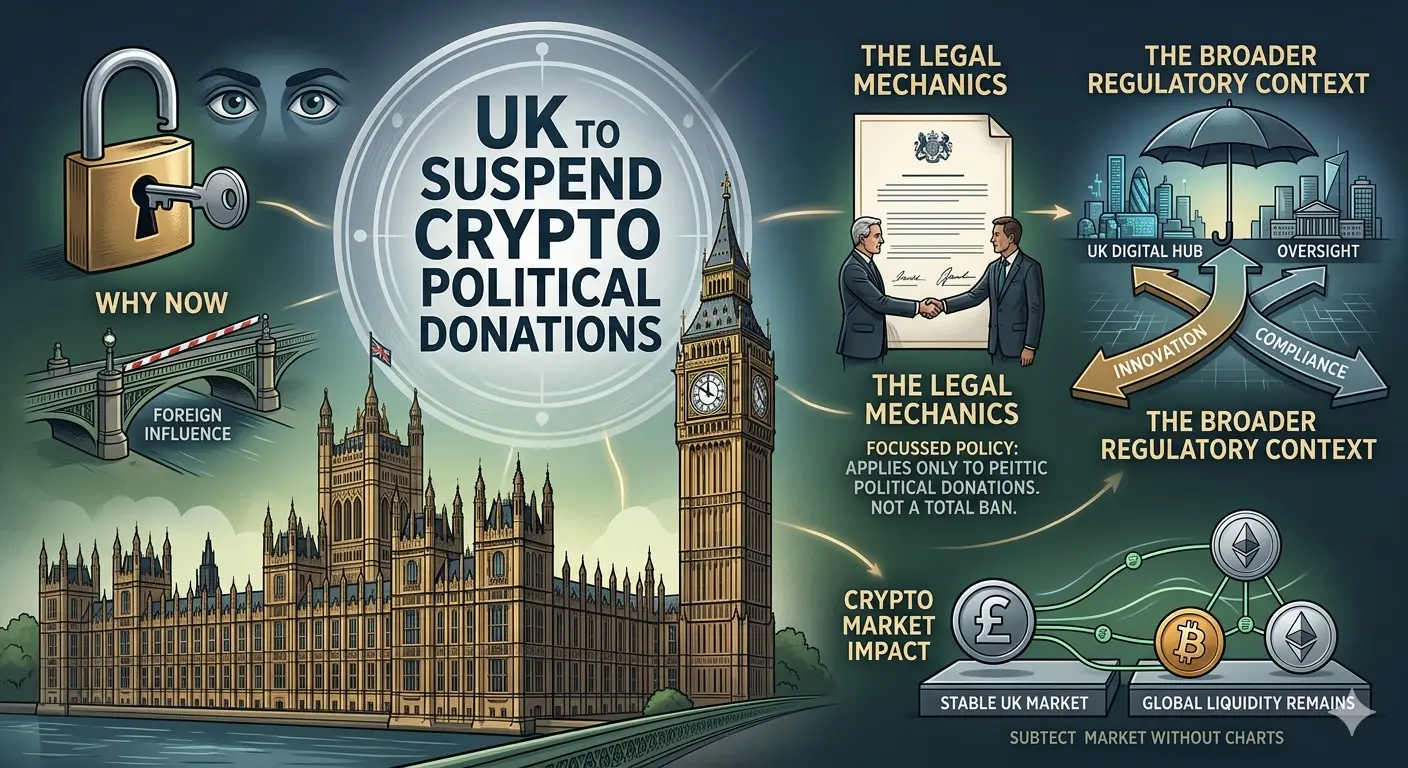
The most notable part of the report is recommendation number 3 concerning political donations made via crypto assets. Rycroft proposes a **temporary moratorium** for all crypto donations, to be enacted through the Representation of the People Bill. This moratorium would cover small amounts below the £500 reporting threshold and is described not as a permanent ban, but as “an interim period for the regulatory environment to catch up with the reality of crypto.” The reasoning is clear: the true ownership and origin of crypto assets cannot be fully verified, AI-powered sharding techniques can allow amounts to fall below the reporting threshold, and this carries the potential for rapid growth that could undermine public trust. While the report states that “no crypto donations have yet reached the reporting threshold,” it emphasizes the risk of unpredictable growth rates destroying transparency. Rycroft explicitly states: “This is not a harbinger of a permanent ban, but an interim period for regulation to catch up.” The government immediately adopted this recommendation and retrospectively banned all crypto donations from March 25, 2026; parties are required to return such donations within 30 days.
The report also recommends, under recommendation number 1, to limit annual donations by British overseas electors to £100,000. This step aims to reduce the risk of wealthy overseas Britons making unlimited donations to optimize their tax system. This risk has increased as the number of overseas voters has risen from 1.4 million to 3 million under the Electoral Commission 2022. Rycroft also recommends introducing post-tax profit-based limits on corporate donations, bringing “know your donor” rules closer to anti-money laundering standards, and expanding the powers of the Electoral Commission. Other prominent recommendations among the 17 recommendations include: a complete ban on foreign-funded online political advertising, eliminating tax exemptions for foreign lobbying organizations, establishing a ministerial-level accountable mechanism against online interference, and strengthening controls on donations to political parties. The report cites concrete examples such as the Nathan Gill scandal (the case of the former Reform UK Wales leader accepting bribes for Russian interests) to demonstrate the concreteness of the threats.
The government's response has been swift and decisive. As Prime Minister Keir Starmer announced in Parliament on 25 March 2026, the crypto moratorium and the £100,000 overseas donation cap came into effect immediately. Housing, Communities and Local Government Minister Steve Reed fully supported the report, stating that the crypto donation ban is a fundamental step in protecting our democracy against attempts by foreign states to undermine it. These changes will be enacted as an addendum to the Representation of the People Bill and completed before the next general election. NGOs such as Transparency International UK welcomed the moratorium and cap but called for a general cap on all donations (not just overseas). The Liberal Democrats, meanwhile, demanded that Reform UK return its existing crypto donations.
From an analytical perspective, the Rycroft Review is a critical turning point in the integration of the crypto sector into mainstream politics. The report doesn't declare crypto "bad"; rather, it presents the suspension as a temporary measure to "build trust" until the regulatory infrastructure matures. This approach allows the UK to close transparency gaps on the political financing side while maintaining its claim to leadership as a country making progress in crypto regulation (e.g., in the stablecoin and tokenization field). However, there are also criticisms: some experts interpret this as "the state's lack of trust in its own institutions," arguing that the real problem is a lack of administrative capacity, not technological capacity. For crypto-friendly parties like Reform UK, it represents a direct financial blow; the party is currently the only mainstream entity accepting crypto donations, and the Electoral Commission has previously requested wallet details. In conclusion, the Rycroft Review is concrete evidence of the UK's will to protect its democracy from foreign financial infiltration. While steps like the crypto moratorium may create uncertainty in the sector in the short term, in the long term it can lay the foundation for a regulated and traceable ecosystem. The full text of the report is publicly available on gov uk, and the progress of the Representation of the People Bill should be closely monitored, as this review offers a framework that will reshape not only crypto donations but political financing as a whole. These developments could set a new standard at the intersection of crypto and politics on a global scale.
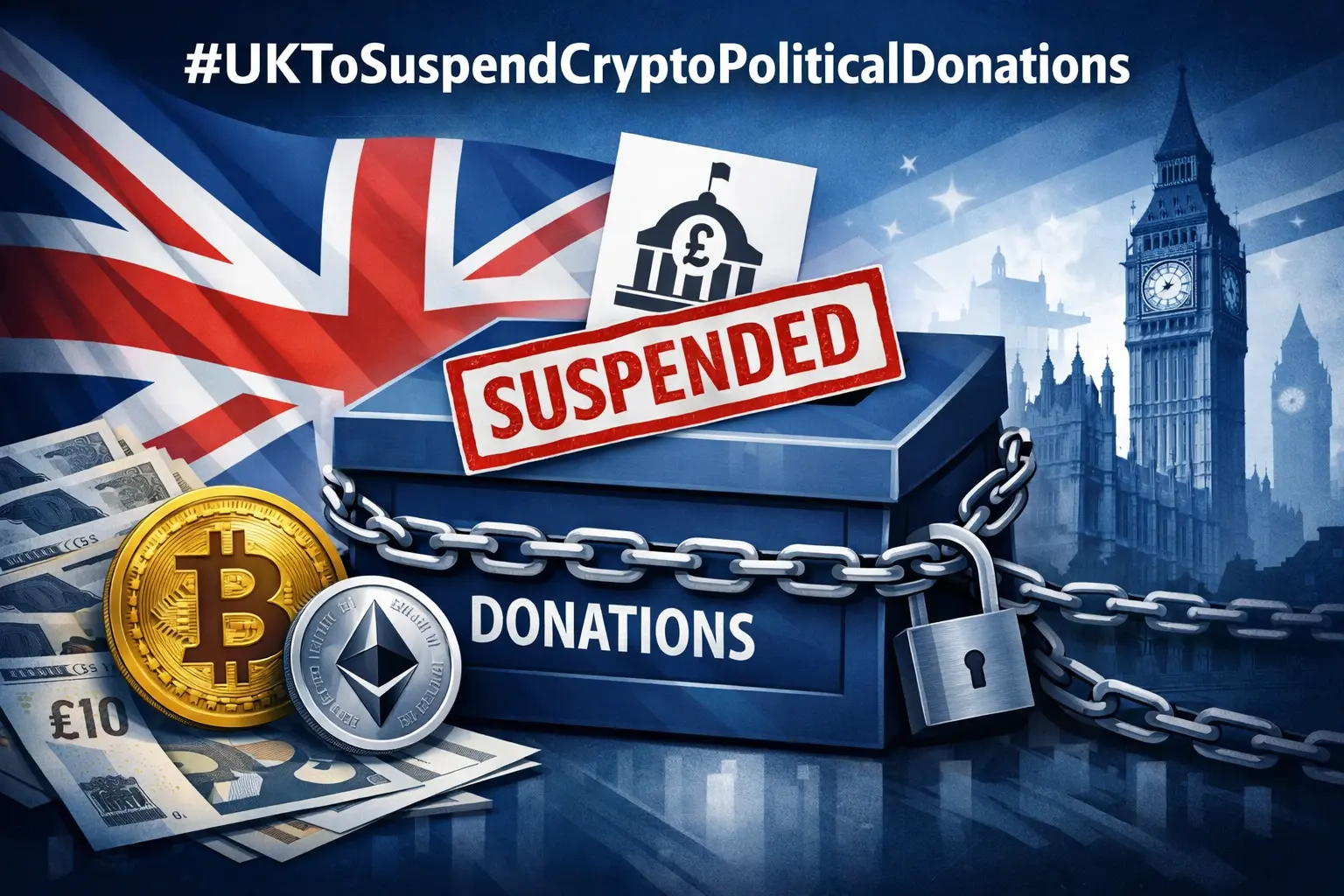
#UKToSuspendCryptoPoliticalDonations
#CreatorLeaderboard
The most notable part of the report is recommendation number 3 concerning political donations made via crypto assets. Rycroft proposes a **temporary moratorium** for all crypto donations, to be enacted through the Representation of the People Bill. This moratorium would cover small amounts below the £500 reporting threshold and is described not as a permanent ban, but as “an interim period for the regulatory environment to catch up with the reality of crypto.” The reasoning is clear: the true ownership and origin of crypto assets cannot be fully verified, AI-powered sharding techniques can allow amounts to fall below the reporting threshold, and this carries the potential for rapid growth that could undermine public trust. While the report states that “no crypto donations have yet reached the reporting threshold,” it emphasizes the risk of unpredictable growth rates destroying transparency. Rycroft explicitly states: “This is not a harbinger of a permanent ban, but an interim period for regulation to catch up.” The government immediately adopted this recommendation and retrospectively banned all crypto donations from March 25, 2026; parties are required to return such donations within 30 days.
The report also recommends, under recommendation number 1, to limit annual donations by British overseas electors to £100,000. This step aims to reduce the risk of wealthy overseas Britons making unlimited donations to optimize their tax system. This risk has increased as the number of overseas voters has risen from 1.4 million to 3 million under the Electoral Commission 2022. Rycroft also recommends introducing post-tax profit-based limits on corporate donations, bringing “know your donor” rules closer to anti-money laundering standards, and expanding the powers of the Electoral Commission. Other prominent recommendations among the 17 recommendations include: a complete ban on foreign-funded online political advertising, eliminating tax exemptions for foreign lobbying organizations, establishing a ministerial-level accountable mechanism against online interference, and strengthening controls on donations to political parties. The report cites concrete examples such as the Nathan Gill scandal (the case of the former Reform UK Wales leader accepting bribes for Russian interests) to demonstrate the concreteness of the threats.
The government's response has been swift and decisive. As Prime Minister Keir Starmer announced in Parliament on 25 March 2026, the crypto moratorium and the £100,000 overseas donation cap came into effect immediately. Housing, Communities and Local Government Minister Steve Reed fully supported the report, stating that the crypto donation ban is a fundamental step in protecting our democracy against attempts by foreign states to undermine it. These changes will be enacted as an addendum to the Representation of the People Bill and completed before the next general election. NGOs such as Transparency International UK welcomed the moratorium and cap but called for a general cap on all donations (not just overseas). The Liberal Democrats, meanwhile, demanded that Reform UK return its existing crypto donations.
From an analytical perspective, the Rycroft Review is a critical turning point in the integration of the crypto sector into mainstream politics. The report doesn't declare crypto "bad"; rather, it presents the suspension as a temporary measure to "build trust" until the regulatory infrastructure matures. This approach allows the UK to close transparency gaps on the political financing side while maintaining its claim to leadership as a country making progress in crypto regulation (e.g., in the stablecoin and tokenization field). However, there are also criticisms: some experts interpret this as "the state's lack of trust in its own institutions," arguing that the real problem is a lack of administrative capacity, not technological capacity. For crypto-friendly parties like Reform UK, it represents a direct financial blow; the party is currently the only mainstream entity accepting crypto donations, and the Electoral Commission has previously requested wallet details. In conclusion, the Rycroft Review is concrete evidence of the UK's will to protect its democracy from foreign financial infiltration. While steps like the crypto moratorium may create uncertainty in the sector in the short term, in the long term it can lay the foundation for a regulated and traceable ecosystem. The full text of the report is publicly available on gov uk, and the progress of the Representation of the People Bill should be closely monitored, as this review offers a framework that will reshape not only crypto donations but political financing as a whole. These developments could set a new standard at the intersection of crypto and politics on a global scale.
#UKToSuspendCryptoPoliticalDonations
#CreatorLeaderboard