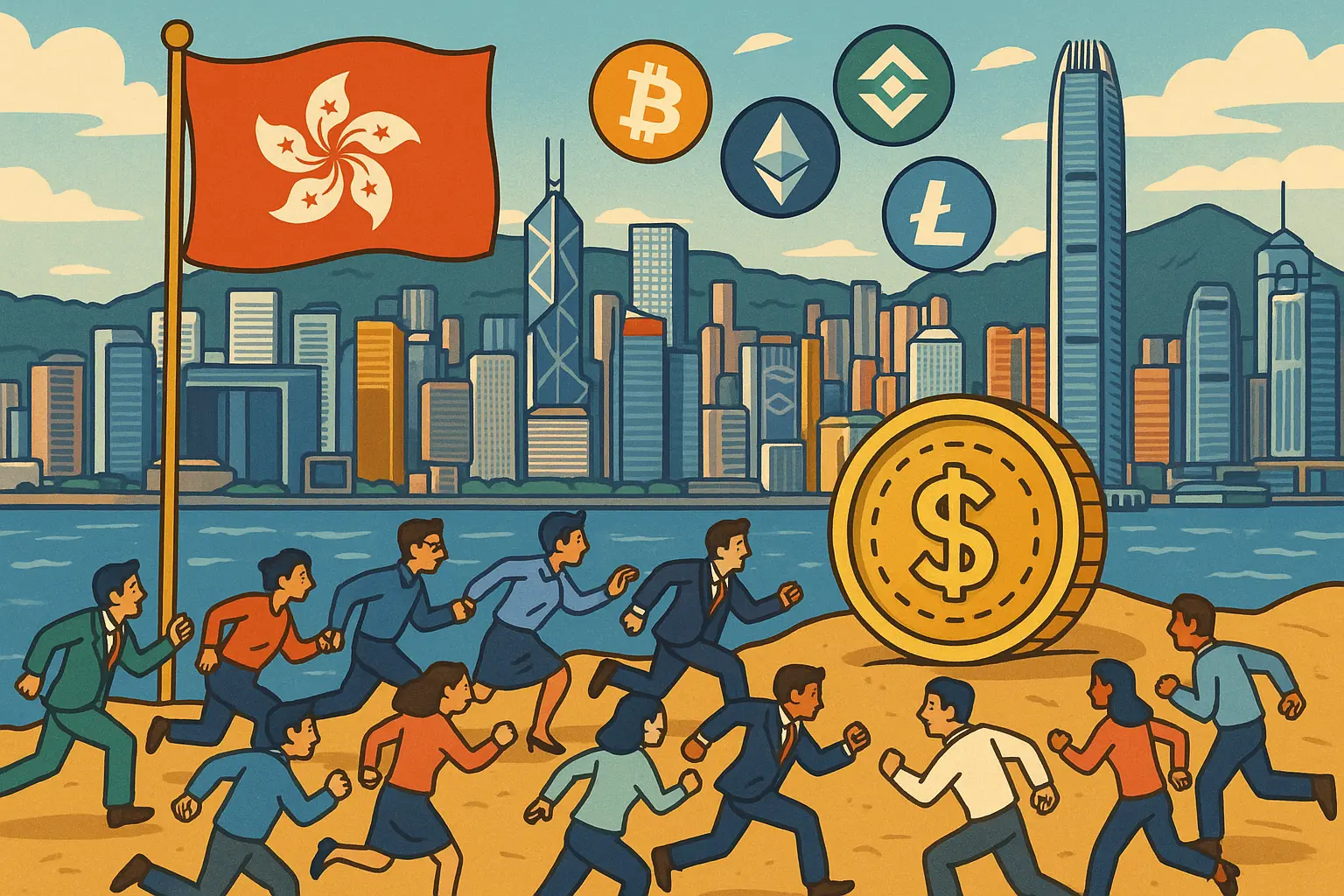
Hong Kong Financial Secretary Paul Chan Mo-po stated in Davos that 11 trading platforms have been licensed, and the first batch of stablecoin licenses will be issued in the first quarter. Hong Kong adopts the principle of “same activity, same risk, same regulation,” having issued $2.1 billion USD in tokenized green bonds and launched a regulatory sandbox. The “Stablecoin Ordinance” came into effect in August last year, imposing strict standards.
Hong Kong Stablecoin Licenses Leading Global Regulatory Framework in Q1
Hong Kong Financial Secretary Paul Chan Mo-po said that, as an international financial center, Hong Kong adopts an active and cautious approach to developing digital assets. To date, 11 virtual asset trading platforms have been licensed, and the first batch of stablecoin licenses is expected to be issued in the first quarter of this year. According to the South China Morning Post, Chan Mo-po pointed out during the World Economic Forum annual meeting in Davos on January 20 that Hong Kong will promote responsible and sustainable growth of the cryptocurrency market based on the principles of “same activity, same risk, same regulation.”
Hong Kong’s stablecoin regulatory system is regarded as a cornerstone of its overall strategy. The Hong Kong Stablecoin Ordinance officially came into force last August, clearly requiring stablecoin issuers to meet strict standards, including reserve asset management, maintaining sound value stability mechanisms, and a series of anti-money laundering, counter-terrorism financing, risk management, disclosure, and audit requirements.
This regulatory framework is globally leading. In contrast, U.S. stablecoin regulation is still in legislative discussion, and the EU’s MiCA, although implemented, is relatively lenient. Hong Kong’s Stablecoin Ordinance clarifies issuance eligibility, reserve requirements, and operational standards, providing a clear compliance pathway for the stablecoin market. This regulatory certainty is especially important for institutional investors and large enterprises, as they need to ensure compliance before participating at scale.
The issuance of the first batch of stablecoin licenses will be a significant milestone in Hong Kong’s crypto industry development. Licensees will be able to legally issue and operate stablecoins in Hong Kong, which can be used for payments, cross-border remittances, DeFi applications, and more. More importantly, licensed stablecoins will gain recognition from Hong Kong regulators, paving the way for their integration into the traditional financial system.
Hong Kong Has Issued 11 Exchange Licenses to Build a Complete Ecosystem
Hong Kong has issued licenses to 11 virtual asset trading platforms, allowing licensed exchanges to legally provide cryptocurrency trading services to retail and institutional clients, which is markedly different from many jurisdictions that only permit professional investor trading.
The presence of these 11 licensed exchanges provides a complete infrastructure for Hong Kong’s crypto ecosystem. Investors can trade in a regulated environment without worrying about exchange insolvency or asset security issues. Licensed exchanges must also comply with strict anti-money laundering and KYC requirements, enhancing overall market compliance.
Additionally, Hong Kong actively promotes tokenization development, including issuing 3 batches of tokenized green bonds totaling about $2.1 billion USD, and launching a regulatory sandbox to encourage application innovation. Tokenized green bonds are traditional bonds issued on the blockchain in token form, offering multiple advantages: reducing issuance costs, increasing trading efficiency, enhancing transparency, and enabling small investors to participate in the bond market.
The $2.1 billion scale places Hong Kong at the forefront of the global tokenized bond market. These successful cases serve as models for tokenizing other traditional financial products, with future expansion into stocks, real estate, commodities, and more asset classes. The regulatory sandbox provides a testing ground for innovative enterprises, allowing them to trial new products and services in a controlled environment, reducing compliance costs.
Hong Kong Positions Digital Finance as a Core Growth Strategy
Chan Mo-po mentioned that finance and technology can mutually promote each other. Digital assets exemplify this financial innovation, which not only enhances transparency, efficiency, inclusiveness, and risk management in financial services but also more effectively channels capital into the real economy. Moreover, finance is a key driver supporting and empowering technological development. Chan Mo-po stated that Hong Kong aims to build an integrated ecosystem covering stablecoins, exchanges, and tokenized assets.
In the face of increasing global competition, Hong Kong positions digital finance as a key pillar of its growth strategy. This strategic positioning shows that Hong Kong is not passively accepting the crypto industry but actively using it as a core driver for economic transformation and upgrading. Compared to competitors like Singapore and Dubai, Hong Kong’s advantages lie in its strong traditional financial foundation, links with Mainland China, and a comprehensive legal system.
Hong Kong’s stablecoin license system may attract various applicants: global stablecoin issuers like Circle (USDC) and Tether (USDT) may apply for licenses to enter the Hong Kong market; local financial institutions such as banks and payment companies may launch HKD stablecoins; and emerging stablecoin projects focused on the Asian market.
Tuyên bố miễn trừ trách nhiệm: Thông tin trên trang này có thể đến từ bên thứ ba và không đại diện cho quan điểm hoặc ý kiến của Gate. Nội dung hiển thị trên trang này chỉ mang tính chất tham khảo và không cấu thành bất kỳ lời khuyên tài chính, đầu tư hoặc pháp lý nào. Gate không đảm bảo tính chính xác hoặc đầy đủ của thông tin và sẽ không chịu trách nhiệm cho bất kỳ tổn thất nào phát sinh từ việc sử dụng thông tin này. Đầu tư vào tài sản ảo tiềm ẩn rủi ro cao và chịu biến động giá đáng kể. Bạn có thể mất toàn bộ vốn đầu tư. Vui lòng hiểu rõ các rủi ro liên quan và đưa ra quyết định thận trọng dựa trên tình hình tài chính và khả năng chấp nhận rủi ro của riêng bạn. Để biết thêm chi tiết, vui lòng tham khảo
Tuyên bố miễn trừ trách nhiệm.
Bài viết liên quan
Nguồn cung USDT đạt mức kỷ lục lịch sử 1880 tỷ USD, 550 triệu người dùng dựa vào tiền gửi tiết kiệm để thanh toán
Giám đốc điều hành Tether Paolo Ardoino đã công bố vào ngày 21 tháng 4 rằng nguồn cung USDT lưu hành đã đạt mức cao kỷ lục mới là 188 tỷ đô la, qua đó tiếp tục mở rộng lợi thế dẫn đầu so với các đối thủ cạnh tranh, trở thành tài sản mã hóa lớn thứ ba theo vốn hóa, chỉ sau Bitcoin và Ethereum. Ardoino nhấn mạnh rằng hơn 550 triệu người dùng tại các thị trường mới nổi hiện đang dựa vào USDT để thực hiện các khoản thanh toán hằng ngày.
MarketWhisper15phút trước
Nguồn cung USDT đạt đỉnh ATH $188b mới khi Tether siết chặt quyền kiểm soát đối với stablecoin
Giám đốc điều hành Tether Paolo Ardoino cho biết nguồn cung USDT đã đạt mức kỷ lục 188b đô la, củng cố sự thống trị của stablecoin này khi thanh khoản stablecoin nói chung đang ở gần mức cao nhất mọi thời đại.
Tóm tắt
Giám đốc điều hành Tether Paolo Ardoino nói rằng nguồn cung USDT đã đạt mức kỷ lục $188 tỷ.
Đỉnh mới này xuất hiện chỉ vài tuần sau khi stablecoins đạt a
Cryptonews11giờ trước
Tether Phát Hành 2B USDT trên Ethereum trong 3 Ngày
Tin tức từ Gate, ngày 21 tháng 4 — Theo theo dõi của Lookonchain, Tether đã phát hành 2 tỷ USDT trên Ethereum trong 3 ngày qua.
GateNews19giờ trước
Kẻ lừa đảo giả làm cơ quan chức năng của Iran để tống tiền chủ tàu mắc kẹt bằng Bitcoin và Tether
Tin tức Cổng, ngày 21 tháng 4 — Các đối tượng không rõ danh tính đã gửi tin nhắn gian lận đến các công ty vận tải biển, với những tàu bị mắc kẹt ở phía tây eo biển Hormuz, tuyên bố là cơ quan chức năng của Iran và đề nghị cho đi qua an toàn để đổi lấy các khoản phí được thanh toán bằng Bitcoin hoặc Tether, theo công ty rủi ro của Hy Lạp MARISKS. Bản tin
GateNews20giờ trước
Tether mua cổ phần 8,2% tại Antalpha, mở rộng mức độ tiếp xúc với nền tảng cho vay Bitcoin
Các thực thể liên quan đến Tether đã đầu tư $25 triệu USD vào Antalpha, mua 8,2% quyền sở hữu với giá IPO là 12,80 USD/cổ phiếu. Antalpha, một nền tảng fintech cho khai thác Bitcoin, đã báo cáo kết quả tài chính mạnh mẽ, nhưng cổ phiếu đã giảm hơn 27% sau công bố.
GateNews22giờ trước
Tether mua cổ phần Antalpha 8,2%, Chủ tịch hội đồng quản trị có quyền biểu quyết và quyền định đoạt
Theo hồ sơ Schedule 13D được nộp cho Ủy ban Chứng khoán và Giao dịch Hoa Kỳ (SEC) vào ngày 20 tháng 4, Tether nắm giữ 1.950.000 cổ phiếu của nền tảng tài chính khai thác bitcoin Antalpha thông qua các công ty liên quan, với tỷ lệ sở hữu là 8,2%; Chủ tịch Tether, Giancarlo Devasini, có quyền biểu quyết và quyền định đoạt đối với các cổ phiếu nói trên.
MarketWhisper04-21 02:14


