The historical growth issue in Ethereum scalability highlights that the accumulation of new blocks and transactions is the biggest bottleneck. Historical growth is limited by network I/O and node storage space, differing from state growth issues. The article mentions that although the Dencun hard fork introduced blobs to slow down historical growth, it remains a challenge. The EIP-4444 proposal suggests that each node should only keep one year of history, significantly reducing storage burden and stabilizing storage needs.
2026-03-24 11:54:24
The rise of Ethereum in the field of stablecoin development stems from its powerful blockchain platform and smart contract capabilities, providing a solid foundation for stablecoin innovation.
2026-03-24 11:54:24
Swell Network is an innovative non-custodial staking protocol offering liquid staking and restaking services, designed to simplify DeFi access and secure the future of Ethereum staking services. Swell has rapidly grown its TVL to $2.1 billion through its unique architecture, which includes the restaking Rollup and EigenDA data layer, as well as a native yield mechanism. The growth of Swell L2 has been particularly notable, with its pre-launch deposits increasing from zero to over $1 billion in just 28 days, demonstrating its potential and leadership in the DeFi sector.
2026-03-24 11:54:24
Cellframe's dual-layer sharding design offers customizable sub chains and enhances decentralized app interactions, setting new standards for scalability and efficiency.
2026-03-24 11:54:24
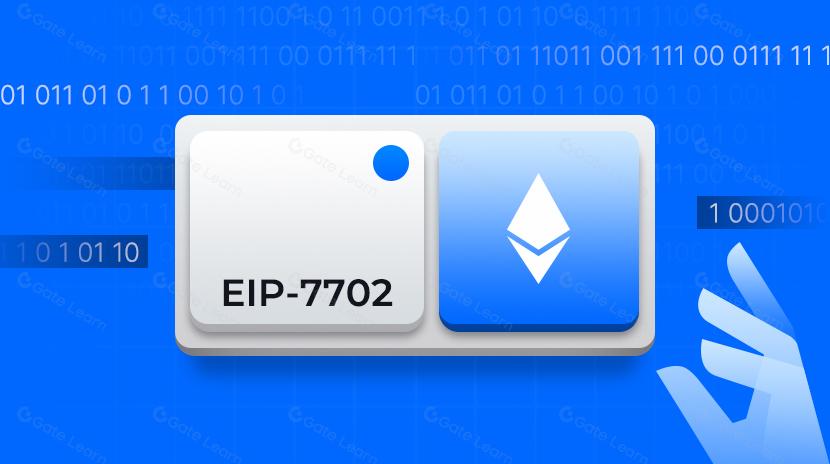
Vitalik Buterin has proposed EIP-7702, which could be one of the most significant changes in Ethereum's history. EIP-7702 aims to improve account abstraction, allowing smart contracts to be used as accounts, thereby enhancing functionality and security. It is highly compatible with EIP-4337, which has been widely adopted on platforms like Polygon. EIP-7702 achieves the temporary delegation of EOAs (Externally Owned Accounts) to smart contracts by temporarily populating the contract code field of an EOA with smart contract code, without the need for a hard fork. This could transform how users interact with Web3 applications.
2026-03-24 11:54:23
The ICOs of 2017, the DeFi that heralded the bull market of 2020, the mainstreaming of non-fungible tokens (NFTs) in 2021, and the scaling solutions such as EVM-compatible chains and Layer2 Rollups driven by a surge in user demand, all these notable blockchain innovations are inseparable from a blockchain named Ethereum. This article will guide you through what Ethereum is, how it operates, the important trajectories of its development, and some of its well-known applications.
2026-03-24 11:54:23
This article explores how DeFi protocols generate revenue through several means; from direct charges to indirect sources, ensuring sustainability and financial innovation in the decentralized finance ecosystem.
2026-03-24 11:54:23
Explore Metis' innovations in ZK technology and decentralized Sequencer, and how these drive forward blockchain technology.
2026-03-24 11:54:22
Consider a contract that commits to purchasing Ethereum at a specific price at a future time. These derivative contracts are traded via Ether (ETH) futures exchange-traded funds (ETFs), providing a regulated method of investing in Ethereum using a brokerage account.
2026-03-24 11:54:22
This article provides an in-depth analysis and comparison of the different approaches and unique architectural aspects of the EigenLayer and Babylon projects in improving blockchain network security and providing additional rewards for users.
2026-03-24 11:54:22
Ordinal Inscriptions differ significantly from NFTs. Although they are both tradable digital assets on the blockchain; their minting, storage, and operation underpins the major differences between them. While NFTs are minted and stored outside the Ethereum network, Ordinal Inscriptions are created and stored on the Bitcoin blockchain.
2026-03-24 11:54:21
EIP-3074 allows externally owned accounts (EOAs) to delegate their transaction capabilities to smart contracts, enhancing features like transaction sponsorship and batch processing. As a short-term fix, it aims to improve the user experience of EOAs to achieve a complete transition to smart accounts. This ensures that legacy users are not left behind, while also making sure they do not hinder AA's efforts.
2026-03-24 11:54:20
According to Ethena Labs, "Ethena is a synthetic dollar protocol on Ethereum which aims to provide the first censorship resistant, scalable, onchain form of money: USDe". Ethena is the protocol in which the stablecoin USDe lives.
2026-03-24 11:54:20
The classification of Ethereum (ETH) was discussed, exploring different perspectives on whether it might be considered a security, currency, or commodity. In the United States, the SEC (Securities and Exchange Commission) and the CFTC (Commodity Futures Trading Commission) hold differing views on the classification of cryptocurrencies. The SEC employs the Howey Test to assess whether ETH qualifies as a security, while the CFTC regards ETH as a commodity.
2026-03-24 11:54:19
At its core, the concept of parallel EVM revolves around optimizing the execution process of transaction states, with the ambitious goal of achieving a staggering 10,000 transactions per second (TPS). The underlying technology behind this impressive feat lies in the realm of specialized databases, developer friendliness, delayed consensus execution, and superscalar pipeline techniques, all working in harmony to enable parallel processing of large-scale transactions. This approach shares fundamental similarities with Artela's concept of elastic computing and asynchronous I/O operations.
2026-03-24 11:54:19