As the end of September approaches, the Bitcoin price fluctuates around $109,000, and market sentiment quietly shifts towards the expectation of “Uptober.”
This seasonal phenomenon is not unfounded; historical data reveals that October is often one of the strongest months for Bitcoin performance throughout the year. However, this year's market environment is complex and intertwined—September did not play out the traditional “curse,” but increased volatility, massive outflows of ETF funds, and uncertainty in macro policies have cast a shadow over the trajectory for the fourth quarter. This article will deeply analyze Bitcoin's potential trajectory in the fourth quarter from four dimensions: historical patterns, current market dynamics, the game of bullish and bearish factors, and future path outlook.
1. “Uptober” in History: Data Support and Seasonal Logic
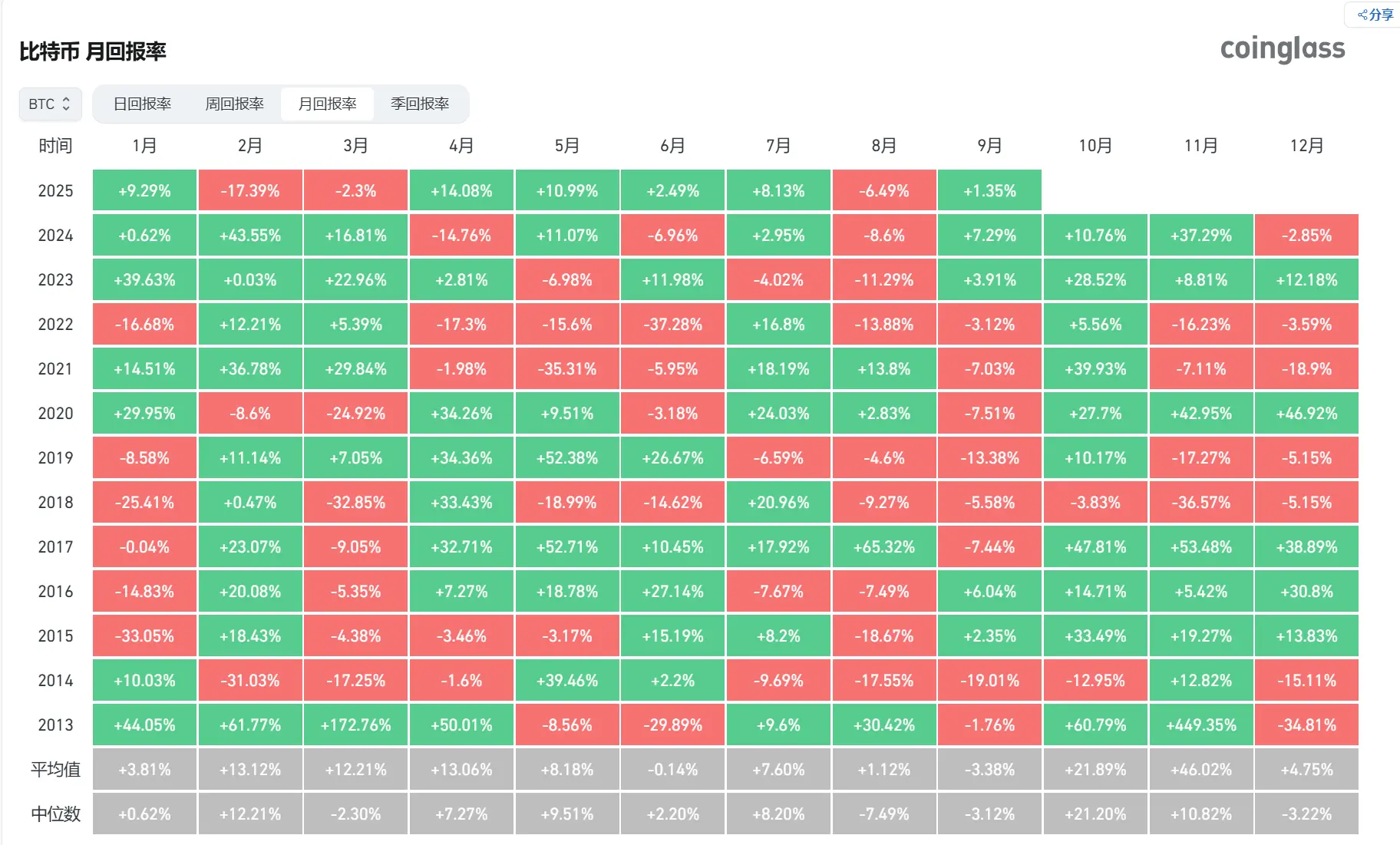
Since 2013, Bitcoin has shown significant regularity in its performance in October: over the past 12 years, there have been 10 instances of price rises, with an average increase of 21.89%. Notably, the rises during bull market phases such as in 2013 (+60.79%), 2017 (+47.81%), and 2021 (+39.93%) are particularly remarkable.
This phenomenon has been dubbed “Uptober” by the market, and there are multiple logical supports behind it.
Firstly, the fourth quarter is usually a window for institutional funds to reallocate, as investors tend to increase their positions in high-volatility assets with a rising risk appetite at the end of the year.
Secondly, the Bitcoin halving cycle often resonates with October - for example, the bull markets of 2017 and 2021 both started in October, and the supply contraction effect after the halving in 2024 may also become evident in the fourth quarter.
In addition, the macro liquidity environment tends to be loose in October: the Federal Reserve has shifted to a dovish stance multiple times in September-October in recent years. For example, after the interest rate cut in September 2024, market expectations for further rate cuts in October rose to 91.9%, which provides fuel for risk assets.
However, history is not an absolute template. October recorded declines of -12.95% in 2014 and -3.83% in 2018, indicating that “Uptober” needs to work in conjunction with the macro context to be effective.
September 2025 closed with a slight rise of 1%. Although it did not trigger a deep decline, it also failed to accumulate enough momentum, which makes the direction in October more dependent on real-time fundamentals rather than purely seasonal patterns.
2. Current Market Status: The Legacy of September's Volatility and Divergence in Funding
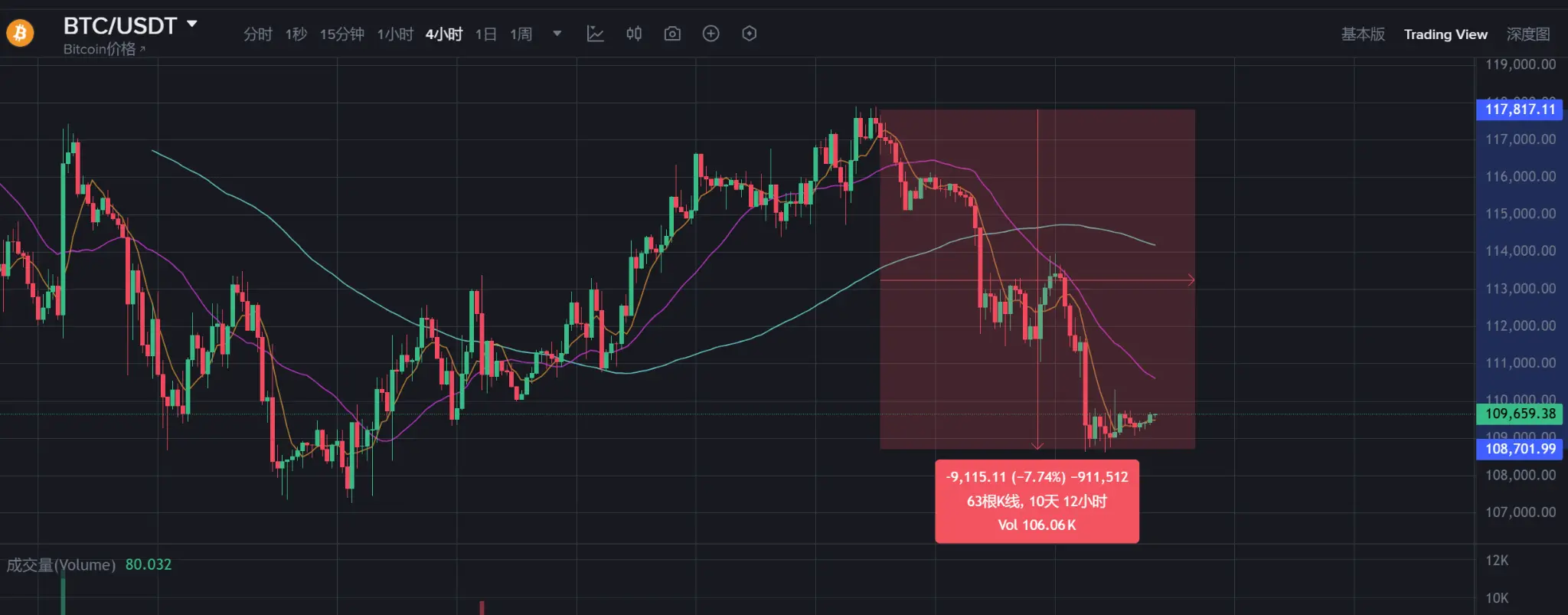
In the last two weeks of September, Bitcoin fell from $117,000 to around $108,000, a decline of nearly 8%. During this period, the total liquidation amount across the network exceeded $3 billion, and long leverage was massively wiped out.
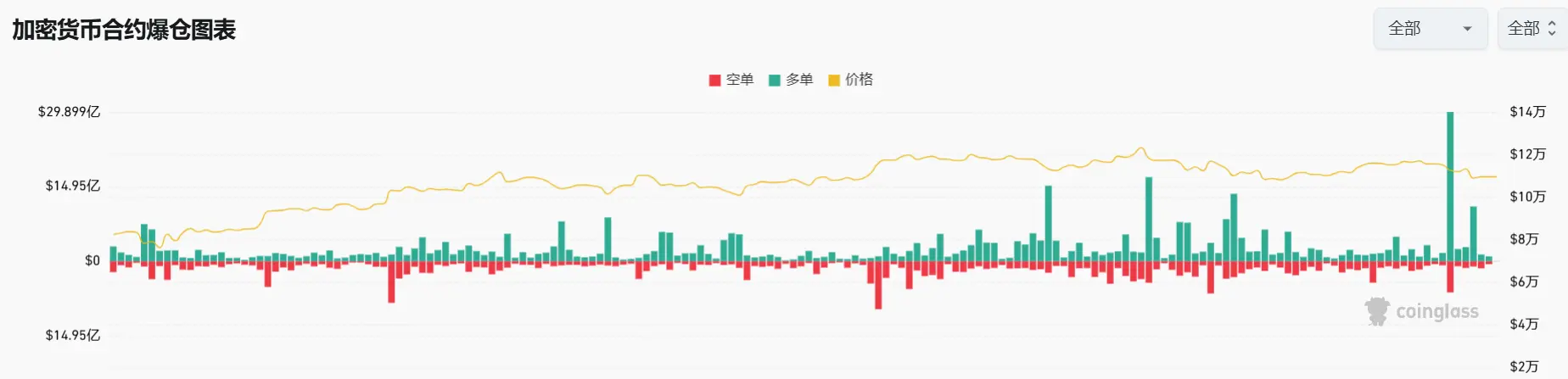
This adjustment is viewed by some analysts as a “healthy correction” because it has cleared excessive leverage and laid the foundation for a subsequent rebound. However, the signals from the funding side appear contradictory:
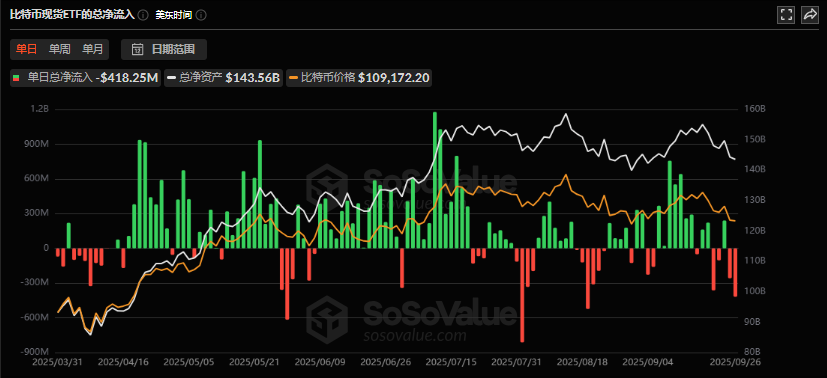
- ETF capital outflow intensifies: Bitcoin spot ETFs have seen net outflows for several consecutive days, with a weekly scale reaching $902.5 million, and BlackRock's IBIT and Fidelity's FBTC have both faced significant redemptions.
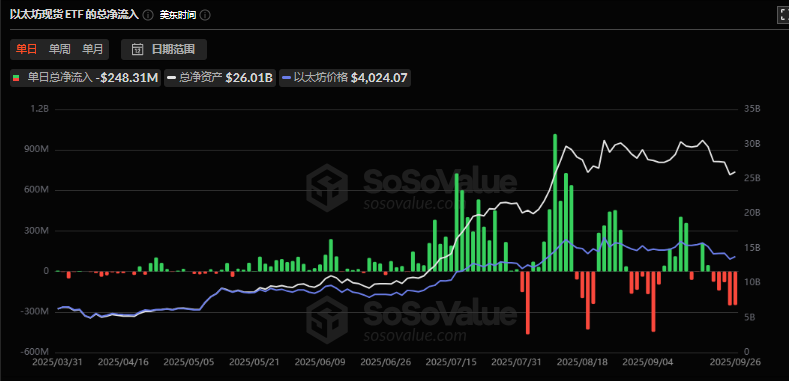
- Ethereum ETF also remains weak, with nearly $800 million flowing out weekly, marking the worst record since its launch. The phase of reduced institutional demand reflects the market's cautious attitude towards overvalued assets.
- On-chain data shows resilience: Despite price pressure, Bitcoin long-term holders (HODLers) have not experienced panic selling. Net Realized Profit and Loss (NRPL) remains positive, and buying activity around the key support level of $109,500 is active, indicating that core investors' confidence in long-term logic remains unchanged.
This differentiation reveals the core contradiction of the market: short-term capital flows are constrained by macro uncertainty (such as the Federal Reserve's policy divergence and disturbances from the U.S. elections), while the narrative of Bitcoin's scarcity (institutional accumulation and halving supply contraction) remains the long-term support.
3. Fourth Quarter Drivers: The Tug of War Between Bullish and Bearish Forces
1. Bullish Catalysts
- Macroeconomic liquidity shift: If the Federal Reserve lowers interest rates as scheduled at the FOMC meeting on October 29, it will weaken the dollar. Historical data shows that Bitcoin has reached a negative correlation of -0.25 with the dollar index (a two-year low). During the rate-cutting cycle, funds are more likely to flow into the crypto market.
- Institutional behavior deepens: As of August 2025, over 290 companies hold Bitcoin worth $163 billion, with corporate demand growing at about 4.3 times the Bitcoin production rate. In addition, the Ethereum fork upgrade is scheduled for April 2026; if the technical upgrade goes smoothly, it may rekindle market interest in smart contract platforms.
- Key technical support level: If Bitcoin holds the support level at $109,500 and breaks through the resistance at $117,700, it may trigger a trend reversal. Technical analysts believe that the current price action is highly similar to the consolidation before the start of the bull market in 2017.
2. Risks and Suppressive Factors
- Regulatory Uncertainty: The increased compliance scrutiny of cryptocurrency exchanges by the US SEC and the investigation into the Digital Asset Treasury (DAT) model may suppress the pace of institutional entry.
- Market sentiment is weak: The negative feedback loop of ETF fund outflows may amplify selling pressure, especially when the price breaks below key support levels, and panic selling could test the low of $98,000.
- Potential impact of black swan events: Recently, projects like UXLINK and GriffinAI have suffered hacker attacks, causing localized panic. If security incidents spread, they could undermine overall confidence.
Four, Future Path Simulation: Market Trends in Three Scenarios
Based on the current variables, the fourth quarter may present the following three scenarios:
Optimistic scenario (30% probability): The Federal Reserve releases a clear dovish signal, Bitcoin quickly recovers to $115,000 and challenges its all-time high. Institutional funds flow back into ETFs, combined with the “Uptober” sentiment fermenting, pushing the price towards the $165,000 target.
Neutral scenario (50% probability): Long and short factors are in a tug of war, with Bitcoin fluctuating widely in the range of 100,000-120,000 dollars. The market is waiting for clear signals such as the result of interest rate cuts in the United States, with volatility remaining high but lacking a directional trend.
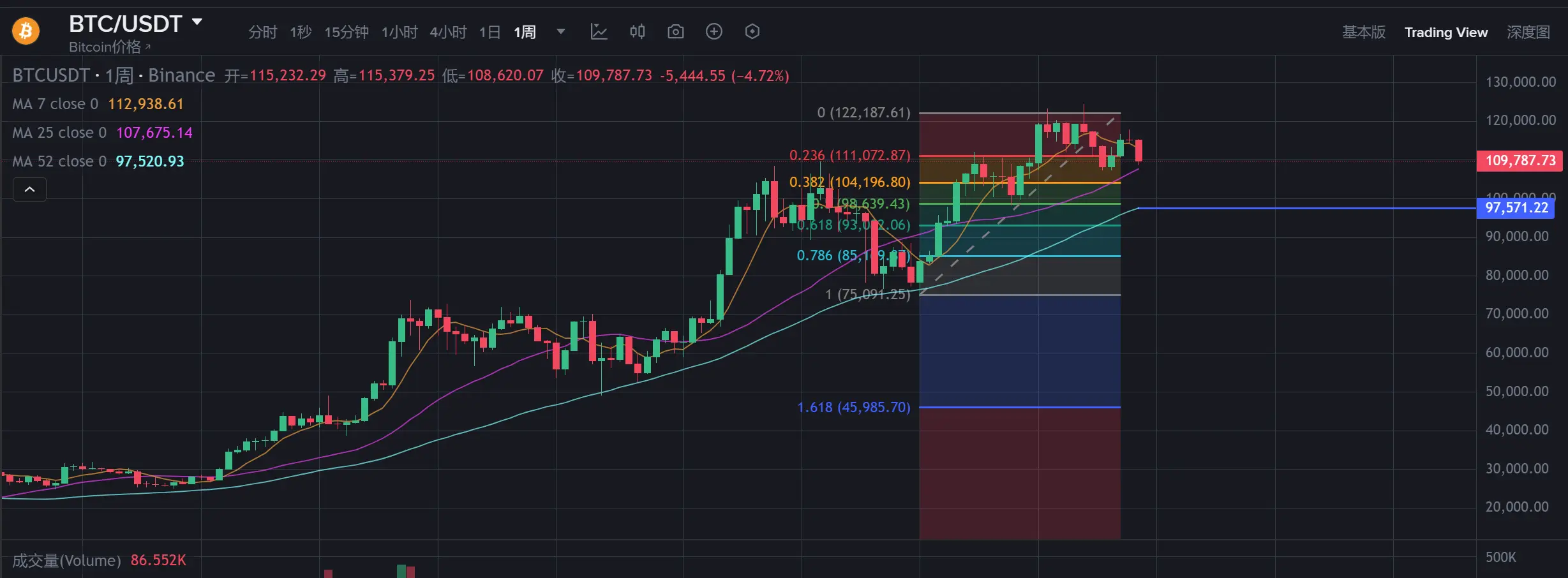
Cautious scenario (20% probability): Deterioration of macro data, geopolitical factors, or tightening regulations triggering systemic sell-off, with Bitcoin testing the support at $100,000. If it breaks below this level, it may further test $98,000 (52-week moving average), but long-term investors may accelerate accumulation in this area.
Conclusion: Seeking a balance between seasonal patterns and real-time fundamentals
“Uptober” is not an automatic calendar magic, but a combination of historical probability and market psychology. In the fourth quarter of 2025, Bitcoin faces short-term pressure from institutional capital outflows, while enjoying long-term support from the interest rate cut cycle and scarcity narrative. For investors, rationally viewing seasonal patterns and closely monitoring changes in Federal Reserve policies and ETF capital flows is essential to navigate volatility and seize opportunities.
Disclaimer: The information on this page may come from third parties and does not represent the views or opinions of Gate. The content displayed on this page is for reference only and does not constitute any financial, investment, or legal advice. Gate does not guarantee the accuracy or completeness of the information and shall not be liable for any losses arising from the use of this information. Virtual asset investments carry high risks and are subject to significant price volatility. You may lose all of your invested principal. Please fully understand the relevant risks and make prudent decisions based on your own financial situation and risk tolerance. For details, please refer to
Disclaimer.
Related Articles
Arthur Hayes: Bitcoin’s long-term target price is $250k to $750k, and in the short term it could fall below $60k
Arthur Hayes said on a podcast that, because the Federal Reserve has not expanded liquidity, he will not put more money into Bitcoin. He expects his medium- to long-term target price to be between $250,000 and $750,000. He warned that if the Iran–U.S. conflict continues, Bitcoin could fall below $60,000 in the short term. Meanwhile, Charles Schwab will launch spot trading for Bitcoin and Ethereum. Research shows that after major shocks, Bitcoin has performed better than gold and the S&P 500, and its current price has rebounded to $67,300.
GateNews26m ago
Bitcoin Breaks Through 68,000 USDT, Up 1.05% Within the Day
Gate News message: On April 6, market data shows that Bitcoin has broken through 68,000 USDT; it is currently trading at 68,007.46 USDT, with a intraday gain of 1.05%.
GateNews35m ago
Decode the luck of a solo Bitcoin Miner winning 210.000 USD
A solo Bitcoin miner recently won $210,000 by successfully mining a block on CKpool, highlighting the rarity and luck involved in solo mining. With a success probability of 1 in 28,000 daily, solo mining remains appealing despite its low odds, contrasting with the stability of pool mining for most miners.
TapChiBitcoin44m ago
Quantum computing is a major threat to Bitcoin and crypto
This week, Google released a research paper describing how—at least in theory—a quantum computer could derive the Bitcoin private key in 9 minutes, setting off ripple effects across Ethereum, other tokens, private banks, and possibly everything in this world.
Quantum computers are easily misunderstood as a ph
TapChiBitcoin44m ago
Michael Saylor dismisses Schiff's warning that 'MSTR will collapse,' citing 36% annual profits from Bitcoin
Michael Saylor, CEO of MicroStrategy, defends the company's Bitcoin strategy against investor Peter Schiff's warning about MSTR stock. Despite losses, Saylor emphasizes Bitcoin's superior performance compared to gold and the S&P 500 since 2020.
TapChiBitcoin45m ago
BTC Breaks Through 69000 USDT
Gate News bot 消息,Gate 行情显示,BTC 突破 69000 USDT,现价 69028 USDT。
CryptoRadar1h ago


