Solana’s aggressive push into privacy features has hit a major controversy with the new application SHDW, which stands accused of locking user funds without providing any withdrawal mechanism or customer support.
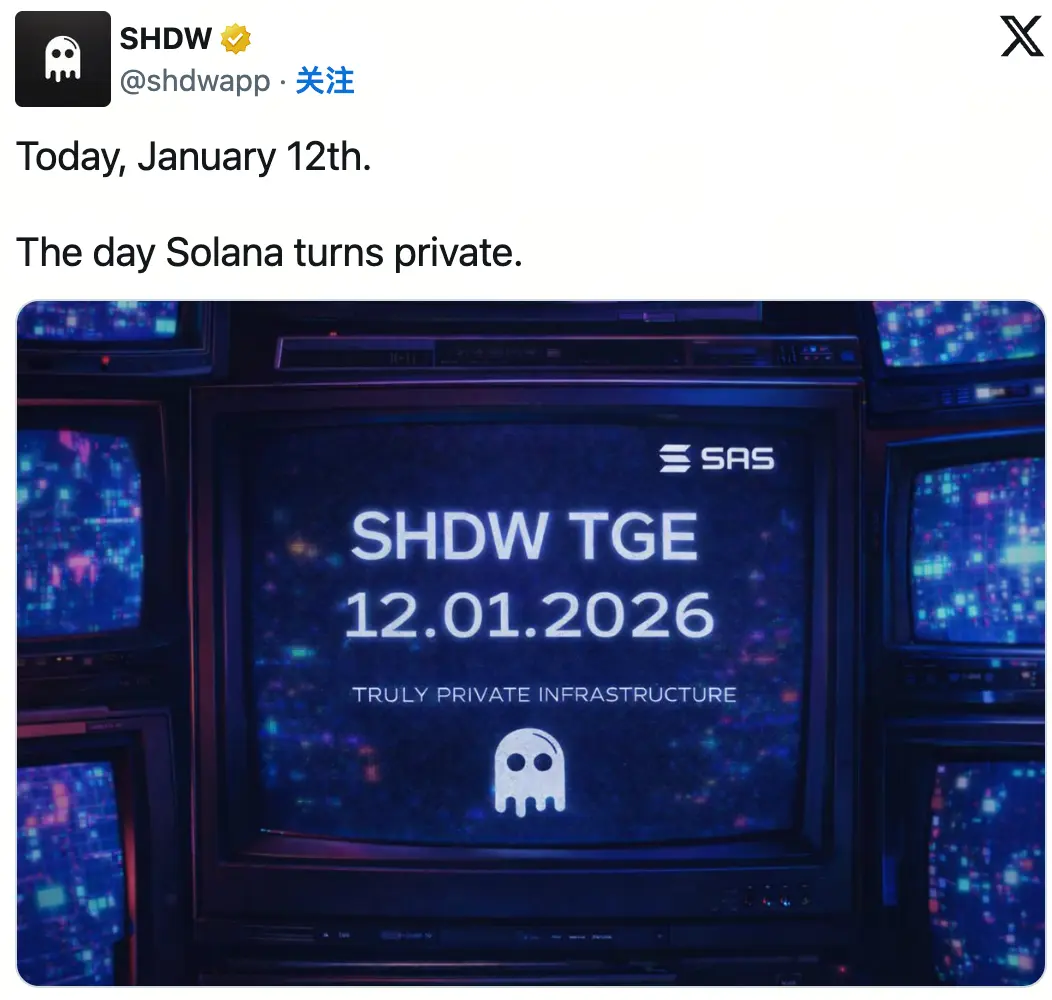
(Sources: X)
Launched during the ongoing Solana privacy hackathon, SHDW promised advanced transaction privacy and shielding capabilities on the high-performance blockchain. However, early user reports and community warnings suggest the app may be trapping deposits, raising serious concerns about security, legitimacy, and the broader risks in Solana’s rapidly expanding privacy ecosystem.
This analyst insight examines the SHDW controversy, its promised features versus actual user experience, the context of Solana’s privacy development drive, the ongoing hackathon, and the implications for user safety and project credibility as of January 13, 2026.
SHDW App: Promised Privacy Features vs. Reality
SHDW positioned itself as a next-generation privacy layer for Solana, promising:
- Private transfers and trades using Jupiter aggregator for optimized routing.
- Elimination of front-running risks through a dedicated privacy layer.
- Future features including X402 standard transactions, prediction markets, data filters, and private verification for AI-agent interactions.
- Chain-off verification and settlement for human-AI or AI-AI transactions without revealing identities.
The app launched with two core functions: SHDW Swap (private trading) and SHDW Wallet (browser extension). Additional capabilities were slated for later release.
However, user reports paint a starkly different picture:
- Deposits made for testing or trading cannot be withdrawn.
- The “unshield” or withdrawal button is non-functional.
- No customer support is available despite a contact form.
- Funds appear locked in user accounts with no recovery path.
These allegations have surfaced rapidly on X and Solana community channels, with warnings that SHDW may be a scam or severely defective product.
SHDW Token Launch and Viral Promotion
SHDW was heavily promoted across social media in the past 24 hours, with influencers and accounts hyping the January 12, 2026 (UTC 20:00) token launch. The token is unrelated to any previous project using the same ticker (which crashed to near zero).
Promotion emphasized:
- Integration with Jupiter for private swaps.
- Elimination of MEV/front-running.
- Future AI-agent privacy features.
Despite the hype, early user experiences have turned overwhelmingly negative, with locked funds and zero support driving scam accusations.
- Token Launch: January 12, 2026 (UTC 20:00).
- Promotion Intensity: High visibility via influencers and Solana privacy communities.
- Previous Token: Unrelated legacy SHDW token (now worthless).
- Current Status: Token not yet live; app functionality already questioned.
Solana Privacy Hackathon Context: High Stakes for New Projects
SHDW launched during Solana’s ongoing privacy hackathon, which runs through January 30, 2026. The event offers a $100,000 prize pool for the best privacy applications and has driven significant visibility for new projects.
Solana has aggressively pursued privacy capabilities in recent months, including integrations with zero-knowledge tech and private computation layers. The hackathon is part of this broader strategy to compete with privacy-focused chains like Monero and Zcash while maintaining high throughput.
However, the rush to launch has raised concerns about quality control and security vetting:
- Prize Pool: $100,000 for top privacy projects.
- Duration: Ends January 30, 2026.
- Goal: Accelerate privacy tooling on Solana.
- Risk: Rapid launches may lead to untested or malicious applications.
SHDW’s issues highlight the double-edged sword of fast-moving hackathons: innovation speed vs. security diligence.
Solana Seeker vs Saga: Ecosystem Evolution and Airdrop Drama
The controversy arrives amid Solana Mobile’s transition from the original Saga phone to the newer Seeker device. Solana Mobile recently confirmed that the upcoming SKR token airdrop will go exclusively to Solana Seeker phone users and developers—explicitly excluding Solana Saga phone owners.
This decision has sparked debate within the community:
- Seeker Phone: Second-generation device with improved hardware and ecosystem focus.
- Saga Exclusion: First-generation owners miss SKR airdrop despite early adoption.
- Rationale: Reward current device holders and developers building on the platform.
- Ecosystem Impact: Drives Seeker sales but risks alienating early supporters.
The Solana Seeker phone vs Saga distinction reflects a deliberate pivot toward ecosystem growth over legacy rewards.
Broader Implications for Solana Privacy Development
The SHDW controversy raises serious questions about the safety of new privacy applications on Solana:
- Rapid launches during hackathons may prioritize speed over security.
- Lack of withdrawal functionality and support creates high user risk.
- Viral promotion via influencers can amplify potentially malicious projects.
- Community vigilance and on-chain verification become critical.
While Solana’s high throughput and low fees make it attractive for privacy tooling, incidents like SHDW underscore the need for rigorous auditing, transparent team information, and user education.
Outlook: Solana Privacy Hackathon and SHDW Fallout
The Solana privacy hackathon continues through January 30, with more projects expected to launch. SHDW’s issues serve as an early warning: high visibility and influencer promotion do not guarantee legitimacy.
For users:
- Verify withdrawal functionality before depositing.
- Research team transparency and audit status.
- Avoid projects with locked funds or no support channels.
- Use small test amounts when experimenting.
For Solana ecosystem:
- The hackathon may accelerate legitimate privacy innovation.
- High-profile failures could increase scrutiny and demand for better vetting.
In summary, the SHDW app on Solana faces serious allegations of locking user funds without withdrawal options or customer support, casting a shadow over the network’s privacy ambitions during its ongoing hackathon. While promising advanced features like private swaps, AI-agent verification, and X402 standards, the lack of basic functionality has triggered scam warnings and community backlash. The explicit exclusion of Solana Saga phone owners from the upcoming SKR airdrop further highlights Solana Mobile’s focus on the newer Solana Seeker phone and current ecosystem participants. As the hackathon continues through January 30, users should exercise extreme caution with new privacy applications—verify withdrawals, check audits, and avoid unaudited or untested platforms. Monitor official Solana Mobile announcements and community channels for updates on SHDW, SKR, and hackathon outcomes—always use regulated wallets and conduct thorough due diligence before interacting with any cryptocurrency project.
Disclaimer: The information on this page may come from third parties and does not represent the views or opinions of Gate. The content displayed on this page is for reference only and does not constitute any financial, investment, or legal advice. Gate does not guarantee the accuracy or completeness of the information and shall not be liable for any losses arising from the use of this information. Virtual asset investments carry high risks and are subject to significant price volatility. You may lose all of your invested principal. Please fully understand the relevant risks and make prudent decisions based on your own financial situation and risk tolerance. For details, please refer to
Disclaimer.
Related Articles
$285M Solana Disaster – Here’s What Actually Happened
On April 1, 2026, things fell apart on Solana (SOL). Drift Protocol got hit with a $285 million exploit, and within hours, its token crashed hard. The impact didn’t stop there, it quickly spread to other connected protocols.
This breakdown is based on reporting and analysis from Coin Bureau wi
CaptainAltcoin1h ago
Circle Mints $1 Billion USDC on Solana as On-Chain Dollar Demand Grows
Circle's recent $1 billion USDC mint on Solana indicates rising demand for stablecoins, highlighting Solana's growth in on-chain financial activities. This event suggests increased liquidity and a shift towards digital dollars in crypto markets.
CryptometerIo2h ago
Exodus Movement 3 月末 BTC 持有量增至 628 枚,SOL 增至 17,541 枚
Gate News message. On April 8, publicly listed self-custody crypto company Exodus Movement released updated data on its digital asset holdings as of the end of March. The data shows that the company’s Bitcoin holdings increased to 628 coins (a net monthly gain of 18 BTC), its Ethereum holdings increased to 1,857 coins (a net monthly gain of 17 ETH), and its Solana holdings increased to 17,541 coins (a net monthly gain of 1,847 SOL).
GateNews3h ago
SOL Strategies Acquires Darklake Labs to Accelerate Zero-Knowledge Privacy Via Solana
SOL Strategies Inc. has acquired Darklake Labs for $1.2M to enhance zero-knowledge privacy on the Solana network, strengthening its position in decentralized finance and securing on-chain transactions. The move integrates Darklake's expertise, aiming to bolster financial security and advance product development.
BlockChainReporter5h ago
$285M Solana Disaster – Here’s What Actually Happened
On April 1, 2026, things fell apart on Solana (SOL). Drift Protocol got hit with a $285 million exploit, and within hours, its token crashed hard. The impact didn’t stop there, it quickly spread to other connected protocols.
This breakdown is based on reporting and analysis from Coin Bureau wi
CaptainAltcoin8h ago
Nasdaq-listed DeFi Development held 2.22 million SOL at the end of March, and the dfdvSOL holdings increased to over 656,000 SOL.
Gate News message, April 8, DeFi Development, the Solana treasury company listed on Nasdaq, released its latest operational report. The report shows that as of the end of March, the company held 2.22 million SOL, and its liquid staking token dfdvSOL holdings have increased from 513k to more than 656k. In addition, DeFi Development said it will continue to advance its strategic investment in the stablecoin protocol Apyx.
GateNews12h ago


