







👉#Web3SecurityGuide
👉Web3 Privacy Solutions. In the #Web3 ecosystem, privacy is an indispensable element for protocols today to protect the data and assets of users and organizations. According to analyses from expert organizations like a16z crypto for 2026, privacy has become the most important competitive advantage in crypto and is considered a critical prerequisite for bringing on-chain finance into the mainstream. In 2025, privacy-focused assets like Zcash and Monero outperformed the market with increases of 820% and 130% respectively. This performance continues in 2026 with what is called the privacy supercycle, where demand shifts towards compliant privacy tools—solutions that provide selective disclosure and regulatory compliance instead of complete opacity. While the traceability risks brought about by transparent blockchains increase data leaks in DeFi RWAs, corporate finance, and identity applications, privacy has ceased to be an additional feature and has become a fundamental infrastructure.
For developers, privacy technologies are a top priority. Tools like zero-knowledge proofs (ZKPs), zkSNARKs, and zkVMs have transformed the development process. This allows developers to write code in familiar languages like Rust or Solidity, compile it into verifiable circuits, and easily create use cases such as private DEX transactions, confidential governance, or KYC verifiable transactions. ZK-based Layer 2 solutions like Aztec Network offer encrypted smart contracts on Ethereum, while Railgun protects balance and transaction details by shielding ERC20 and NFTs with private addresses using ZK SNARKs. Protocols like Zama with fully homomorphic encryption (FHE) enable computation on encrypted data, supporting scenarios such as private DeFi payments, banking tokenization, and private auctions. Hybrid architectures with multi-party computation (MPC) and trusted execution environments (TEEs) provide a balance of speed, security, and verifiability. Innovative approaches like Garbled Circuits (GRCs) integrate programmable privacy into any chain at low cost, as seen in COTI. During development, these technologies embed privacy controls into the base layer of the code, similar to the Checks Effects Interactions pattern, and proof generation with zkVMs is reduced to milliseconds.
This enables developers to write code in familiar languages like Rust or Solidity, compile it into verifiable circuits, and easily create use cases for private DEX transactions, confidential governance, or KYC verifiable transactions. Operational controls are vital for protocol teams. The Secrets as a Service approach makes privacy a shared infrastructure, and programmable data access rules enforce who can access data under what conditions and for how long on the chain, thanks to client-side encryption and decentralized key management. This structure enables selective disclosure in DeFi RWAs and enterprise applications, meeting AML and KYC requirements. Hybrid architectures, such as ZK with TEE or MPC with FHE combinations, compensate for the weaknesses of individual technologies and deliver practical performance in a production environment. TEE-based chains like Oasis Network support confidential smart contracts, while Secret Network protects private computations. Continuous monitoring tools should be combined with early warning mechanisms, and incident response plans should be strengthened with privacy-focused governance. Audits and bug bounty programs should become standard in this area, but are not sufficient. Privacy should be adopted as a demonstrable program so that the system can be re-evaluated in the face of new integrations or ecosystem changes.
Wallet and asset privacy is a separate layer for users. Stealth addresses conceal recipient identity through one-time address generation; techniques like ring signatures and RingCT obfuscate sender and amount information; and viewkeys provide selective access to authorized parties. Railway Signal, such as hardware wallets and ZK-based wallets, should be obtained through official channels, and recipient addresses, contract interactions, and metadata should be carefully verified before each transaction. Training on phishing and chain analysis attacks should be increased, and transaction approvals should never be rushed in privacy-focused practices. For enterprises, governance risk compliance frameworks, ISO standards, and multi-layered privacy approaches should be adopted.
The projections for 2026 are clear. Privacy is not a badge, but a demonstrable infrastructure. Lifecycle privacy encompasses the design, development, deployment, and evolution phases. Programmable cryptography, mature zkVMs, and hybrid systems have become standard, but real benefits are achieved through process integration. Protocols continuously verify system behavior, strengthen operational controls, and minimize the likelihood of a single point of failure becoming catastrophic. Teams adopting these approaches gain trust, attract capital, and accelerate iteration. As a16z crypto emphasizes, privacy creates a chain-lock effect and produces lasting network impacts beyond performance competition. In conclusion, Web3 privacy is a proactive, cultural, and continuous effort. The most up-to-date guidance from expert analysts is based on these principles and, when implemented, makes the ecosystem more resilient. Every stakeholder—developer, protocol operator, or user—protects their own assets and the overall ecosystem by adopting these practices. Investing in privacy is far less costly than losses and creates a competitive advantage in the long run.
#CreatorLeaderboard
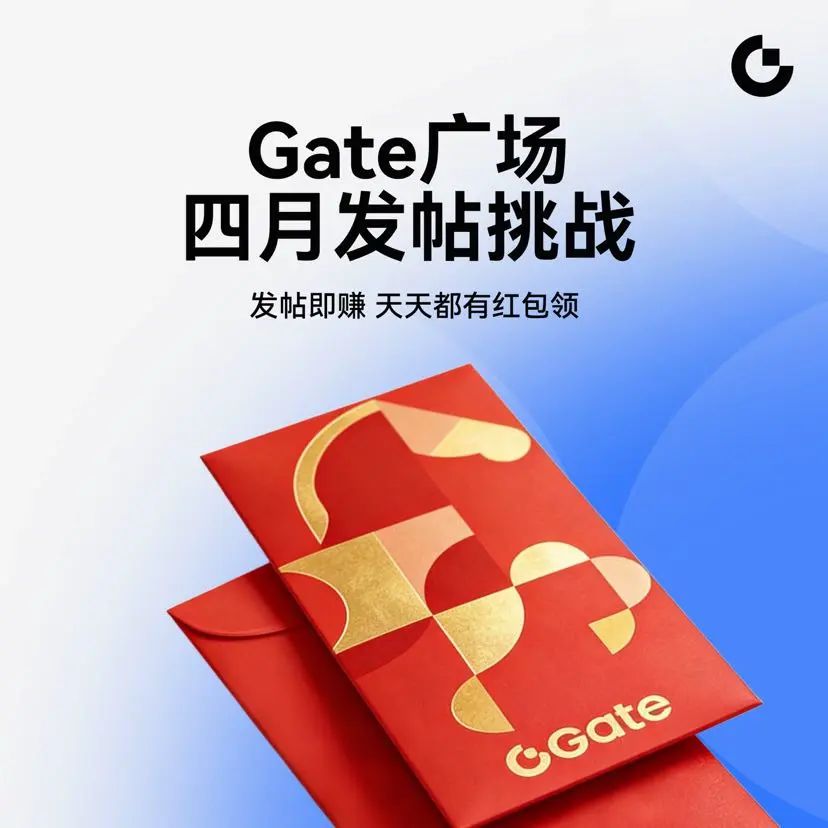
#GateSquareAprilPostingChallenge
Take action now and post your first plaza message in April!
👉️ https://www.gate.com/post
🗓 Deadline: April 15th
Details: https://www.gate.com/announcements/article/50520
👉Web3 Privacy Solutions. In the #Web3 ecosystem, privacy is an indispensable element for protocols today to protect the data and assets of users and organizations. According to analyses from expert organizations like a16z crypto for 2026, privacy has become the most important competitive advantage in crypto and is considered a critical prerequisite for bringing on-chain finance into the mainstream. In 2025, privacy-focused assets like Zcash and Monero outperformed the market with increases of 820% and 130% respectively. This performance continues in 2026 with what is called the privacy supercycle, where demand shifts towards compliant privacy tools—solutions that provide selective disclosure and regulatory compliance instead of complete opacity. While the traceability risks brought about by transparent blockchains increase data leaks in DeFi RWAs, corporate finance, and identity applications, privacy has ceased to be an additional feature and has become a fundamental infrastructure.
For developers, privacy technologies are a top priority. Tools like zero-knowledge proofs (ZKPs), zkSNARKs, and zkVMs have transformed the development process. This allows developers to write code in familiar languages like Rust or Solidity, compile it into verifiable circuits, and easily create use cases such as private DEX transactions, confidential governance, or KYC verifiable transactions. ZK-based Layer 2 solutions like Aztec Network offer encrypted smart contracts on Ethereum, while Railgun protects balance and transaction details by shielding ERC20 and NFTs with private addresses using ZK SNARKs. Protocols like Zama with fully homomorphic encryption (FHE) enable computation on encrypted data, supporting scenarios such as private DeFi payments, banking tokenization, and private auctions. Hybrid architectures with multi-party computation (MPC) and trusted execution environments (TEEs) provide a balance of speed, security, and verifiability. Innovative approaches like Garbled Circuits (GRCs) integrate programmable privacy into any chain at low cost, as seen in COTI. During development, these technologies embed privacy controls into the base layer of the code, similar to the Checks Effects Interactions pattern, and proof generation with zkVMs is reduced to milliseconds.
This enables developers to write code in familiar languages like Rust or Solidity, compile it into verifiable circuits, and easily create use cases for private DEX transactions, confidential governance, or KYC verifiable transactions. Operational controls are vital for protocol teams. The Secrets as a Service approach makes privacy a shared infrastructure, and programmable data access rules enforce who can access data under what conditions and for how long on the chain, thanks to client-side encryption and decentralized key management. This structure enables selective disclosure in DeFi RWAs and enterprise applications, meeting AML and KYC requirements. Hybrid architectures, such as ZK with TEE or MPC with FHE combinations, compensate for the weaknesses of individual technologies and deliver practical performance in a production environment. TEE-based chains like Oasis Network support confidential smart contracts, while Secret Network protects private computations. Continuous monitoring tools should be combined with early warning mechanisms, and incident response plans should be strengthened with privacy-focused governance. Audits and bug bounty programs should become standard in this area, but are not sufficient. Privacy should be adopted as a demonstrable program so that the system can be re-evaluated in the face of new integrations or ecosystem changes.
Wallet and asset privacy is a separate layer for users. Stealth addresses conceal recipient identity through one-time address generation; techniques like ring signatures and RingCT obfuscate sender and amount information; and viewkeys provide selective access to authorized parties. Railway Signal, such as hardware wallets and ZK-based wallets, should be obtained through official channels, and recipient addresses, contract interactions, and metadata should be carefully verified before each transaction. Training on phishing and chain analysis attacks should be increased, and transaction approvals should never be rushed in privacy-focused practices. For enterprises, governance risk compliance frameworks, ISO standards, and multi-layered privacy approaches should be adopted.
The projections for 2026 are clear. Privacy is not a badge, but a demonstrable infrastructure. Lifecycle privacy encompasses the design, development, deployment, and evolution phases. Programmable cryptography, mature zkVMs, and hybrid systems have become standard, but real benefits are achieved through process integration. Protocols continuously verify system behavior, strengthen operational controls, and minimize the likelihood of a single point of failure becoming catastrophic. Teams adopting these approaches gain trust, attract capital, and accelerate iteration. As a16z crypto emphasizes, privacy creates a chain-lock effect and produces lasting network impacts beyond performance competition. In conclusion, Web3 privacy is a proactive, cultural, and continuous effort. The most up-to-date guidance from expert analysts is based on these principles and, when implemented, makes the ecosystem more resilient. Every stakeholder—developer, protocol operator, or user—protects their own assets and the overall ecosystem by adopting these practices. Investing in privacy is far less costly than losses and creates a competitive advantage in the long run.
#CreatorLeaderboard
#GateSquareAprilPostingChallenge
Take action now and post your first plaza message in April!
👉️ https://www.gate.com/post
🗓 Deadline: April 15th
Details: https://www.gate.com/announcements/article/50520




























 :
:



