ChingYang

vip
Age 0.8 Yıl
Peak Tier 0
No content yet
#CelebratingNewYearOnGateSquare #CLARITYActAdvances 🇺🇸📜
The Digital Asset Market CLARITY Act has entered its most critical phase in Washington. As of late February 2026, the bill is on the verge of finalization — but negotiations remain tense. What happens in the coming days could define the regulatory structure of U.S. crypto markets for the next decade.
This is no longer just a policy debate — it is a structural turning point for digital finance.
📌 Current Legislative Status
House of Representatives
The bill passed in July 2025 with a decisive bipartisan vote (294–134), signaling broad p
DOGE12,47%
SUI13,21%
BTC7,28%
ETH12,27%
MrFlower_XingChenvip
#CelebratingNewYearOnGateSquare #CLARITYActAdvances 🇺🇸📜
The Digital Asset Market CLARITY Act has entered its most critical phase in Washington. As of late February 2026, the bill is on the verge of finalization — but negotiations remain tense. What happens in the coming days could define the regulatory structure of U.S. crypto markets for the next decade.
This is no longer just a policy debate — it is a structural turning point for digital finance.
📌 Current Legislative Status
House of Representatives
The bill passed in July 2025 with a decisive bipartisan vote (294–134), signaling broad political recognition that crypto market structure requires clarity.
Senate Progress
The legislation has cleared the United States Senate Committee on Agriculture, Nutrition, and Forestry, but advancement through the United States Senate Committee on Banking, Housing, and Urban Affairs has stalled.
The key obstacle? Stablecoin yield provisions.
White House Timeline
The The White House has reportedly set a March 1, 2026 soft deadline to broker a compromise. If negotiations hold, analysts estimate a strong probability of final passage by April 2026.
⚖️ The Three Major Sticking Points
1️⃣ Stablecoin Yield Battle — Wall Street vs Crypto
This is the core conflict.
Traditional banks argue that allowing stablecoins to offer yield would create unregulated competition with savings accounts. Their concern centers on:
Deposit flight from banks
Shadow banking risk
Monetary transmission disruption
Crypto advocates counter that banning yield would:
Limit innovation
Reduce consumer benefit
Entrench traditional financial monopolies
The resolution of this debate will determine whether stablecoins evolve into passive settlement tools — or yield-bearing financial products.
2️⃣ DeFi Liability Framework
Lawmakers are debating how responsibility should be distributed between:
Software developers
DAO contributors
Centralized intermediaries
Front-end operators
The outcome could either protect open-source innovation or impose compliance burdens that reshape decentralized finance architecture.
3️⃣ The “Nihilist” Rhetoric
Treasury Secretary Scott Bessent recently urged industry holdouts to accept compromise terms, warning that failure to pass the bill before the 2026 midterms could stall regulatory clarity for years.
This reflects political urgency: delay could mean uncertainty through another election cycle.
🔮 What Happens Next?
Watch the March 1 deadline closely.
If a deal is reached on stablecoin yield language:
The bill likely advances to a full Senate floor vote.
Market structure clarity becomes imminent.
Institutional onboarding accelerates.
If negotiations fail:
Regulatory uncertainty extends.
Market volatility may increase.
Stablecoin frameworks remain fragmented.
📊 Market Implications
If passed, the CLARITY Act could:
• Define SEC vs CFTC jurisdiction lines
• Establish clearer token classification rules
• Provide compliance pathways for exchanges
• Encourage institutional capital inflows
• Accelerate ETF and structured product approvals
Regulatory clarity historically reduces long-term volatility while increasing capital efficiency.
🪙 Impact on $DOGE and $SUI
🐶 Dogecoin
Likely benefits from broader exchange clarity.
Meme coins may still face higher scrutiny depending on token classification rules.
Retail sentiment-driven assets could see renewed liquidity if regulatory fear decreases.
🌊 Sui
Layer-1 networks stand to gain from clearer compliance frameworks.
Developer ecosystems may expand under reduced legal uncertainty.
Institutional experimentation on emerging chains could accelerate.
🚀 Bigger Picture
The CLARITY Act is not just about compliance. It represents the institutionalization phase of crypto’s lifecycle.
If finalized:
Bitcoin solidifies as regulated digital collateral.
Ethereum and smart contract platforms operate under defined oversight.
Stablecoins become formal components of the financial system.
DeFi enters a new accountability era.
Celebrating the New Year on Gate Square while watching this legislation unfold feels symbolic — a transition from speculative adolescence to structural maturity.
The next few days could quietly shape the next decade of crypto.
Stay alert. The clock is ticking. ⏳

repost-content-media
  • Reward
  • 2
  • Repost
  • Share
Discoveryvip:
To The Moon 🌕
View More
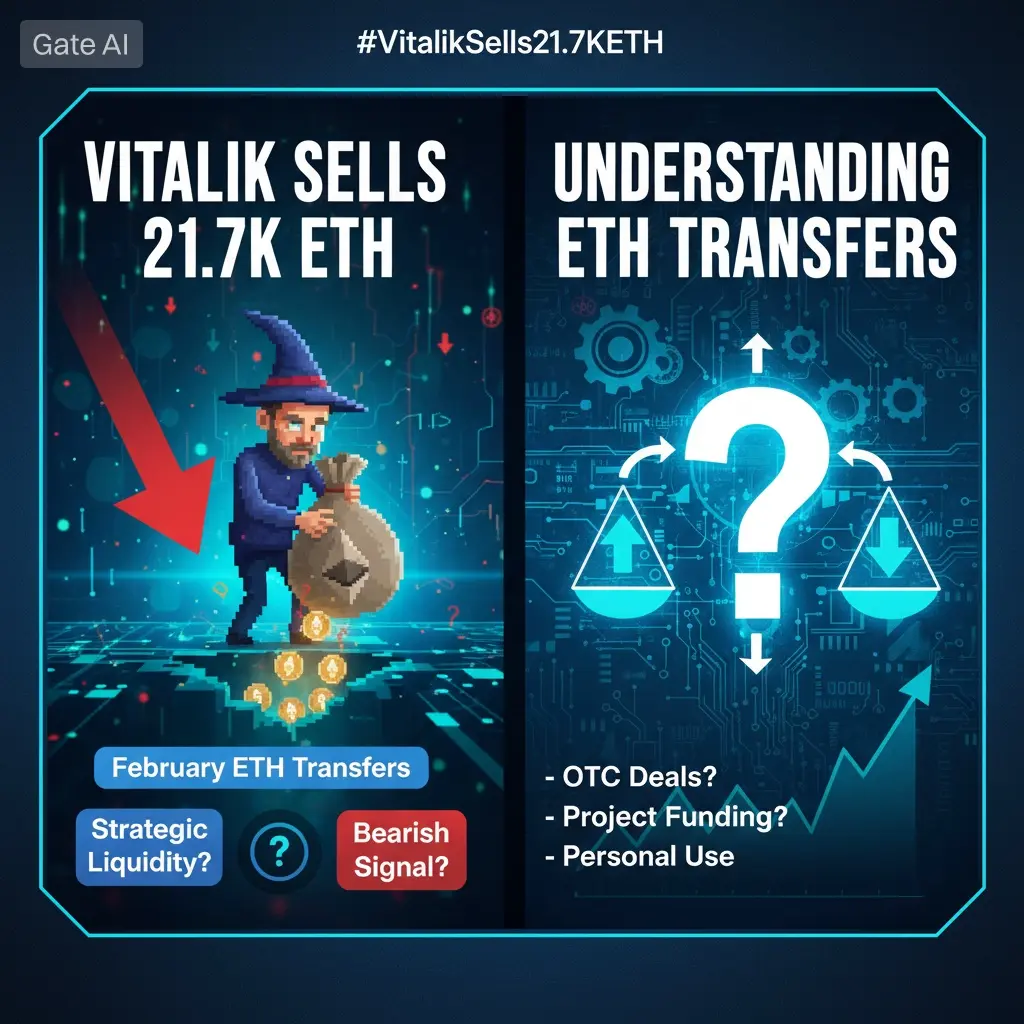
#VitalikSells21.7KETH A new wave of on-chain activity has placed Vitalik Buterin back in the spotlight after substantial ETH sales were detected throughout February 2026. While large token movements from founders often trigger speculation, the broader context suggests this is part of a structured and strategic allocation plan rather than an emotional market reaction.
🔍 What Happened
Blockchain tracking data indicates that approximately 10,723 ETH (~$21.74 million) has been sold since early February. Notably, around 3,765 ETH (~$7.08 million) was liquidated within just the past few days, showi
ETH12,27%
MrFlower_XingChenvip
#VitalikSells21.7KETH A new wave of on-chain activity has placed Vitalik Buterin back in the spotlight after substantial ETH sales were detected throughout February 2026. While large token movements from founders often trigger speculation, the broader context suggests this is part of a structured and strategic allocation plan rather than an emotional market reaction.
🔍 What Happened
Blockchain tracking data indicates that approximately 10,723 ETH (~$21.74 million) has been sold since early February. Notably, around 3,765 ETH (~$7.08 million) was liquidated within just the past few days, showing that the distribution has been ongoing rather than a single transaction event.
The average selling price across these transfers was close to $2,027 per ETH, aligning with recent market consolidation levels. The structured nature of the transactions suggests pre-planned treasury management rather than reactive selling during volatility spikes.
🧠 Strategic Context Behind the Sales
As co-founder of Ethereum, Vitalik has historically allocated portions of his holdings toward:
Ecosystem grants
Open-source development funding
Research initiatives
Public goods infrastructure
Philanthropic causes
Previous disclosures have indicated that portions of his ETH holdings are periodically liquidated to fund long-term development programs. Analysts monitoring the wallets suggest this month’s activity aligns with that pattern.
This distinction is critical:
✔ There is no evidence of panic selling.
✔ There is no signal of abandonment of the network.
✔ The transactions appear programmatic and structured.
📉 Market Reaction & Sentiment Impact
Despite the strategic framing, markets are psychological.
Large holder sales — especially from a founder — often create short-term pressure due to trader interpretation rather than fundamentals. Key sentiment shifts observed:
Exchange inflows have increased, which traders often interpret as potential sell-side supply.
Social media engagement around ETH volatility has surged.
Derivatives markets show heightened short-term hedging activity.
However, institutional positioning tells a more balanced story. Some major staking providers and long-term holders continue to accumulate ETH, suggesting that supply absorption may counterbalance distribution pressure.
📊 Broader Market Implications
Short-Term Outlook: Expect continued volatility. High-profile on-chain movements often trigger algorithmic and retail-driven reactions. Price swings may persist until liquidity stabilizes.
Medium-to-Long Term Outlook: Founder distributions for ecosystem funding are not inherently bearish. Historically, similar events have created temporary dips rather than structural breakdowns.
What matters more is:
Network activity growth
Staking participation rates
Layer 2 expansion
Institutional allocation trends
If development momentum remains strong, strategic funding deployments could ultimately reinforce ecosystem value.
🚦 Key Takeaways for Traders & Investors
Insider sales do not automatically equal loss of confidence.
Context matters more than headlines.
Structured treasury management differs from capitulation.
Market overreactions often create both risk and opportunity.
🧠 Final Thought
When a high-profile figure like Vitalik moves significant capital, the market listens — but smart participants look deeper than surface-level numbers. This appears to be a calculated redistribution aligned with long-term ecosystem goals rather than a bearish signal.
In the near term, sentiment may remain fragile. But over the longer horizon, how effectively those funds strengthen development will likely matter far more than the sale itself.
Stay analytical. Monitor on-chain flows. Watch liquidity conditions. And most importantly — separate narrative from data before making strategic decisions.
repost-content-media
  • Reward
  • 1
  • Repost
  • Share
Yunnavip:
Happy New Year 🧨
#MyViewOnWeb4.0’sOutlook The concept of Web 4.0 represents the next major evolution of the internet — one that will go beyond today’s Web 3.0 focus on decentralization and blockchain to include deeper connectivity between people, machines, artificial intelligence, and real-world systems. Below is a clear, forward-looking view of what Web 4.0’s outlook might realistically look like over the coming years:
🔮 1. Smarter, More Contextual AI Everywhere
Web 4.0 will be driven by advanced artificial intelligence frameworks that understand context — not just keywords, but intent, emotion, and real-tim
MrFlower_XingChenvip
#MyViewOnWeb4.0’sOutlook The concept of Web 4.0 represents the next major evolution of the internet — one that will go beyond today’s Web 3.0 focus on decentralization and blockchain to include deeper connectivity between people, machines, artificial intelligence, and real-world systems. Below is a clear, forward-looking view of what Web 4.0’s outlook might realistically look like over the coming years:
🔮 1. Smarter, More Contextual AI Everywhere
Web 4.0 will be driven by advanced artificial intelligence frameworks that understand context — not just keywords, but intent, emotion, and real-time needs. Unlike current AI that can answer questions or generate content, Web 4.0 AI will:
Anticipate needs before users ask
Personalize experiences dynamically
Facilitate seamless human-machine collaboration
Integrate with real-world devices and environments
This means search engines, apps, and digital assistants will feel more human-like and predictive. The internet won’t just respond — it will reason.
🔗 2. The Hyper-Connected Metaverse & Digital Twins
Web 4.0 will see virtual and physical worlds converge more tightly:
Digital twins — virtual replicas of physical systems — will be common for cities, factories, and infrastructure.
The metaverse will shift from gaming experiments to real-world use cases like education, remote collaboration, and healthcare.
Identity across digital spaces will become unified, secure, and portable.
This new layer of reality means interactions online have real-world impact and vice versa.
🧠 3. Decentralization, But Integrated
Unlike Web 3.0’s early vision of everything fully decentralized, Web 4.0 will find balance. Important truths emerging include:
✔ Decentralized systems will remain vital for security and trust.
✔ Centralized systems will still play roles where efficiency and compliance matter (e.g., financial systems, enterprise services).
✔ Smart contracts and blockchain will integrate behind the scenes rather than be a constant focal point for users.
Users won’t need to know they’re using decentralized tech — it will just work.
🔐 4. Privacy-First But Not Anonymity-Only
Privacy in Web 4.0 won’t just be about hiding data — it will be about user intent control:
Users decide how data is shared and for what purposes
AI agents will negotiate access in real time
Identity systems will confirm authenticity without exposing sensitive information
This is privacy with agency, not privacy as a vague promise.
⚙️ 5. IoT & Real-World Automation Integration
The Internet of Things (IoT) will become far more autonomous and intelligent:
Smart homes will predict needs, not just respond to commands
Autonomous vehicles will communicate with cities and infrastructure
Industrial systems will self-optimize with predictive AI
Web 4.0 is essentially the connective tissue between digital intention and real-world action.
📈 6. Economic and Market Impacts
Web 4.0 will reshape how value is created:
Micro-transactions and programmable money will be embedded everywhere
AI-mediated commerce will tailor offers to individuals in real time
New job ecosystems will emerge around AI supervision, ethics, and digital-physical integration
Traditional internet business models (ads, subscriptions) will evolve or fade
It’s not just a tech upgrade — it’s a new economic layer.
⚠️ 7. Challenges & Risks
Every powerful wave has turbulence. Web 4.0 faces:
🔹 Ethical questions about AI autonomy
🔹 Security risks from hyper-connected systems
🔹 Governance issues about data ownership
🔹 Inequality in access and benefit distribution
These aren’t blockers — but they will shape adoption and regulation.
📌 Final Outlook
Web 4.0 is not a single technology — it’s a fusion of:
✔ Predictive AI
✔ Fluid digital identity
✔ Real-physical world integration
✔ Seamless decentralized systems
✔ Dynamic economic interactions
It represents the shift from an internet that serves information to one that serves understanding and action.
In simple terms:
Web 1.0 was read,
Web 2.0 was interact,
Web 3.0 was own,
Web 4.0 will be live.
The internet won’t just be something you use — it will become something that understands you and the world around you.
repost-content-media
  • Reward
  • 2
  • Repost
  • Share
Discoveryvip:
To The Moon 🌕
View More
#GoldTops$5,190
#GoldTops$5,190
Gold has climbed above $5,190 per ounce, marking a major milestone in the global commodities market. The surge reflects growing investor demand for safe-haven assets as uncertainty increases across financial markets. When economic risks rise, gold often becomes a preferred store of value.
One of the key drivers behind this rally is global instability. Ongoing geopolitical tensions and trade concerns have made investors more cautious. Instead of holding riskier assets like stocks or cryptocurrencies, many are shifting funds into gold to protect their wealth.
Ano
MrFlower_XingChenvip
#GoldTops$5,190
#GoldTops$5,190
Gold has climbed above $5,190 per ounce, marking a major milestone in the global commodities market. The surge reflects growing investor demand for safe-haven assets as uncertainty increases across financial markets. When economic risks rise, gold often becomes a preferred store of value.
One of the key drivers behind this rally is global instability. Ongoing geopolitical tensions and trade concerns have made investors more cautious. Instead of holding riskier assets like stocks or cryptocurrencies, many are shifting funds into gold to protect their wealth.
Another important factor is monetary policy. When interest rates are expected to slow down or decline, gold becomes more attractive because it does not offer interest but holds value during inflation or currency weakness. A softer U.S. dollar has also supported the upward move in gold prices.
Market sentiment is currently bullish. Strong institutional demand and continued central bank buying are adding support to the price trend. While short-term pullbacks are always possible, the broader outlook remains positive as long as uncertainty and economic pressures continue.
In simple terms, gold crossing $5,190 shows that investors are prioritizing safety and stability. The next direction will largely depend on global economic conditions, central bank decisions, and overall market confidence.
repost-content-media
  • Reward
  • 2
  • Repost
  • Share
Discoveryvip:
To The Moon 🌕
View More
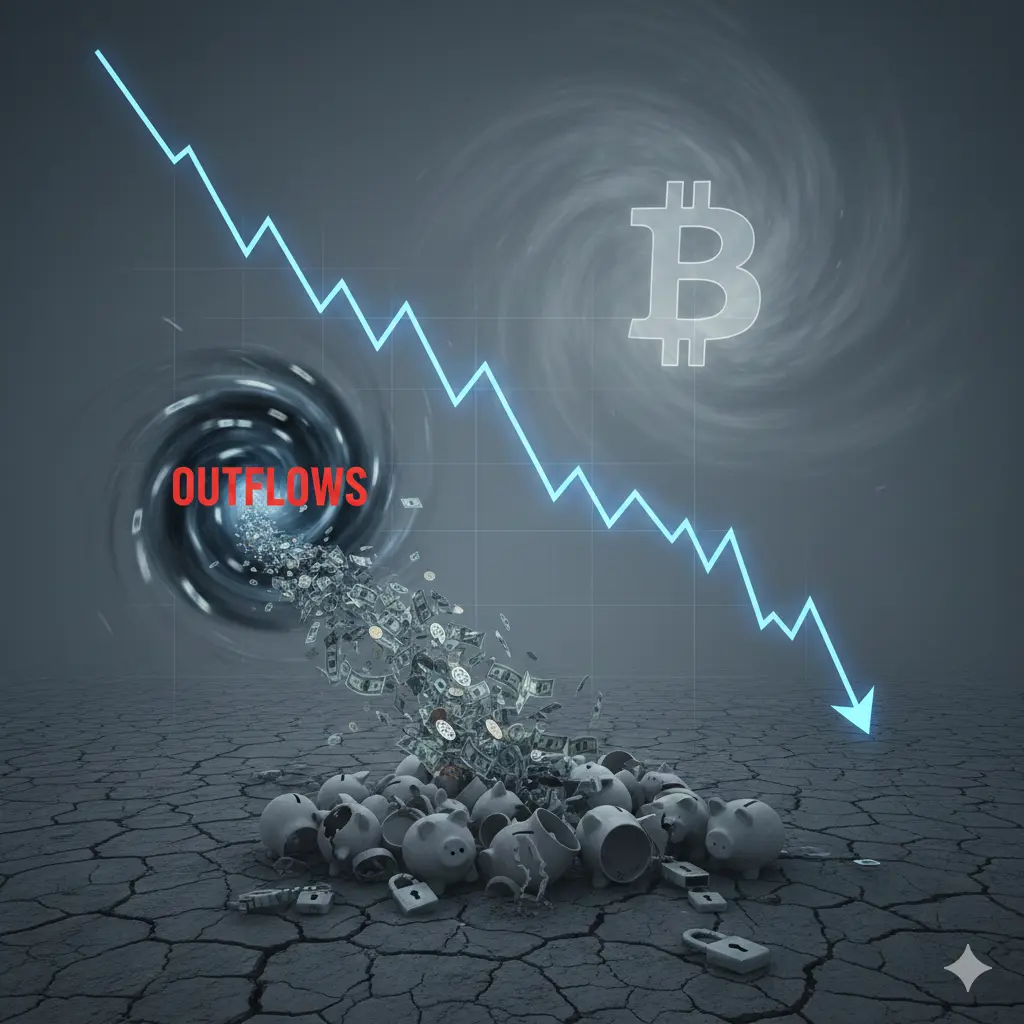
#SpotBTCETFsLogFiveWeekOutflows Spot Bitcoin ETFs have recorded five straight weeks of net outflows, marking a notable shift in market behavior for one of the crypto world’s most closely watched investment products. Instead of new money flowing into Bitcoin via these funds, investors have been withdrawing capital over several consecutive weeks — a trend that reflects changing sentiment and positioning among institutional and retail players.
Outflows typically signal a reduction in demand for exposure to Bitcoin through regulated investment vehicles. This can happen for several reasons. First,
BTC7,28%
MrFlower_XingChenvip
#SpotBTCETFsLogFiveWeekOutflows Spot Bitcoin ETFs have recorded five straight weeks of net outflows, marking a notable shift in market behavior for one of the crypto world’s most closely watched investment products. Instead of new money flowing into Bitcoin via these funds, investors have been withdrawing capital over several consecutive weeks — a trend that reflects changing sentiment and positioning among institutional and retail players.
Outflows typically signal a reduction in demand for exposure to Bitcoin through regulated investment vehicles. This can happen for several reasons. First, traders may be reallocating into other assets amid short-term volatility or uncertainty in the crypto market. When prices wobble, ETFs often feel the impact quickly because they are easy for large investors to enter or exit.
Another factor behind sustained outflows could be profit-taking. After periods of price appreciation, some holders choose to realize gains, especially if they believe near-term growth may stall. This rotation can lead to capital leaving Bitcoin ETFs and moving into cash, stablecoins, or alternative investments.
Market psychology also plays a role. Five weeks of outflows can create a feedback loop: as headlines report continued withdrawals, other investors may become cautious or defensive, prompting further outflows. This doesn’t always mean the market is entering a deep bearish phase, but it does highlight that confidence has softened compared with earlier periods of strong inflows.
It’s important to remember that ETF outflows do not necessarily equate to a drop in Bitcoin’s price — though they often correlate. The broader crypto ecosystem, on-chain metrics, miner behavior, and macroeconomic trends all factor into price direction. Still, sustained ETF outflows are a key signal that institutional appetite has temporarily pulled back.
In the coming days and weeks, watch for changes in fund flows, macroeconomic news, and Bitcoin price action. A shift back toward inflows could signal renewed confidence, while continued outflows might reflect ongoing caution among investors.
repost-content-media
  • Reward
  • 2
  • Repost
  • Share
Discoveryvip:
LFG 🔥
View More
#TrumpGroupMullsGazaStablecoin A U.S. government-linked group chaired by Donald Trump is reportedly exploring the creation of a U.S. dollar-pegged stablecoin for the Gaza Strip as part of post-war reconstruction discussions. The idea is being reviewed by members of a newly formed advisory initiative often referred to as a “Board of Peace,” focused on humanitarian and economic rebuilding efforts in the region.
The proposed stablecoin would not replace any existing currency. Instead, it would function as a digital payment tool to help facilitate transactions in an environment where traditional b
TOKEN7,27%
MrFlower_XingChenvip
#TrumpGroupMullsGazaStablecoin A U.S. government-linked group chaired by Donald Trump is reportedly exploring the creation of a U.S. dollar-pegged stablecoin for the Gaza Strip as part of post-war reconstruction discussions. The idea is being reviewed by members of a newly formed advisory initiative often referred to as a “Board of Peace,” focused on humanitarian and economic rebuilding efforts in the region.
The proposed stablecoin would not replace any existing currency. Instead, it would function as a digital payment tool to help facilitate transactions in an environment where traditional banking infrastructure has been heavily disrupted. With damaged financial systems, limited access to cash, and restricted banking operations, a blockchain-based dollar token could potentially provide an alternative channel for commerce and aid distribution.
Supporters of the idea argue that a stablecoin could:
Enable faster digital transactions without relying on physical cash
Improve transparency in aid and reconstruction payments
Support small businesses operating without functioning banks
Reduce reliance on informal or unregulated financial networks
However, the concept faces major practical and political challenges. Gaza’s infrastructure limitations — including electricity shortages and limited high-speed internet coverage — could restrict large-scale digital payment adoption. There are also governance questions regarding who would issue the token, how reserves would be managed, and what regulatory framework would apply.
Critics have also raised concerns that introducing a localized digital currency system could complicate broader regional economic coordination. The legal, geopolitical, and financial implications would need careful structuring to avoid unintended consequences.
At this stage, the stablecoin idea remains exploratory. No confirmed issuance plan, launch timeline, or finalized structure has been announced. Still, the proposal highlights how stablecoins are increasingly being considered not only as financial instruments but also as potential tools for reconstruction, humanitarian finance, and economic stabilization.
If developed responsibly, such a project could mark a significant moment where blockchain technology intersects directly with geopolitical recovery efforts.
repost-content-media
  • Reward
  • 2
  • Repost
  • Share
Discoveryvip:
LFG 🔥
View More
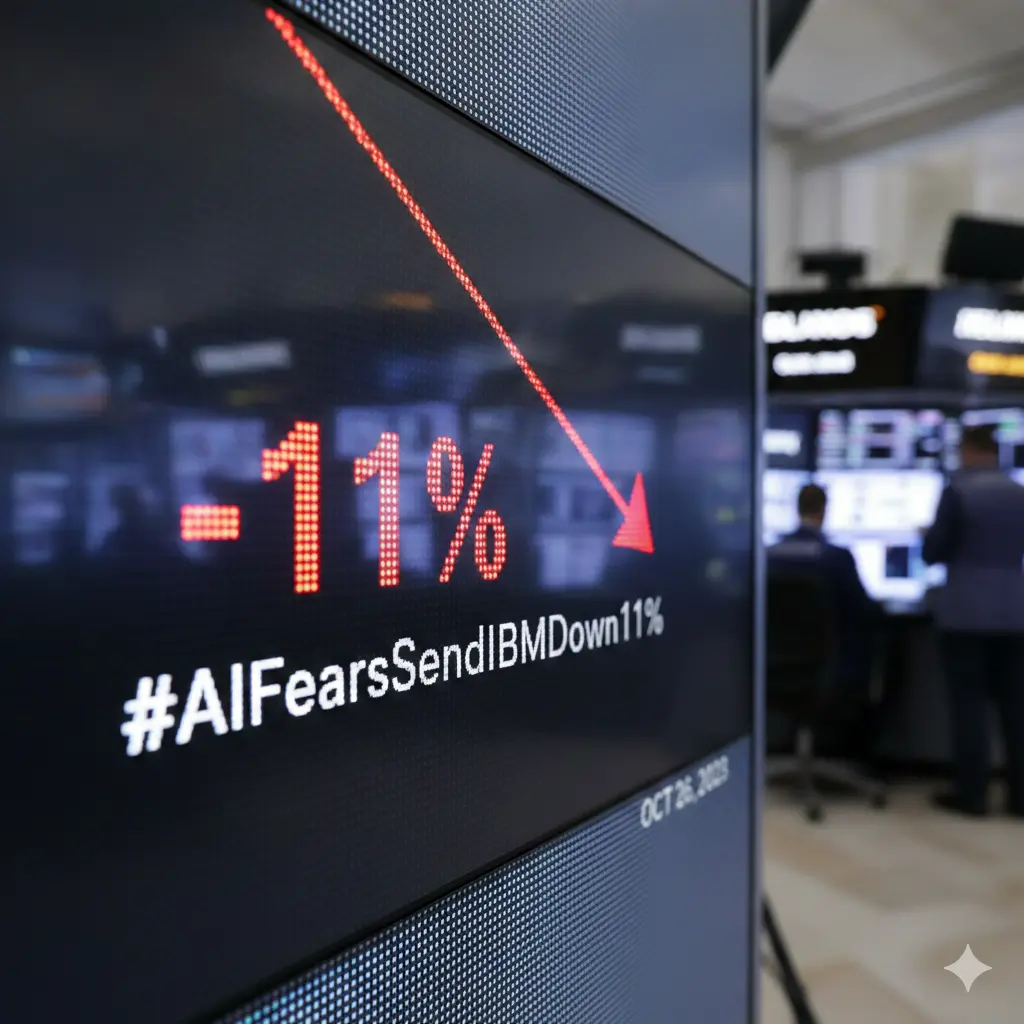
#AIFearsSendIBMDown11% Shares of IBM recently dropped about 11%, reflecting growing investor concern over the company’s ability to compete in the rapidly evolving artificial intelligence (AI) landscape. This decline is one of the most significant pullbacks in IBM’s stock in months and underscores how sensitive markets have become to AI leadership and growth expectations.
Investors and analysts have pointed to several key factors behind the sell-off. First, despite IBM’s long history in enterprise technology and early investments in AI through its Watson platform, the company has struggled to g
MrFlower_XingChenvip
#AIFearsSendIBMDown11% Shares of IBM recently dropped about 11%, reflecting growing investor concern over the company’s ability to compete in the rapidly evolving artificial intelligence (AI) landscape. This decline is one of the most significant pullbacks in IBM’s stock in months and underscores how sensitive markets have become to AI leadership and growth expectations.
Investors and analysts have pointed to several key factors behind the sell-off. First, despite IBM’s long history in enterprise technology and early investments in AI through its Watson platform, the company has struggled to gain the same level of momentum as newer competitors. Tech giants focused deeply on AI-native products — especially in generative models and cloud services — have captured a disproportionate share of investor enthusiasm and spending.
Market fears intensified after IBM’s latest earnings report revealed that AI-related revenue growth did not meet some analyst forecasts. While IBM continues to generate consistent income from legacy businesses like mainframes, consulting, and traditional software, investors are watching closely for stronger signs of traction in high-growth AI segments such as large language models, autonomous systems, and AI-powered analytics.
Compounding the situation, announcements from rival companies about new AI products, partnerships, or platform advances have amplified concerns that IBM may be lagging in innovation. When competitors demonstrate rapid enhancements or widely adopted AI tools, expectations rise across the sector — putting additional pressure on companies perceived as slower to evolve.
This 11% shift also reflects broader market dynamics where tech stocks are increasingly valued based on future growth potential rather than near-term profits alone. In this environment, hesitation in presenting a clear AI dominance strategy can quickly lead to sharp share-price reactions.
Despite the recent sell-off, IBM still maintains substantial assets, global enterprise relationships, and a significant installed customer base. However, the near-term outlook now hinges on how convincingly IBM can articulate and execute its AI strategy, attract developer and enterprise adoption, and compete with faster-moving rivals.
For investors, this drop serves as a reminder that AI leadership beliefs are now deeply embedded in stock valuations. Any sign of lagging behind can translate into significant market moves — whether fair or emotional — as traders reprice expectations for future growth.
repost-content-media
  • Reward
  • 1
  • Repost
  • Share
Yunnavip:
To The Moon 🌕
#EthereumFoundationAdvancesDeFipunk The Ethereum Foundation has announced a meaningful update in its support for DeFi + NFT innovation, especially in areas that blend decentralized finance (DeFi) with culture and community-driven assets — sometimes termed “DeFiPunk” projects. This initiative reflects the foundation’s growing focus on expanding the Ethereum ecosystem beyond purely technical upgrades and into creative financial infrastructure.
At its core, the move is designed to encourage builders who are innovating at the intersection of decentralized finance and digital culture. These are pro
ETH12,27%
MrFlower_XingChenvip
#EthereumFoundationAdvancesDeFipunk The Ethereum Foundation has announced a meaningful update in its support for DeFi + NFT innovation, especially in areas that blend decentralized finance (DeFi) with culture and community-driven assets — sometimes termed “DeFiPunk” projects. This initiative reflects the foundation’s growing focus on expanding the Ethereum ecosystem beyond purely technical upgrades and into creative financial infrastructure.
At its core, the move is designed to encourage builders who are innovating at the intersection of decentralized finance and digital culture. These are projects that combine financial primitives with community-centric digital assets — such as NFT-linked lending platforms, tokenized membership systems, and gamified financial experiences.
Under the new initiative, the Ethereum Foundation is:
Providing grants and funding to promising DeFiPunk teams building on Ethereum and its layer-2 networks.
Offering technical support and development resources to help projects scale securely.
Encouraging cross-project collaboration to create shared standards and tools.
One reason for this shift is that community-driven financial products have shown rapid experimentation in ways that traditional DeFi protocols haven’t matched. By formally backing these efforts, the foundation is signaling that innovation isn’t just about yields and liquidity — it’s also about community engagement, token creativity, and next-generation financial social models.
The initiative also aligns with Ethereum’s broader roadmap around scalability and user-centric design. As the network continues to evolve with layer-2 ecosystems, tools that attract diverse users — not only developers and traders — are increasingly valuable. Support for DeFiPunk efforts could lower barriers for artistic and cultural communities to participate meaningfully in decentralized finance.
Experts say this could enhance Ethereum’s competitive edge versus other smart contract platforms by:
Broadening use cases outside pure financial trading.
Driving higher on-chain activity and engagement.
Attracting new builders and communities.
Of course, with innovation comes risk, and the foundation is emphasizing security audits and responsible design as part of its grant criteria. Projects receiving support will be expected to demonstrate robust smart contract hygiene and user safety measures.
In summary, #EthereumFoundationAdvancesDeFipunk highlights a strategic push toward a more diverse and culture-rich ecosystem. Rather than focusing solely on traditional DeFi metrics, Ethereum is now actively nurturing projects that fuse financial tools with community creativity — opening the door to a broader, more vibrant future for decentralized applications.
repost-content-media
  • Reward
  • 1
  • Repost
  • Share
Yunnavip:
To The Moon 🌕
#ThreeMajorUSIndexesDecline The three major U.S. stock market indexes recently posted declines, signaling a broad pullback in equities after a period of mixed economic data and renewed investor caution. This downturn affected the S&P 500, Dow Jones Industrial Average, and Nasdaq Composite, which together serve as key barometers of U.S. economic and corporate health.
Several factors contributed to this decline. Persistent concerns about interest rate uncertainty have made investors wary. When central banks signal that interest rates may remain higher for longer, growth stocks — especially in te
MrFlower_XingChenvip
#ThreeMajorUSIndexesDecline The three major U.S. stock market indexes recently posted declines, signaling a broad pullback in equities after a period of mixed economic data and renewed investor caution. This downturn affected the S&P 500, Dow Jones Industrial Average, and Nasdaq Composite, which together serve as key barometers of U.S. economic and corporate health.
Several factors contributed to this decline. Persistent concerns about interest rate uncertainty have made investors wary. When central banks signal that interest rates may remain higher for longer, growth stocks — especially in technology and innovation sectors — often see price pressure. Higher borrowing costs can squeeze future earnings forecasts, leading traders to reevaluate valuations.
Economic indicators also played a role. Reports showing slower consumer spending or mixed employment data can dampen market confidence because they suggest economic momentum may be weakening. Investors tend to react quickly to signals that growth could slow, reallocating portfolios away from equities toward safer assets like bonds, gold, or cash.
Geopolitical tensions and global risk factors added to market jitters. Ongoing international uncertainties — whether related to trade, foreign policy, or conflict zones — can push markets lower when investors seek stability over risk.
Sector performance during the pullback also varied. Traditional defensive sectors such as utilities and consumer staples outperformed more cyclical segments like technology and industrials. This shift often reflects investor preference for steady returns and lower volatility during uncertain periods.
It’s important to note that a period of decline doesn’t necessarily indicate a full market downturn or bear market. Short-term volatility is common, and markets can rebound quickly as new economic data comes in or sentiment improves. Traders and analysts will be watching leading indicators, corporate earnings reports, and central bank communications closely to assess whether this correction is temporary or part of a broader trend.
In summary, the recent decline in the three major U.S. indexes reflects a combination of rate anxiety, economic uncertainty, and risk aversion — key themes that are currently shaping market behavior.
  • Reward
  • 1
  • Repost
  • Share
Yunnavip:
To The Moon 🌕
#BTCMarketAnalysis Bitcoin (BTC) continues to show dynamic price action as markets wrestle with macroeconomic forces, investor sentiment, and evolving crypto-specific factors. Here’s a clear, up-to-date analysis of where BTC stands and what could influence its next moves:
Current Price Condition
Bitcoin has been trading with notable volatility — alternating between short-term rallies and pullbacks. This choppiness reflects a market that is still searching for clear direction, with buyers and sellers reacting to both global economic signals and crypto-specific data.
Bullish Signals
1. Instituti
BTC7,28%
MrFlower_XingChenvip
#BTCMarketAnalysis Bitcoin (BTC) continues to show dynamic price action as markets wrestle with macroeconomic forces, investor sentiment, and evolving crypto-specific factors. Here’s a clear, up-to-date analysis of where BTC stands and what could influence its next moves:
Current Price Condition
Bitcoin has been trading with notable volatility — alternating between short-term rallies and pullbacks. This choppiness reflects a market that is still searching for clear direction, with buyers and sellers reacting to both global economic signals and crypto-specific data.
Bullish Signals
1. Institutional Interest Still Present
Institutional players, including asset managers and large funds, continue to engage with BTC through regulated vehicles like futures and custody solutions. Periods of inflows into institutional products often support price floors.
2. On-Chain Demand Metrics
Key on-chain indicators, such as long-term holder accumulation and declining exchange balances, suggest that many holders prefer to keep BTC off exchanges — a bullish sign historically linked with price strength.
3. Reduced Miner Sell Pressure
Miners have periodically slowed down their sales, indicating that selling supply from production sources is less aggressive than in some past periods. This can reduce downward pressure over time.
Bearish or Risk Factors
1. Spot BTC ETF Outflows
Recent weeks have shown continuous outflows from major spot Bitcoin ETF products. While flows can be short-term driven by sentiment, they indicate temporary weakness in capital inflows and trader caution.
2. Macro Uncertainty
Broader market stress — especially concerns about interest rates or equity volatility — can pull risk appetite down, with Bitcoin often moving in sync with traditional risk assets during periods of global uncertainty.
3. Psychological Resistance Levels
BTC has faced resistance at major psychological price zones. Breaking above these levels convincingly is crucial for momentum to return.
Support & Resistance Levels to Watch
Here’s a simplified snapshot of key price levels:
📌 Support Zones:
Near historically strong areas where buyers previously stepped in
Often aligned with major moving averages or previous consolidation zones
📌 Resistance Levels:
Psychological round numbers
Previous swing highs that have capped upside momentum
These levels serve as reference points for traders seeking potential breakouts or pullbacks.
Market Structure & Sentiment
Short-Term:
Choppy price action and range trading
Traders reacting to news events and ETF flow reports
Mid-Term:
Still range-bound until a catalyst pushes BTC decisively above key resistance
Either macro relief or renewed institutional inflows could ignite momentum
Long-Term:
Fundamentals like adoption, security, and blockchain network effects remain supportive
Long-term accumulation behavior and decreasing supply on exchanges often favor bullish trends over time
What’s Next? Key Drivers to Monitor
🔸 Macro Economic Data:
Inflation trends, interest rate guidance, and risk market performance
🔸 ETF Flows:
Direction and size of capital moving in/out of Bitcoin investment products
🔸 On-Chain Metrics:
Exchange balance changes, long-term holder activity, miner behavior
🔸 Regulation News:
Any clarity or shifts in global crypto policy affects sentiment
Bottom Line
Bitcoin’s market currently reflects cautious confidence mixed with uncertainty. While fundamentals and network strength remain healthy, short-term volatility is expected as traders watch macro conditions and ETF flows closely.
In simple terms:
Bullish if key resistance breaks cleanly,
Neutral to cautious if range persists,
Shift bearish only if major support fails.
  • Reward
  • 1
  • Repost
  • Share
Yunnavip:
To The Moon 🌕
#LatestMarketInsights As the new working season begins, I feel excited to share my thoughts on the future of trading and market opportunities on Gate.io.
2026 is shaping up to be an interesting year for digital finance. The market is moving toward stronger technological integration, especially in sectors connected with artificial intelligence, data infrastructure, and blockchain adoption. I believe the next major growth momentum may come from projects that combine innovation with real-world economic applications.
Right now, I am paying close attention to early market signals before entering an
MrFlower_XingChenvip
#LatestMarketInsights As the new working season begins, I feel excited to share my thoughts on the future of trading and market opportunities on Gate.io.
2026 is shaping up to be an interesting year for digital finance. The market is moving toward stronger technological integration, especially in sectors connected with artificial intelligence, data infrastructure, and blockchain adoption. I believe the next major growth momentum may come from projects that combine innovation with real-world economic applications.
Right now, I am paying close attention to early market signals before entering any position. Instead of chasing sudden price movements, I prefer analyzing volume trends, overall sentiment, and macroeconomic developments. A disciplined start to the trading day often creates better long-term results than impulsive decisions.
The AI technology cycle is still one of the strongest narratives driving investor interest, while global stock market performance may also influence crypto liquidity and risk appetite. Traders who stay updated with both crypto and traditional finance trends may have an advantage in understanding market direction.
For my first trade of the day, I am looking for opportunities with strong fundamentals, active community support, and sustainable long-term potential. Risk management remains my top priority because successful trading is not about winning every trade but about protecting capital while seeking consistent growth.
Wishing everyone a prosperous start to the season. May smart analysis, patience, and good market timing bring positive results for all participants in this exciting trading journey.
#马年开工第一帖
repost-content-media
  • Reward
  • 1
  • Repost
  • Share
Yunnavip:
To The Moon 🌕
#LatestMarketInsights The crypto market continues to evolve rapidly, creating new opportunities for traders and investors around the world. Platforms like Gate.io are playing an important role in building a global trading ecosystem where innovation, liquidity, and community interaction grow together.
In the current market environment, I believe technology-driven assets are becoming increasingly important. The rise of blockchain-based financial infrastructure, combined with artificial intelligence advancement, is changing how markets operate. Many investors are now focusing not only on short-te
MrFlower_XingChenvip
#LatestMarketInsights The crypto market continues to evolve rapidly, creating new opportunities for traders and investors around the world. Platforms like Gate.io are playing an important role in building a global trading ecosystem where innovation, liquidity, and community interaction grow together.
In the current market environment, I believe technology-driven assets are becoming increasingly important. The rise of blockchain-based financial infrastructure, combined with artificial intelligence advancement, is changing how markets operate. Many investors are now focusing not only on short-term price movement but also on long-term technological value and ecosystem strength.
From a trading perspective, emotional discipline is still one of the most powerful tools for success. Markets often move based on sentiment cycles, news developments, and macroeconomic expectations. Experienced traders usually avoid impulsive entries and instead wait for confirmation signals before executing large positions. Protecting capital is just as important as finding profitable opportunities.
Another important factor shaping the future market direction is global liquidity flow. When technology sectors perform strongly in traditional markets, risk appetite in digital assets may also increase. This connection between traditional finance and decentralized finance is becoming more visible every year.
I am particularly interested in projects that focus on real-world adoption, scalability, and sustainable tokenomics. The next growth wave of the crypto industry may not only depend on speculation but also on practical usage, institutional participation, and technological breakthrough innovation.
As we move forward in this dynamic financial era, continuous learning, market research, and strategic thinking will remain essential. Trading is a journey of patience and skill development, not just a game of short-term profit.
Wishing success, good luck, and smart decisions to everyone starting their trades today.
#马年开工第一帖
repost-content-media
  • Reward
  • 1
  • Repost
  • Share
Yunnavip:
To The Moon 🌕
#LatestMarketInsights
#马年开工第一帖
This year, I hope the cryptocurrency market brings meaningful positive changes to my life and opens new opportunities for growth and financial progress. I believe that dedication, learning, and smart trading strategies can help turn small steps into bigger achievements over time.
Through the power of blockchain and digital finance, I hope to explore a broader world beyond limits, gain new perspectives, and move closer to my personal and professional goals. Cryptocurrency represents innovation, opportunity, and the future of global finance.
I also wish Gate.io a
MrFlower_XingChenvip
#LatestMarketInsights
#马年开工第一帖
This year, I hope the cryptocurrency market brings meaningful positive changes to my life and opens new opportunities for growth and financial progress. I believe that dedication, learning, and smart trading strategies can help turn small steps into bigger achievements over time.
Through the power of blockchain and digital finance, I hope to explore a broader world beyond limits, gain new perspectives, and move closer to my personal and professional goals. Cryptocurrency represents innovation, opportunity, and the future of global finance.
I also wish Gate.io a smooth and successful journey ahead. May the platform continue supporting its community, promoting technological advancement, and helping traders around the world grow together.
Let us work hand in hand to embrace the future of cryptocurrency and contribute to changing the world through financial innovation and global connectivity.
repost-content-media
  • Reward
  • 1
  • Repost
  • Share
Yunnavip:
To The Moon 🌕
#TrumpAnnouncesNewTariffs Tariff Shockwave 2.0: Global Liquidity Repricing Enters a New Phase
The latest tariff announcement from Donald Trump has reactivated a powerful macro catalyst across global markets. Trade policy is no longer a background headline — it has moved to the center of liquidity repricing. While tariffs traditionally impact equities, commodities, and foreign exchange first, crypto markets now sit directly within the global liquidity transmission chain. This is not just a policy update. It is a volatility expansion trigger with cross-asset consequences.
Markets are entering a
BTC7,28%
MrFlower_XingChenvip
#TrumpAnnouncesNewTariffs Tariff Shockwave 2.0: Global Liquidity Repricing Enters a New Phase
The latest tariff announcement from Donald Trump has reactivated a powerful macro catalyst across global markets. Trade policy is no longer a background headline — it has moved to the center of liquidity repricing. While tariffs traditionally impact equities, commodities, and foreign exchange first, crypto markets now sit directly within the global liquidity transmission chain. This is not just a policy update. It is a volatility expansion trigger with cross-asset consequences.
Markets are entering a phase where macro headlines override short-term technical structure. When geopolitical trade friction rises, capital does not immediately rotate into risk assets — it first contracts, consolidates, and then selectively reallocates.
The Updated Macro Transmission Channels
Tariffs now influence markets through broader and more interconnected pathways than in previous cycles.
1. Corporate Margin Compression & Earnings Risk
Higher import costs raise production expenses. Multinational firms face margin pressure, leading to downward earnings revisions. Equity markets typically price this risk rapidly, increasing volatility in major indices.
2. USD Liquidity Tightening
Trade tensions often create short-term demand for the U.S. dollar as a perceived safe currency. A stronger dollar tightens global financial conditions, especially in emerging markets with dollar-denominated debt. This indirectly impacts crypto liquidity because global risk appetite weakens.
3. Treasury Yield & Rate Expectations
If tariffs increase inflation expectations, bond markets may price prolonged higher rates. Elevated yields reduce speculative appetite and pressure high-beta assets, including altcoins.
4. Risk Correlation Recalibration
Crypto’s correlation with equities tends to spike during initial macro stress. Only later — if narrative strength builds — does decoupling emerge.
Historically, crypto does not immediately act as a safe haven. The first reaction is defensive liquidity behavior.
Immediate Crypto Reaction Model (Updated)
Short-Term Window: 0–72 Hours
BTC shows relative strength against altcoins
Stablecoin dominance increases
Derivatives funding rates become unstable
Open interest spikes without sustained trend
Liquidation clusters form around leveraged zones
Altcoins typically underperform in early macro shock phases because traders consolidate capital into deeper liquidity pools such as BTC and stablecoins.
On major exchanges, macro-driven repositioning often creates rapid OI expansion without price confirmation — a classic precursor to volatility spikes.
On-Chain Metrics to Watch
Beyond price action, on-chain signals now provide early macro stress indicators:
Exchange inflows increasing → potential sell pressure
Stablecoin minting acceleration → defensive positioning
Whale wallet inactivity → large players waiting for clarity
Derivatives long/short imbalance → crowd positioning risk
If stablecoin supply rises while BTC holds structure, it may signal capital preparing for redeployment rather than exit.
Liquidity Phases in a Tariff-Driven Cycle
Phase 1 — Defensive Liquidity (Current Risk Zone)
Spreads widen. Order books thin. Funding flips quickly. Wick-driven fake breakouts dominate. This stage is narrative-driven and unstable. Traders react emotionally to headlines.
Phase 2 — Structured Volatility
Volatility compresses after liquidation events. Arbitrage desks and institutional participants re-enter. Directional expansion begins with clearer trend formation.
Phase 3 — Macro Hedge Narrative (Conditional)
If trade tensions escalate meaningfully:
Equity volatility sustains
Gold strengthens
USD momentum slows after initial spike
BTC begins rising independently of equities
This is the stage where crypto can transition into a macro hedge cycle.
Cross-Market Correlation Monitoring
To assess sustainability, traders should monitor:
BTC vs Nasdaq futures
BTC vs U.S. Dollar Index (DXY)
Gold reaction to trade stress
Emerging market FX weakness
U.S. Treasury yield movements
If BTC falls alongside equities, the move reflects liquidity contraction.
If BTC rises while equities weaken, capital rotation into alternative assets may be forming.
Expanded Forward Scenarios
Scenario A: Escalation Cycle
If tariffs expand into broader retaliation: Global growth expectations decline.
Equity volatility persists.
Capital seeks non-sovereign alternatives.
Crypto liquidity inflows increase.
In this environment, BTC dominance rises first. Altcoin rotation follows only after macro stability forms.
Scenario B: Negotiation Leverage
If markets interpret tariffs as temporary pressure tactics: Equity markets stabilize.
USD momentum softens.
Crypto returns to technical-driven structure.
Altcoins gradually recover.
Strategic Positioning Framework
BTC before altcoins — liquidity concentrates in majors first.
Monitor open interest — rising OI without price continuation signals instability.
Avoid chasing headline spikes — tariff moves often retrace after liquidity normalization.
Track stablecoin flows — inflows signal defense, outflows signal redeployment.
Respect funding extremes — crowded positioning increases liquidation probability.
Volatility Forecast Window
Next 24–72 Hours:
Reactive volatility, funding instability, sharp wicks.
Next 1–3 Weeks:
Trend clarity depends on equity resilience, USD strength, and bond market reaction.
Next 1–2 Months (If Escalation Continues):
Potential transition into macro-driven crypto expansion cycle — but only if BTC decouples from equities and liquidity rotates rather than contracts.
Final Assessment
Tariff announcements shift markets from technical structure to macro narrative dominance. At present, this remains a volatility event — not yet a confirmed structural trend shift.
Confirmation requires:
Sustained BTC strength relative to equities
Stabilizing funding conditions
Liquidity redeployment from stablecoins into majors
Cross-market divergence
Until those signals appear, expect instability, false breakouts, and liquidity-driven price action.
Macro narratives begin with chaos — structure follows only after liquidation clears excess leverage.
repost-content-media
  • Reward
  • 1
  • Repost
  • Share
Yunnavip:
To The Moon 🌕
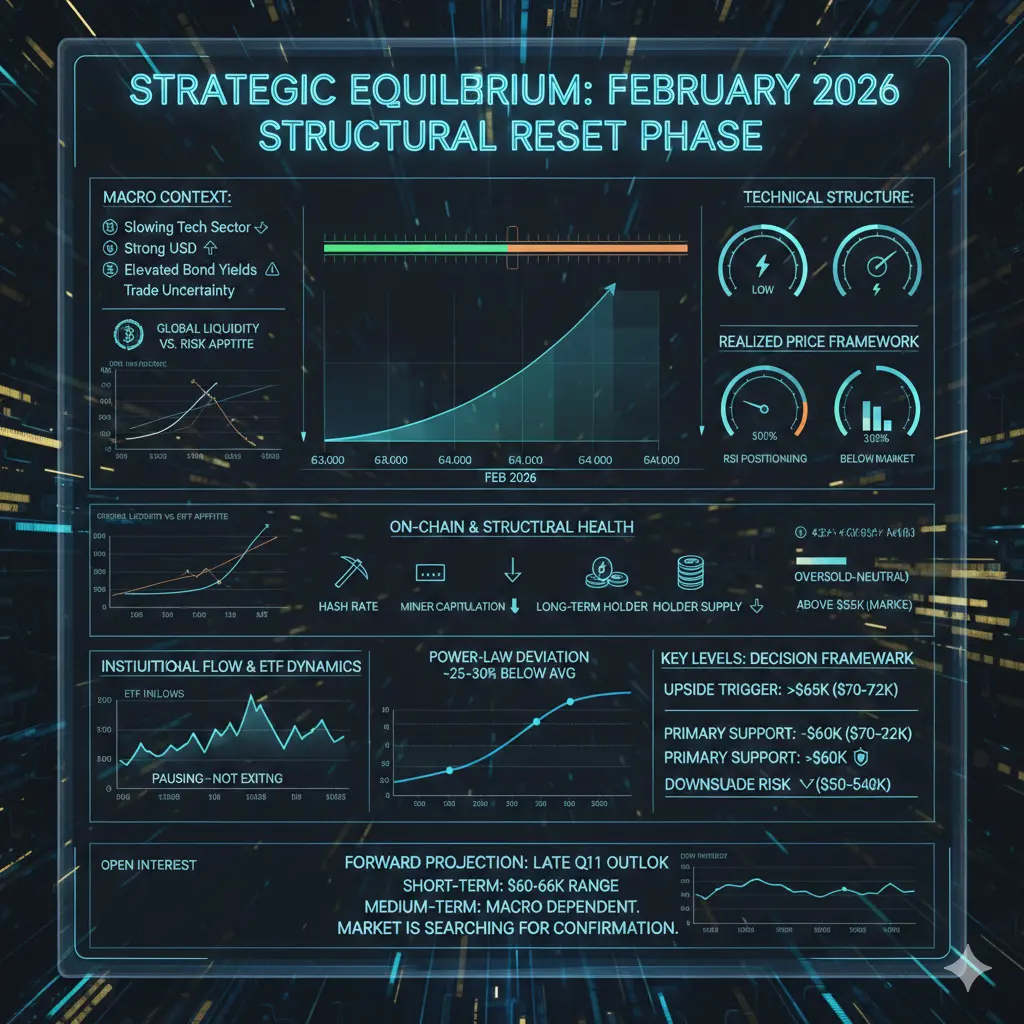
#BitcoinMarketAnalysis Strategic Equilibrium: February 2026 Structural Reset Phase
As February 2026 enters its final stretch, Bitcoin remains locked in a strategic equilibrium zone between $63,000 and $64,000. This range is no longer just a price consolidation — it represents a macro-technical compression phase where liquidity, sentiment, and positioning are recalibrating after the 2025 expansion cycle.
Markets are no longer reacting purely to crypto-native catalysts. Instead, Bitcoin is being evaluated within a broader cross-asset framework shaped by shifting dollar strength, bond yield dynam
BTC7,28%
ETH12,27%
MrFlower_XingChenvip
#BitcoinMarketAnalysis Strategic Equilibrium: February 2026 Structural Reset Phase
As February 2026 enters its final stretch, Bitcoin remains locked in a strategic equilibrium zone between $63,000 and $64,000. This range is no longer just a price consolidation — it represents a macro-technical compression phase where liquidity, sentiment, and positioning are recalibrating after the 2025 expansion cycle.
Markets are no longer reacting purely to crypto-native catalysts. Instead, Bitcoin is being evaluated within a broader cross-asset framework shaped by shifting dollar strength, bond yield dynamics, and global growth expectations. The current structure reflects balance — not weakness — but balance under pressure.
Macroeconomic Context: Liquidity vs. Risk Appetite
Recent failures to sustain price above $64,000 are not purely technical rejections. They reflect macro headwinds:
Slowing technology sector momentum globally
Stronger short-term U.S. dollar positioning
Elevated bond yields limiting speculative capital
Ongoing trade policy uncertainty
When macro uncertainty rises, capital preservation becomes dominant. High-beta assets typically experience compression before renewed expansion. Bitcoin, while increasingly institutionalized, still reacts to global liquidity conditions before decoupling narratives can form.
The broader crypto market cap hovering near $2.2 trillion suggests valuation compression, but not structural breakdown. Meanwhile, Ethereum testing the $1,800 support level adds indirect pressure to overall sentiment, as ETH often serves as the risk barometer for the altcoin complex.
Historically, these contraction phases function as leverage-clearing events rather than trend-ending reversals.
Technical Structure: Compression Before Expansion?
Several technical signals suggest we are in late-stage consolidation rather than early-stage breakdown:
1. Volatility Compression
Realized volatility is near levels last observed during the late 2022 accumulation zone. Periods of extreme compression typically precede directional expansion. The market is storing energy.
2. RSI Positioning
Daily RSI remains in oversold-to-neutral territory despite sideways price action. This divergence indicates seller exhaustion rather than aggressive distribution.
3. Realized Price Framework
Bitcoin is currently trading:
Above a realized holder cost basis near $55,000
Below a broader market cost average around $79,000
This positioning suggests long-term holders remain profitable and structurally supportive, while shorter-term participants are cautious.
On-Chain & Structural Health
The divergence between price stagnation and network strength is one of the most notable features of this cycle:
Hash rate remains at record highs
Miner capitulation signals are minimal
Exchange balances continue trending structurally lower
Long-term holder supply remains elevated
Network fundamentals do not reflect distribution pressure. Instead, they reflect resilience beneath a cooling price surface.
Additionally, power-law deviation models tracking approximately 25–30% below historical cycle averages indicate valuation compression relative to prior speculative peaks. This gap often closes through gradual appreciation rather than vertical spikes.
Institutional Flow & ETF Dynamics
Spot ETF inflows have slowed compared to peak 2025 levels, but they have not reversed aggressively. This suggests:
Institutional participants are pausing — not exiting
Reallocation decisions are macro-driven
Liquidity timing is being optimized rather than abandoned
If macro conditions stabilize, ETF inflows could reaccelerate quickly due to reduced overhead supply.
Key Levels: Decision Framework
Primary Support: $60,000
This level serves as both psychological and structural defense. Holding above it preserves bullish medium-term structure.
Upside Trigger: Sustained Close Above $65,000
Would signal absorption of overhead liquidity and open a path toward $70,000–$72,000.
Downside Risk: Break Below $60,000
Could initiate a controlled retracement toward the $50,000–$54,000 liquidity pocket, where strong historical demand sits.
At present, there is no confirmed breakdown — only range-bound compression.
Liquidity & Derivatives Behavior
Open interest has shown expansion without sustained directional follow-through. This typically precedes one of two outcomes:
A liquidation sweep followed by trend continuation
A volatility breakout triggered by funding imbalance
Monitoring funding rate extremes and liquidation clusters near leveraged zones remains critical over the next 7–10 trading sessions.
Forward Projection: Late Q1 Outlook
Short-Term (1–2 Weeks):
Expect continued range-bound volatility between $60K–$66K with occasional liquidity wicks.
Medium-Term (1–2 Months):
Directional clarity will depend on:
U.S. dollar trajectory
Bond yield stability
Equity market resilience
ETF flow resumption
If macro stabilizes, Bitcoin’s structural underperformance relative to prior cycle averages may resolve through gradual upside expansion rather than explosive breakout.
Strategic Conclusion
The February 2026 market is not signaling collapse — it is signaling recalibration. Sentiment is subdued, volatility is compressed, and leverage has normalized. These conditions historically precede structural continuation phases rather than terminal tops.
For disciplined participants, this phase demands patience and data alignment rather than emotional reaction. Equilibrium zones test conviction — but they also build the foundation for the next expansionary leg.
The market is not searching for excitement.
It is searching for confirmation.
repost-content-media
  • Reward
  • 1
  • Repost
  • Share
Yunnavip:
To The Moon 🌕
#LatestMarketInsights Opening Move of the Fire Horse Year – Commanding Tempo on Gate.io Square
#马年开工第一帖
The Lunar New Year silence has closed.
Screens illuminate. Order books refill. Spreads tighten. Liquidity begins to pulse again.
But the return is not explosive — it is cautious. Measured. Observational.
2026, the Year of the Fire Horse, symbolizes acceleration layered with intensity. In cyclical philosophy, the Horse represents motion, autonomy, and forward thrust. Fire amplifies those traits — turning movement into momentum, and momentum into conviction.
Yet markets teach a deeper lesson:
BTC7,28%
MrFlower_XingChenvip
#LatestMarketInsights Opening Move of the Fire Horse Year – Commanding Tempo on Gate.io Square
#马年开工第一帖
The Lunar New Year silence has closed.
Screens illuminate. Order books refill. Spreads tighten. Liquidity begins to pulse again.
But the return is not explosive — it is cautious. Measured. Observational.
2026, the Year of the Fire Horse, symbolizes acceleration layered with intensity. In cyclical philosophy, the Horse represents motion, autonomy, and forward thrust. Fire amplifies those traits — turning movement into momentum, and momentum into conviction.
Yet markets teach a deeper lesson:
Speed without structure becomes volatility.
Momentum without discipline becomes liquidation.
On Gate.io Square, #马年开工第一帖 is more than symbolic participation. It is a strategic declaration — a statement of how you intend to manage tempo in a year that will reward precision over impulse.
Reading the Opening Weeks in Layers
The early cycle phase is rarely about trend.
It is about calibration.
1️⃣ Post-Holiday Liquidity Behavior – Thin to Structured
During holiday markets, liquidity thins and price reacts exaggeratedly. Now depth slowly rebuilds. The key question is not whether volatility exists — but whether volatility is supported by participation.
Are breakouts supported by rising open interest and spot volume?
Are funding rates stable or flipping aggressively?
Are stablecoin flows defensive or redeploying?
Professional positioning begins by identifying whether liquidity is reactive or structural.
2️⃣ Capital Rotation – Following Bridges, Not Headlines
As tokenization expands and traditional finance integrates deeper into digital markets, capital pathways are becoming more sophisticated.
The edge in early 2026 will not come from chasing trending narratives.
It will come from detecting:
ETF flow resumption or hesitation
Cross-market correlation shifts
BTC dominance stabilization before altcoin expansion
Quiet accumulation zones forming beneath volatility
The Fire Horse rewards foresight — not noise consumption.
3️⃣ First Trade Psychology – Identity Under Pressure
Your first meaningful trade of the year is rarely about size.
It reveals bias.
Did you:
Enter aggressively on reopening momentum?
Wait for confirmation and volume alignment?
Protect capital first and scale gradually?
The Horse runs instinctively.
But markets reward those who conserve acceleration for decisive terrain.
Controlled aggression outperforms emotional speed.
4️⃣ Macro Undercurrents – The Quiet Drivers
Global equity recalibrations.
Liquidity repricing cycles.
AI infrastructure expansion.
Trade policy repositioning.
Headlines create motion.
Liquidity creates direction.
The Fire Horse year will test emotional endurance. Fast rallies and sharp retracements will coexist. Only those who structure exposure carefully will convert volatility into advantage.
Energy Is Capital
After the holiday pause, the desire to accelerate feels natural. But sustainability requires constraints:
Position sizing aligned with volatility
Avoiding leverage concentration near obvious liquidity zones
Scaling into strength rather than chasing spikes
Allowing consolidation phases to complete
Even participation on Gate.io Square follows this rule. Posting insight is not noise generation — it is positioning your analytical identity for the year ahead.
The rhythm you establish now compounds across months.
Strategic Framework for Q1 2026
Phase 1 – Observation
Monitor funding stability, open interest behavior, and correlation shifts.
Phase 2 – Controlled Deployment
Scale into structural moves confirmed by volume and macro alignment.
Phase 3 – Expansion
Increase exposure only after volatility compresses and trend clarity forms.
Fire energy accelerates cycles.
Structure determines survival.
A Stage for Leadership
#马年开工第一帖 is not celebration.
It is rehearsal.
Markets constantly influence psychology.
Leadership begins when you influence your reaction to markets.
The Horse will run — that is inevitable.
But direction belongs to the disciplined.
Liquidity is reforming its channels.
Volatility is preparing its tests.
Narratives are waiting to ignite.
The defining variable is not speed.
It is control.
repost-content-media
  • Reward
  • 1
  • Repost
  • Share
Yunnavip:
To The Moon 🌕
#VitalikSells21.7KETH Strategic Liquidity or Bearish Signal? Understanding the February ETH Transfers
Vitalik Buterin, co-founder of Ethereum, has once again become a focal point of market discussion following a series of ETH sales throughout February 2026. On-chain monitoring platforms have tracked multiple structured transactions totaling thousands of ETH, triggering debate across the crypto ecosystem.
However, context matters more than headlines.
Size, Structure, and Timing of the Sales
Blockchain data indicates that the transactions were:
Gradual and distributed, not a single large dump
Ex
ETH12,27%
COW3,74%
DEFI4,72%
MrFlower_XingChenvip
#VitalikSells21.7KETH Strategic Liquidity or Bearish Signal? Understanding the February ETH Transfers
Vitalik Buterin, co-founder of Ethereum, has once again become a focal point of market discussion following a series of ETH sales throughout February 2026. On-chain monitoring platforms have tracked multiple structured transactions totaling thousands of ETH, triggering debate across the crypto ecosystem.
However, context matters more than headlines.
Size, Structure, and Timing of the Sales
Blockchain data indicates that the transactions were:
Gradual and distributed, not a single large dump
Executed in batches over several weeks
Routed strategically to minimize slippage
Notable transfers reportedly included:
1,869 ETH ($3.6–3.7M equivalent at the time)
3,788 ETH ($7M+ equivalent)
Cumulative February sales exceeding 8,800 ETH
Price reactions followed some of these transactions, including short-term drawdowns of 5–6%, while a previous larger distribution period coincided with a sharper correction exceeding 20%.
Yet correlation does not automatically equal causation. Ethereum was already trading within a broader consolidation structure influenced by macro liquidity tightening and cross-market volatility.
The Strategic Context: Ecosystem Funding
These transactions appear aligned with previously communicated intentions.
In late January 2026, Buterin referenced a period of “moderate austerity” within the broader ecosystem structure. Reports indicate that approximately 16,384 ETH from his personal holdings may be allocated over time to support development and charitable initiatives.
The intended funding areas reportedly include:
Open-source Ethereum infrastructure projects
Privacy-enhancing technologies
Public goods research
Biomedical initiatives supported through philanthropic vehicles such as Kanro
This suggests capital redeployment rather than profit extraction.
Market Psychology: Symbol vs. Structure
Large transfers by symbolic founders often trigger amplified emotional reactions.
For many participants, founder selling can be interpreted as:
A signal of reduced confidence
A potential local top indicator
A short-term supply shock
However, structurally:
Buterin reportedly still holds over 200,000 ETH
Sales appear methodical rather than urgent
Execution through decentralized liquidity venues such as CoW Protocol reduces immediate order book impact
This pattern aligns more closely with treasury management than panic liquidation.
Supply Dynamics and Real Impact
To assess real impact, consider:
Daily ETH trading volume often absorbs multi-million-dollar flows without structural breakdown.
Distributed selling reduces concentrated pressure.
Long-term holder supply metrics remain relatively stable.
Short-term volatility may occur around headline-driven events, but sustained downtrends typically require broader liquidity contraction — not isolated wallet activity.
Broader Macro Overlay
Ethereum’s price behavior in February also reflects:
Slower ETF inflows across crypto markets
USD strength fluctuations
Equity market recalibration
Risk appetite compression
Founder transactions alone rarely define trend direction. Macro liquidity still dominates medium-term structure.
Forward Outlook
Short-Term: Expect sentiment-driven volatility spikes when large wallet movements are detected.
Medium-Term: Price direction will depend more on:
Network activity growth
DeFi capital rotation
ETF flow stabilization
Broader macro liquidity conditions
If ecosystem funding translates into tangible infrastructure growth, the long-term net effect could be structurally positive.
Final Assessment
The #VitalikSells21.7KETH narrative reflects optics more than structural deterioration.
While short-term traders may react cautiously, the data suggests planned capital deployment aimed at ecosystem reinforcement rather than confidence withdrawal.
Markets often react emotionally to symbolic figures.
But sustainable trends are driven by liquidity, adoption, and macro alignment — not single wallet activity.
As always, separating narrative from structure is where clarity emerges.
repost-content-media
  • Reward
  • 1
  • Repost
  • Share
Yunnavip:
To The Moon 🌕
#GateSquare$50KRedPacketGiveaway Community Liquidity Activation on Gate.io Square
The #GateSquare$50KRedPacketGiveaway campaign represents more than a promotional event — it reflects the structural evolution of exchange ecosystems in 2026. Hosted within Gate Square, the interactive social layer of Gate.io, the initiative merges cultural symbolism with Web3-native engagement mechanics.
With a $50,000 pooled reward allocation distributed through digital “red packets,” the campaign demonstrates how centralized exchanges are integrating social participation directly into liquidity architecture.
🧧
BTC7,28%
MrFlower_XingChenvip
#GateSquare$50KRedPacketGiveaway Community Liquidity Activation on Gate.io Square
The #GateSquare$50KRedPacketGiveaway campaign represents more than a promotional event — it reflects the structural evolution of exchange ecosystems in 2026. Hosted within Gate Square, the interactive social layer of Gate.io, the initiative merges cultural symbolism with Web3-native engagement mechanics.
With a $50,000 pooled reward allocation distributed through digital “red packets,” the campaign demonstrates how centralized exchanges are integrating social participation directly into liquidity architecture.
🧧 Cultural Symbolism Meets Digital Finance
The “red packet” tradition originates from Lunar New Year customs symbolizing prosperity, fortune, and shared success. In the digital asset economy, this concept is reengineered into:
Randomized blockchain-based reward distributions
Gamified engagement incentives
Community amplification through hashtag participation
Micro-reward mechanics that stimulate interaction
This fusion of heritage and decentralized finance mechanics strengthens emotional attachment while encouraging active ecosystem participation.
Cultural alignment in Web3 is no longer symbolic — it is strategic.
🏟 The Strategic Role of Gate Square
Gate Square functions as a social-financial hybrid layer inside the exchange environment. Users can:
Share trading insights and macro perspectives
Participate in campaign-based initiatives
Engage in trending discussions
Build visibility within the trading community
Unlike traditional exchange dashboards, Gate Square integrates narrative influence with market participation. Campaigns like this are not merely giveaways — they are ecosystem activation frameworks designed to stimulate engagement velocity.
💰 Mechanics & Participation Dynamics
While specific campaign mechanics may vary, structured events of this type typically include:
Posting or interacting under official hashtags
Completing engagement-based or trading-related tasks
Meeting eligibility criteria for red packet draws
Distribution from a pooled allocation to multiple participants
The $50,000 pool is generally diversified across numerous recipients, promoting inclusivity and broad participation rather than concentrating capital into a small number of winners.
This structure enhances retention while expanding platform-level activity.
📈 Market & Liquidity Implications
Although $50,000 is relatively modest compared to global crypto capitalization, localized impact can be measurable.
1. Increased Transaction Activity
Campaign-driven engagement often leads to short-term trading volume expansion.
2. Retail Activation
Gamified incentives attract retail participants, boosting user onboarding and daily activity metrics.
3. Liquidity Support
Higher engagement frequently translates into improved short-term order book depth on select pairs.
4. Sentiment Enhancement
Hashtag visibility reinforces brand positioning and strengthens community morale.
It is important to distinguish platform-level liquidity effects from macro market structure. Such campaigns influence exchange engagement — not Bitcoin’s global price trajectory.
🧠 Strategic Industry Context
This initiative reflects a broader 2026 exchange trend:
Trading venues are transforming into integrated financial ecosystems where:
Community interaction
Cultural storytelling
Gamification layers
Reward-based loyalty systems
play an essential role in competitive differentiation.
Liquidity increasingly follows attention.
Attention increasingly follows engagement mechanics.
Exchanges that successfully combine narrative, participation, and capital flow will maintain structural advantage in user retention.
⚠️ Practical Considerations for Participants
While participation offers reward opportunities, users should:
Review official eligibility requirements carefully
Understand distribution timelines
Avoid increasing risk exposure solely due to promotional incentives
Maintain disciplined portfolio management
Engagement campaigns are growth tools — not investment signals.
🔎 Final Perspective
#GateSquare$50KRedPacketGiveaway illustrates how modern crypto infrastructure blends tradition, technology, and behavioral economics to stimulate activity during competitive market cycles.
For participants, it offers community-driven reward opportunities.
For analysts, it highlights the rising importance of engagement-led liquidity strategies.
In 2026, attention is capital.
And capital moves where communities are active.
repost-content-media
  • Reward
  • 1
  • Repost
  • Share
Yunnavip:
To The Moon 🌕
#BuyTheDipOrWaitNow? Every cycle brings the same psychological test. Prices turn red. Timelines fill with fear. Volatility expands. And the question resurfaces:
Do you buy the dip — or wait for confirmation?
This isn’t just a trading decision. It’s a discipline test.
📉 Understanding the Nature of the Dip
Not all corrections are equal.
Before acting, ask: why is price falling?
Is it:
Macro-driven? (Interest rates, liquidity tightening, dollar strength)
News-driven? (Regulation, geopolitical headlines, ETF flows)
Structural? (Weak fundamentals, declining adoption, internal instability)
A liquid
BTC7,28%
MrFlower_XingChenvip
#BuyTheDipOrWaitNow? Every cycle brings the same psychological test. Prices turn red. Timelines fill with fear. Volatility expands. And the question resurfaces:
Do you buy the dip — or wait for confirmation?
This isn’t just a trading decision. It’s a discipline test.
📉 Understanding the Nature of the Dip
Not all corrections are equal.
Before acting, ask: why is price falling?
Is it:
Macro-driven? (Interest rates, liquidity tightening, dollar strength)
News-driven? (Regulation, geopolitical headlines, ETF flows)
Structural? (Weak fundamentals, declining adoption, internal instability)
A liquidity squeeze is different from a fundamental breakdown.
A temporary panic is different from a long-term erosion.
For example, when Bitcoin experiences pullbacks during macro tightening cycles, history shows those periods often become accumulation zones — but only when network strength and adoption remain intact.
Context defines opportunity.
🔍 Fundamentals Before Feelings
In crypto markets, analysis goes beyond candles:
Network activity trends
Developer engagement
Stablecoin inflows/outflows
Hash rate or validator growth
Ecosystem expansion
In equities, the lens shifts toward earnings, balance sheets, and sector resilience.
Red candles alone are not signals.
Data alignment is.
💰 The Case for Buying the Dip
Buying dips works best when:
The long-term thesis remains intact
Liquidity contraction is temporary
Sentiment is overly pessimistic
Risk is managed properly
One structured approach is Dollar-Cost Averaging (DCA) — spreading entries over time rather than attempting to capture a perfect bottom. Bottom picking is emotionally tempting but statistically difficult.
Gradual positioning reduces regret risk.
Discipline compounds more reliably than boldness.
⏳ The Case for Waiting
Waiting is not weakness.
Confirmation strategies may include:
Higher lows forming
Volume expansion on green candles
Funding rates stabilizing
Breakouts above resistance zones
You may sacrifice the exact bottom — but you gain probability alignment.
In volatile markets, confirmation often reduces drawdown risk significantly.
🧠 Risk Management: The Deciding Factor
The real difference between success and stress is framework.
Before volatility hits, define:
Position size limits
Maximum acceptable drawdown
Time horizon (short-term trade vs long-term investment)
Liquidity reserve percentage
Cash is not inactivity.
Cash is optionality.
Liquidity allows action when others are forced into reaction.
🔄 Cycle Psychology
Markets rotate between fear and greed endlessly.
During panic:
Volatility expands
Leverage unwinds
Sentiment collapses
During recovery:
Volatility compresses
Accumulation builds quietly
Momentum returns gradually
The strongest participants don’t react emotionally to either phase. They execute pre-defined plans.
🏁 So… Buy the Dip or Wait?
The better question is:
Does your strategy account for both outcomes?
If you believe deeply in the long-term structure of assets like Bitcoin, structured dip buying may align with your thesis.
If uncertainty dominates your analysis, waiting for confirmation may preserve capital.
There is no universal answer — only alignment between conviction, data, and risk tolerance.
Final Perspective 💡
Market success rarely comes from perfectly timing bottoms.
It comes from:
Research over reaction
Structure over impulse
Patience over panic
Volatility is inevitable.
Emotional discipline is optional.
When the cycle turns green again — and it eventually will — the advantage will belong to those who prepared, not those who guessed.
repost-content-media
  • Reward
  • 1
  • Repost
  • Share
Yunnavip:
To The Moon 🌕
#TrumpGroupMullsGazaStablecoin 🧠 What’s Being Discussed
Officials connected to the Board of Peace initiative led by Donald Trump are reportedly exploring the possibility of launching a U.S. dollar–pegged stablecoin for use in Gaza.
The idea centers on creating a digital payment mechanism to support economic activity in a region where traditional banking infrastructure has been heavily disrupted and access to physical cash remains limited.
The proposal remains in the discussion phase — no formal launch framework has been publicly confirmed.
💡 Why This Matters
1️⃣ Economic Stabilization Tool
S
BTC7,28%
ETH12,27%
DEFI4,72%
MrFlower_XingChenvip
#TrumpGroupMullsGazaStablecoin 🧠 What’s Being Discussed
Officials connected to the Board of Peace initiative led by Donald Trump are reportedly exploring the possibility of launching a U.S. dollar–pegged stablecoin for use in Gaza.
The idea centers on creating a digital payment mechanism to support economic activity in a region where traditional banking infrastructure has been heavily disrupted and access to physical cash remains limited.
The proposal remains in the discussion phase — no formal launch framework has been publicly confirmed.
💡 Why This Matters
1️⃣ Economic Stabilization Tool
Supporters argue that a dollar-backed stablecoin could provide transactional stability in an environment where banks, ATMs, and cash logistics are unreliable. A blockchain-based payment rail could enable peer-to-peer transfers, aid distribution, and small-business transactions.
2️⃣ Infrastructure Hurdles
Digital currency adoption requires stable electricity, telecommunications, and internet connectivity — all of which face constraints in Gaza. Without reliable infrastructure, implementation could face significant friction.
3️⃣ Political & Regional Complexity
Critics warn that introducing a localized digital currency could unintentionally create further economic segmentation between Gaza and the West Bank. Any monetary experiment in a politically sensitive region carries geopolitical implications beyond technology.
🌍 Broader Strategic Context
This discussion emerges amid wider reconstruction and stabilization talks. Financial innovation is being positioned as part of economic rebuilding efforts — blending geopolitics with blockchain infrastructure.
If pursued, this would represent one of the most politically sensitive stablecoin deployments to date — using digital assets not for speculation, but for regional economic coordination.
📊 Market & Crypto Implications
While the proposal does not directly impact major cryptocurrencies like Bitcoin or Ethereum, it signals a broader trend:
Stablecoins are increasingly viewed as geopolitical tools.
Dollar-backed digital assets are extending beyond trading venues.
Blockchain rails are entering policy-level discussions.
If implemented, such a move could reinforce the role of stablecoins as instruments of economic strategy — not just crypto market liquidity vehicles.
🔎 Final Perspective
#TrumpGroupMullsGazaStablecoin is still in exploratory stages.
At this point, it represents more of a strategic conversation than an operational rollout. However, it highlights a growing reality in 2026:
Digital currencies are no longer isolated to exchanges and DeFi ecosystems. They are entering geopolitical and reconstruction frameworks.
Whether this evolves into a concrete deployment will depend on infrastructure readiness, political consensus, and regulatory architecture.
For now, it remains a developing narrative — one blending crypto, policy, and global strategy.
repost-content-media
  • Reward
  • 1
  • Repost
  • Share
Yunnavip:
To The Moon 🌕
  • Pin

Trade Crypto Anywhere Anytime
qrCode
Scan to download Gate App
Community
  • 简体中文
  • English
  • Tiếng Việt
  • 繁體中文
  • Español
  • Русский
  • Français (Afrique)
  • Português (Portugal)
  • Bahasa Indonesia
  • 日本語
  • بالعربية
  • Українська
  • Português (Brasil)