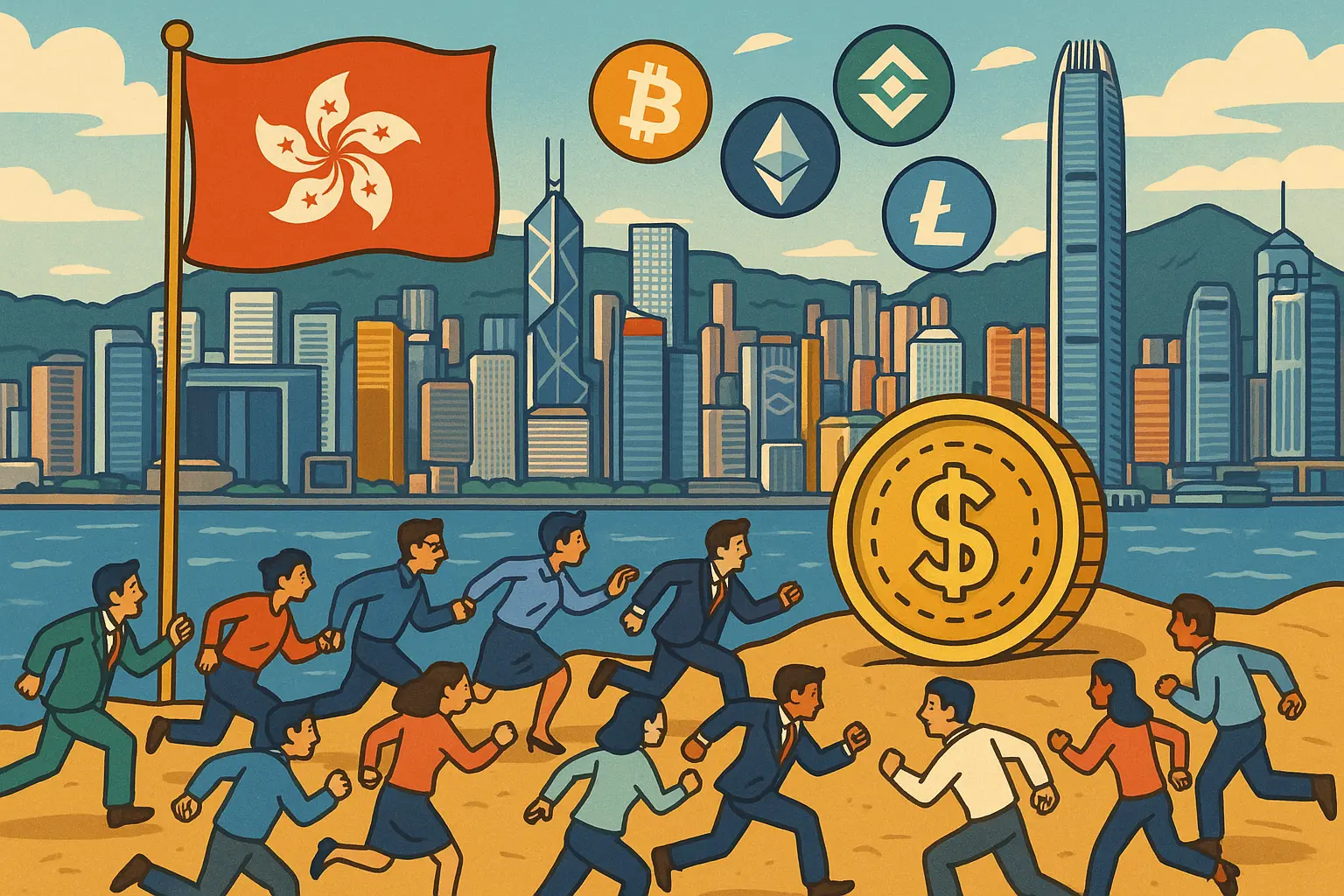
Hong Kong Financial Secretary Paul Chan Mo-po stated in Davos that licenses have been issued to 11 trading platforms, and the first batch of stablecoin licenses will be granted in the first quarter. Hong Kong adopts the principle of “same activity, same risk, same regulation,” having issued $2.1 billion in tokenized green bonds and launched a regulatory sandbox. The “Stablecoin Ordinance” came into effect in August last year, imposing strict standards.
Hong Kong’s Stablecoin Licensing First Quarter Regulatory Framework Leading Globally
Hong Kong Financial Secretary Paul Chan Mo-po said that, as an international financial center, Hong Kong is taking an active and cautious approach to developing digital assets. To date, licenses have been issued to 11 virtual asset trading platforms, with the first batch of stablecoin licenses expected to be issued in the first quarter of this year. According to a report by South China Morning Post, Chan Mo-po stated on January 20 during the World Economic Forum in Davos, Switzerland, that Hong Kong will promote responsible and sustainable growth of the cryptocurrency market based on the principles of “same activity, same risk, same regulation.”
Hong Kong’s stablecoin regulatory system is regarded as a core pillar of its overall strategy. The Hong Kong Stablecoin Ordinance officially came into force last August, clearly requiring stablecoin issuers to meet strict standards, including reserve asset management, maintaining sound value stability mechanisms, and a series of anti-money laundering, counter-terrorism financing, risk management, disclosure, and audit requirements.
This regulatory framework is leading on a global scale. In comparison, U.S. stablecoin regulation is still in legislative discussion, and the EU’s MiCA, while already implemented, is relatively lenient. Hong Kong’s Stablecoin Ordinance clarifies issuance eligibility, reserve requirements, and operational standards, providing a clear compliance pathway for the stablecoin market. This regulatory certainty is especially important for institutional investors and large enterprises, as they need to ensure compliance before participating at scale.
The issuance of the first batch of stablecoin licenses will be a significant milestone in Hong Kong’s crypto industry development. Licensees will be able to legally issue and operate stablecoins in Hong Kong, which can be used for payments, cross-border remittances, DeFi applications, and more. More importantly, licensed stablecoins will gain recognition from Hong Kong regulators, paving the way for their integration into the traditional financial system.
Hong Kong Has Issued 11 Exchange Licenses to Build a Complete Ecosystem
Hong Kong has issued licenses to 11 virtual asset trading platforms, allowing licensed exchanges to legally provide cryptocurrency trading services to retail and institutional clients. This is a notable difference from many jurisdictions that only permit professional investors to trade.
The presence of these 11 licensed exchanges provides a complete infrastructure for Hong Kong’s crypto ecosystem. Investors can trade in a regulated environment without worrying about exchange insolvencies or asset security issues. Licensed exchanges are also required to comply with strict anti-money laundering and KYC standards, enhancing overall market compliance.
Additionally, Hong Kong is actively promoting tokenization development, including issuing three batches of tokenized green bonds totaling approximately $2.1 billion, and launching a regulatory sandbox to encourage innovative applications. Tokenized green bonds are traditional bonds issued on the blockchain in token form, offering multiple advantages: reducing issuance costs, increasing trading efficiency, enhancing transparency, and enabling small investors to participate in the bond market.
The $2.1 billion scale positions Hong Kong as a leader in the global tokenized bond market. These successful cases serve as models for tokenizing other traditional financial products, with future expansion into stocks, real estate, commodities, and more asset classes. The regulatory sandbox provides a testing ground for innovative companies, allowing them to trial new products and services in a controlled environment, reducing compliance costs.
Hong Kong Positions Digital Finance as a Core Growth Strategy
Chan Mo-po mentioned that finance and technology can mutually promote each other. Taking digital assets as an example, this financial innovation not only enhances transparency, efficiency, inclusiveness, and risk management of financial services but also more effectively channels capital into the real economy. Furthermore, finance is a key driver and enabler of technological development. Chan Mo-po stated that Hong Kong aims to build an integrated ecosystem covering stablecoins, exchanges, and tokenized assets.
In the face of increasing global competition, Hong Kong positions digital finance as a key pillar of its growth strategy. This strategic positioning shows that Hong Kong is not passively accepting the crypto industry but actively making it a core driver of economic transformation and upgrading. Compared to competitors like Singapore and Dubai, Hong Kong’s advantages lie in its strong traditional financial foundation, connections with Mainland China, and a comprehensive legal system.
Hong Kong’s stablecoin licensing regime may attract various applicants: global stablecoin issuers like Circle (USDC) and Tether (USDT) may apply for licenses to enter the Hong Kong market; local financial institutions such as banks and payment companies may launch Hong Kong dollar stablecoins; and emerging stablecoin projects focused on the Asian market.
Disclaimer: The information on this page may come from third parties and does not represent the views or opinions of Gate. The content displayed on this page is for reference only and does not constitute any financial, investment, or legal advice. Gate does not guarantee the accuracy or completeness of the information and shall not be liable for any losses arising from the use of this information. Virtual asset investments carry high risks and are subject to significant price volatility. You may lose all of your invested principal. Please fully understand the relevant risks and make prudent decisions based on your own financial situation and risk tolerance. For details, please refer to
Disclaimer.
Related Articles
Tether drives a $500 billion valuation fundraising round; if demand is insufficient or is postponed
Gate News message, on April 5, Tether is pushing investors to participate in a new round of financing at an estimated valuation of about $500 billion. If market demand does not meet expectations, the financing process may be delayed. It is reported that the company has been exploring financing plans since last year, but some investors are cautious about this valuation. If the financing is successful, Tether’s scale will exceed most U.S. banks, second only to JPMorgan Chase. Previously, Tether discussed raising about $15 billion to $20 billion through private placements, but those plans remain uncertain.
GateNews04-05 07:57
Cambodia passes its first anti–tech scam law, strengthening law enforcement regulations to combat online telecom fraud
Cambodia’s National Assembly passed the “Anti-Technology Fraud Law” at the end of March, aiming to crack down on online scams and human trafficking. The law establishes dedicated offenses, with severe penalties and life imprisonment. The new law expands the scope of law enforcement, targeting acts such as “pig butchering” scams, and responds to international pressure to repair its image. The government has pledged to shut down illegal scam centers by the end of April.
ChainNewsAbmedia04-03 18:25
Ledger phishing email scam steals 600,000 USDT, and U.S. federal prosecutors recover all funds
An American court ruled to forfeit more than $600,000 in USDT, stemming from a physical letter phishing scam targeting Ledger users. After receiving the disguised letter, the victims leaked their seed phrases, and their funds were stolen. The scammers tried to conceal the funds through multiple transfers and conversion methods, but the transparency of the blockchain helped the police track the path of the fund movements. They then successfully recovered the funds through a civil forfeiture proceeding.
MarketWhisper04-03 03:02
US Attorney Connecticut Forfeits $600,000 in Tether Linked to Ledger Phishing Letter
Federal prosecutors in Connecticut recovered more than $600,000 in tether ( USDT) after tracing stolen cryptocurrency from a phishing scam that used a physical letter to deceive a hardware wallet user.
Connecticut Crypto Phishing Victim to Recover Funds
Local media reported that the U.S.
Coinpedia04-03 01:34


