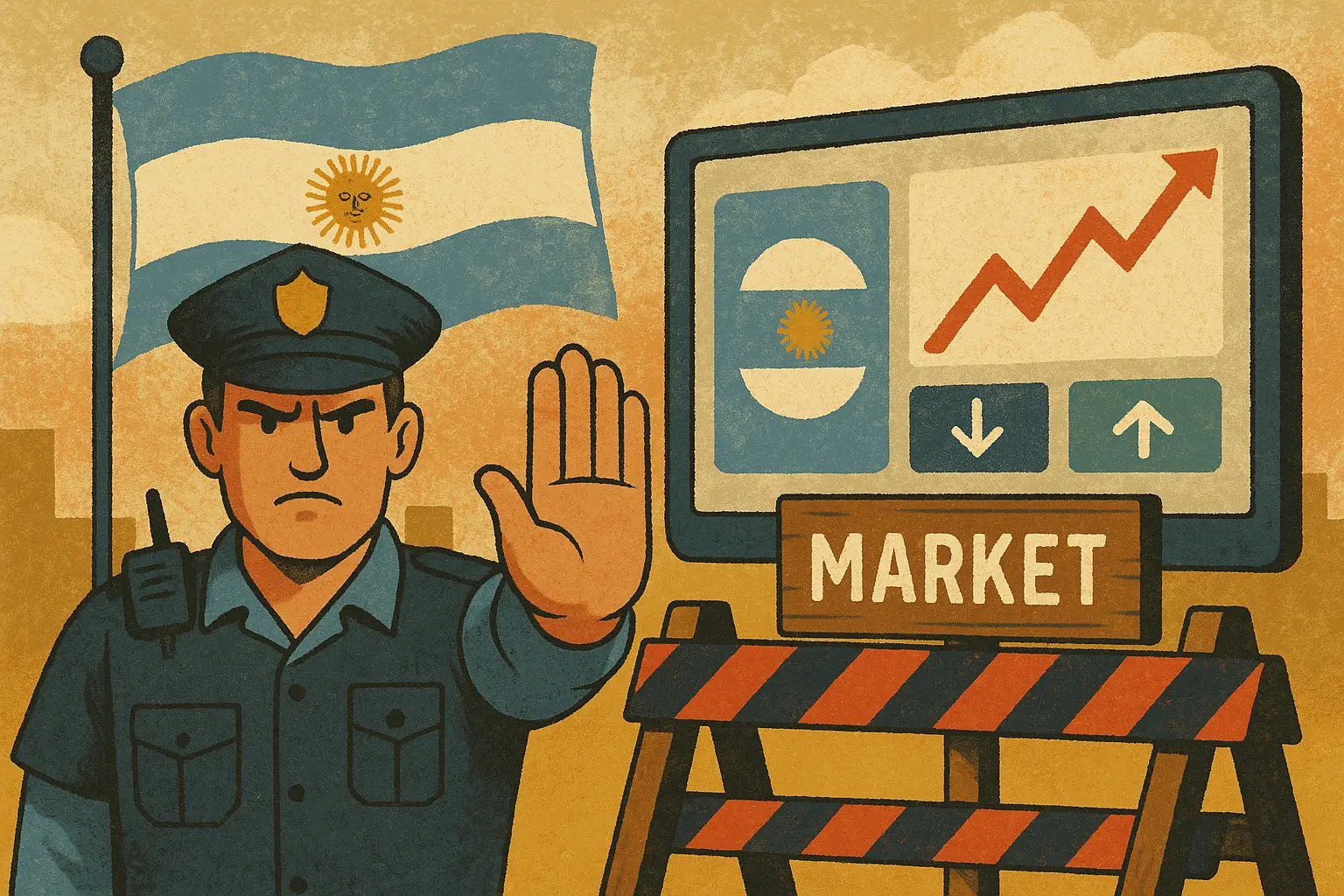
Argentina has issued a nationwide ban on the prediction market platform Polymarket, bringing the total number of countries restricting the platform to over 30. The ban was ordered by the Buenos Aires court, which instructed ENACOM (the National Communications Entity) to coordinate with local internet service providers (ISPs) to enforce the blockade, and simultaneously demanded that Google and Apple remove Polymarket’s mobile applications from the Android and iOS app stores.
The Core Trigger of the Ban: A Mysterious Reversal 15 Minutes Before Inflation Predictions
The direct trigger for this ban was an incident involving a suspected leak of Argentina’s official inflation data.
According to local media reports, there was a prediction market on Polymarket tracking Argentina’s inflation rate for February (which was ultimately announced as 2.9%). Notably, about 15 minutes before the official data was released, the market’s forecast trend suddenly reversed sharply—this abnormal timing sparked widespread suspicion of possible insider trading.
This incident prompted regulatory action. Buenos Aires’ lottery company (LOTBA) and the Argentine Casino and Bingo Games Association (CASCBA) immediately filed complaints with the relevant authorities. The Buenos Aires Office of the Special Prosecutor for Gambling Issues (FEJA), with technical support from the Criminal Investigation Team (CIJ), officially launched an investigation. The final conclusion determined that Polymarket is essentially a “disguised online gambling system masquerading as a prediction market.”
Legal Enforcement Mechanisms and Global Blocking Trends
Argentina’s enforcement process: the court orders ENACOM to notify all internet service providers to implement the blockade. Argentine media quoted prosecutors saying, “The ban has been issued, but due to the structure of the internet and the way Argentine law operates, ENACOM must notify each ISP individually to complete the final blocking,” indicating that the enforcement process requires some technical coordination time.
Polymarket’s global blockade map is expanding:
Colombia: The gambling regulatory authority officially banned Polymarket last year.
Netherlands: The regulatory agency ordered Polymarket to cease all operations in the Netherlands last month.
Over 30 countries: After Argentina’s inclusion, the number of countries restricting Polymarket has exceeded 30.
United States: Recent legislation proposed by Democratic lawmakers suggests banning event contracts related to sensitive topics such as war and death.
Frequently Asked Questions
Q: What is the main legal basis for Argentina’s ban on Polymarket?
The primary legal grounds include two aspects: first, consumer protection—since the platform lacks effective age and identity verification mechanisms, allowing minors to participate in speculative activities involving money; second, gambling regulation—investigators concluded that Polymarket’s operation essentially constitutes gambling behavior rather than a pure information market, thus falling under Argentina’s current gambling laws.
Q: Is the 15-minute “reversal” before inflation data release sufficient evidence of insider trading?
There are no publicly confirmed reports that this reversal definitively constitutes illegal insider trading. The market trend change 15 minutes prior could have multiple explanations, including rapid analysis by some participants, unofficial leaks of information, or mere statistical coincidence. However, the timing is suspicious enough to reasonably raise regulatory suspicion and serve as a basis for initiating an investigation.
Q: Does the widespread global blocking of Polymarket indicate fundamental issues with the prediction market model itself?
The reasons for bans vary across countries, but common points of controversy include: the legal classification of prediction markets (gambling vs. information markets), consumer protection capabilities (age verification, anti-money laundering measures), and the potential for insider trading on highly sensitive topics such as war or political events. Platforms like Polymarket can still operate in well-regulated markets like the US, indicating that the core issue is not the model itself but differing regulatory interpretations and standards across jurisdictions.
Disclaimer: The information on this page may come from third parties and does not represent the views or opinions of Gate. The content displayed on this page is for reference only and does not constitute any financial, investment, or legal advice. Gate does not guarantee the accuracy or completeness of the information and shall not be liable for any losses arising from the use of this information. Virtual asset investments carry high risks and are subject to significant price volatility. You may lose all of your invested principal. Please fully understand the relevant risks and make prudent decisions based on your own financial situation and risk tolerance. For details, please refer to
Disclaimer.


