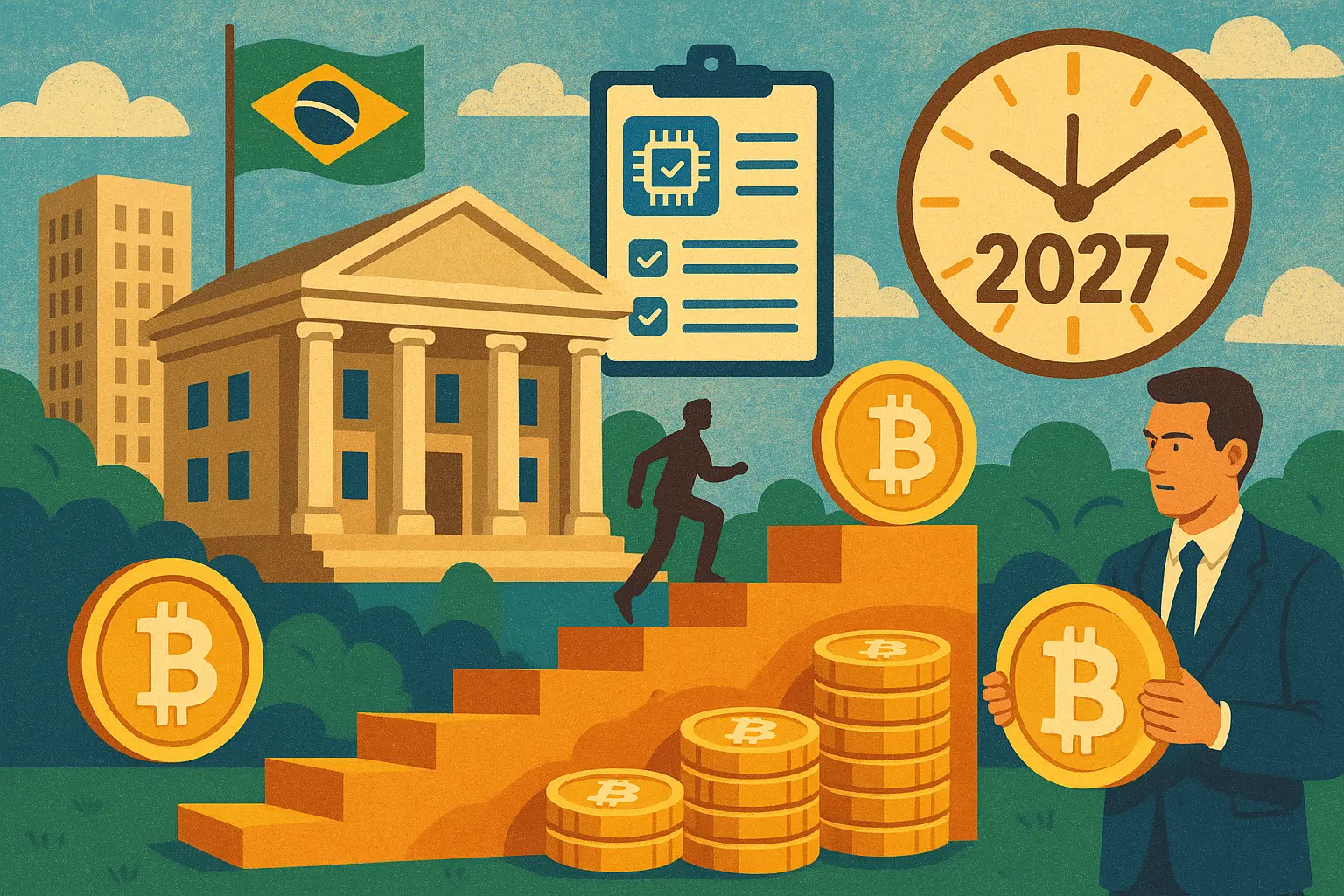
In February 2026, the Central Bank of Brazil officially advanced the regulatory framework for institutional virtual asset service providers (VASPs), establishing an authorization process for cryptocurrency companies in accordance with Resolution 519–521 issued in November 2025 and effective on February 2, 2026, and plans to implement related rules in stages until 2027.
Resolution 519–521: The Institutional Foundation of Brazil’s Cryptocurrency Regulation
Brazil had already laid the legal groundwork for cryptocurrency regulation in 2022 through key legislation that recognized cryptocurrencies as a legitimate means of payment. In November 2025, the Central Bank of Brazil further issued Resolutions 519 to 521, establishing the country’s first formal authorization process for virtual asset service providers (VASPs), which officially came into effect on February 2, 2026. Existing cryptocurrency operators were granted a transition period to adjust to new standards concerning governance, custody, cybersecurity, and reporting.
Core Compliance Requirements of Resolution 519–521
Authorization Application Deadline: Existing cryptocurrency operators must complete their authorization applications by October 30, 2026.
Asset Segregation: Operators are required to manage customer assets separately from the company’s own assets to ensure the safety of client funds.
Independent Audits: Operators must undergo independent audits every two years to enhance financial transparency and regulatory credibility.
Limits on International Transfers: New limits are set for cross-border cryptocurrency transfers to strengthen anti-money laundering (AML) controls.
Reporting Obligations: Under certain circumstances, authorized operators are required to adhere to a structured operational reporting period of 270 days.
Institutional VASP Framework: Focus on B2B Infrastructure
The Central Bank of Brazil’s framework primarily targets institutional-level cryptocurrency service providers, rather than general retail exchanges. Its scope includes custodial firms, settlement service providers, and back-end infrastructure operators that support the digital asset ecosystem. The framework emphasizes three main objectives: strengthening AML and KYC controls; increasing transparency in authorization reviews; and establishing clearer operational standards for institutions, while still allowing room for industry innovation.
This approach aligns closely with the Financial Action Task Force (FATF)’s guidelines on cryptocurrency regulation and is consistent with Brazil’s ongoing DREX pilot program for central bank digital currencies (CBDCs). Overall, it reflects Brazil’s strategic goal of integrating crypto assets into the traditional financial system.
From a compliance cost perspective, stricter reporting and monitoring requirements may pose challenges for small and medium-sized enterprises. However, for well-resourced institutional investors, a regulated environment can reduce uncertainties and barriers to entry, making Brazil an attractive location for global crypto infrastructure companies to expand their operations.
Frequently Asked Questions
Q: What are the main provisions of Resolution 519–521 issued by the Central Bank of Brazil?
A: Issued in November 2025 and effective from February 2, 2026, Resolution 519–521 establishes Brazil’s first formal authorization process for virtual asset service providers (VASPs). Key requirements include asset segregation, biennial independent audits, enhanced AML/KYC controls, and new limits on cross-border crypto transfers. Existing operators must submit their authorization applications by October 30, 2026.
Q: How does Brazil’s institutional VASP framework differ from general retail crypto regulation?
A: This framework mainly targets B2B cryptocurrency infrastructure providers, such as custodians, clearing and settlement firms, and back-end infrastructure operators, rather than retail exchanges directly serving consumers. Its standards are more rigorous, requiring asset segregation, regular audits, and structured reporting.
Q: What is DREX, and how does it relate to this crypto regulation framework?
A: DREX is a pilot project for a central bank digital currency (CBDC) being promoted by the Central Bank of Brazil. The institutional VASP framework aligns with DREX’s objectives, both reflecting Brazil’s broader strategy to foster digital financial innovation and incorporate crypto assets into the traditional financial system. The goal is to develop one of the most comprehensive crypto markets among G20 countries.
Disclaimer: The information on this page may come from third parties and does not represent the views or opinions of Gate. The content displayed on this page is for reference only and does not constitute any financial, investment, or legal advice. Gate does not guarantee the accuracy or completeness of the information and shall not be liable for any losses arising from the use of this information. Virtual asset investments carry high risks and are subject to significant price volatility. You may lose all of your invested principal. Please fully understand the relevant risks and make prudent decisions based on your own financial situation and risk tolerance. For details, please refer to
Disclaimer.
Related Articles
Xinda Futures: Rising Energy Prices Constrain Rate Expectations, Gold Under Short-Term Pressure
Xinda Futures research indicates that gold price movements are influenced by rising energy prices and interest rate expectations. The Middle East conflict has kept crude oil at elevated levels, intensifying inflation concerns in the market and suppressing gold prices. The market expects the Federal Reserve to maintain interest rates unchanged, but Powell's assessment will impact subsequent policy decisions.
GateNews15m ago
CFTC clarifies cryptocurrency margin rules: BTC and ETH capital deduction rate of 20%, permitting investment in the derivatives market
The U.S. Commodity Futures Trading Commission (CFTC) recently released an FAQ clarifying the rules for using cryptocurrencies as margin in derivatives markets, specifically setting capital deduction rates of 20% for Bitcoin and Ethereum and 2% for stablecoins. The pilot program will be limited to three coin types in the first three months, after which it will expand to additional cryptocurrencies and relax reporting requirements. Qualifying crypto assets may be used as margin, marking a gradual acceptance of blockchain assets within the U.S. financial system.
動區BlockTempo1h ago
US CFTC Releases Crypto Asset Collateral Pilot Guidance: BTC/ETH Capital Adequacy Ratio 20%, Stablecoins 2%
The U.S. Commodity Futures Trading Commission (CFTC) has released guidance on a pilot program for crypto assets as collateral, allowing Bitcoin, Ethereum, and stablecoins to be used as margin. Futures brokers must comply with capital requirements and regulatory reporting obligations, and after three months can expand to other crypto assets as collateral. The guidance clarifies the use cases for crypto assets and derivatives clearing requirements.
GateNews2h ago
Citigroup Slashes Bitcoin and Ethereum 12-Month Price Targets, Citing Stalled U.S. Crypto Legislation Weighing on Upside Catalysts
Citigroup has lowered its target prices for Bitcoin and Ethereum, indicating a cautious outlook on the medium-term prospects of the crypto market. The Bitcoin target price has been reduced from $143,000 to $112,000, while Ethereum's has been lowered from $4,304 to $3,175, mainly due to slow progress in U.S. cryptocurrency legislation. Although there is still room for upward movement over the next year, the market may remain volatile in the short term, with Ethereum's valuation becoming more reliant on fundamentals.
区块客4h ago
CME Data: The probability that the Federal Reserve will keep interest rates unchanged in April is 93.8%.
Gate News: According to CME "FedWatch" data on March 21, the probability of the Federal Reserve raising rates by 25 basis points in April is 6.2%, while the probability of maintaining current rates is 93.8%.
GateNews12h ago
CLARITY Act’s Stablecoin Yield Deal Near as SEC Redefines Tokens
Lawmakers and regulators are making progress on crypto policy, with a stablecoin yield proposal anticipated soon. The SEC and CFTC classified most crypto assets as non-securities, designating several as digital commodities.
CryptoFrontNews12h ago


