# GoogleQuantumAICryptoRisk

1.24M
The cryptocurrency world has been shaken by a paper published by the Google Quantum AI team. This paper warns that quantum computers could potentially break the cryptographic encryption that underpins blockchain technology in the future, bringing one of the industry's biggest existential threats back to the forefront. While many blockchains, including giants like Bitcoin and Ethereum, are still in the "planning" phase regarding this threat, Algorand claims to have been quietly preparing for this future for years.
The Threat is No Longer a Hypothesis: "Gather Today, Solve Tomorrow"
Google's res
BTC0,13%
ETH2,41%
ALGO10,64%
post-image
post-image
post-image
User_anyvip
  • Reward
  • 1
  • Repost
  • Share
HighAmbitionvip:
thnxx for the update
Quantum Risk vs Reality: Why Bitcoin Is Still Safe
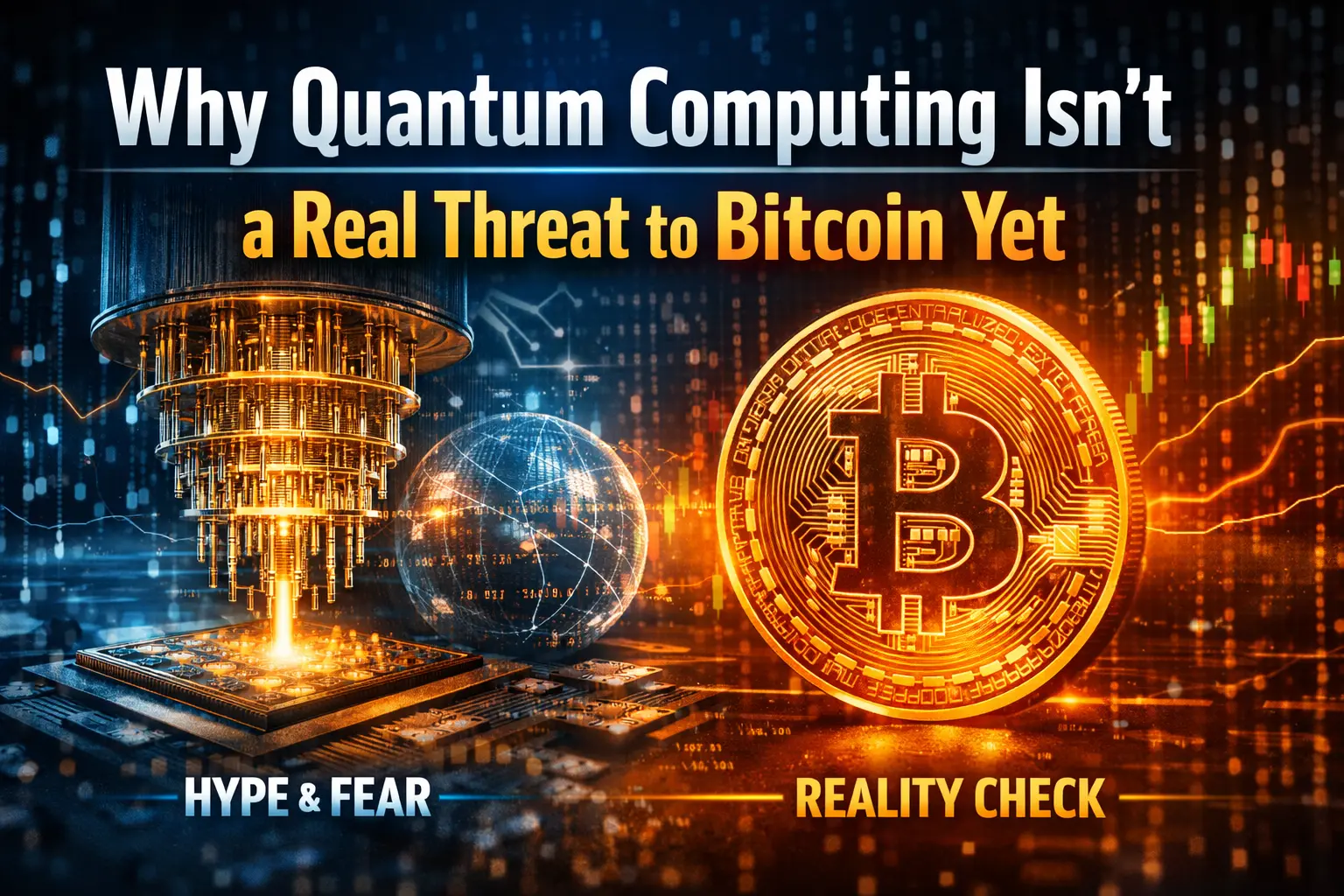
The recent warnings about quantum computing might sound scary, but the situation isn’t as urgent as it seems. Google’s research suggests fewer resources are needed to break Bitcoin’s cryptography than before—from around 10 million qubits down to about 500,000—but current quantum computers are far from reaching that scale. They remain small, unstable, and difficult to scale up. So, this risk is more of a long-term concern than a present danger.
More importantly, this doesn’t threaten Bitcoin itself entirely. The main risk lies in specific cases
BTC0,13%
post-image
  • Reward
  • Comment
  • Repost
  • Share
#GoogleQuantumAICryptoRisk
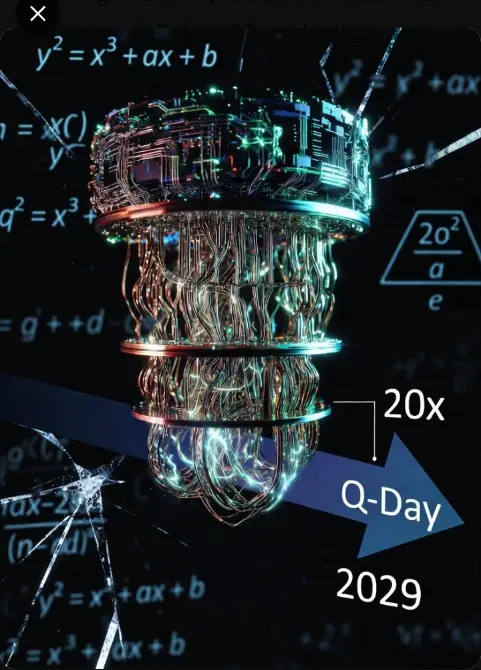
The cryptocurrency world is facing a fundamental reality check today April 1 2026. Googles Quantum AI team just published a whitepaper that has slashed the estimated timeline for breaking the encryption that secures Bitcoin and Ethereum. This is no longer a distant threat for 2040. The window just shrank by 20 times.
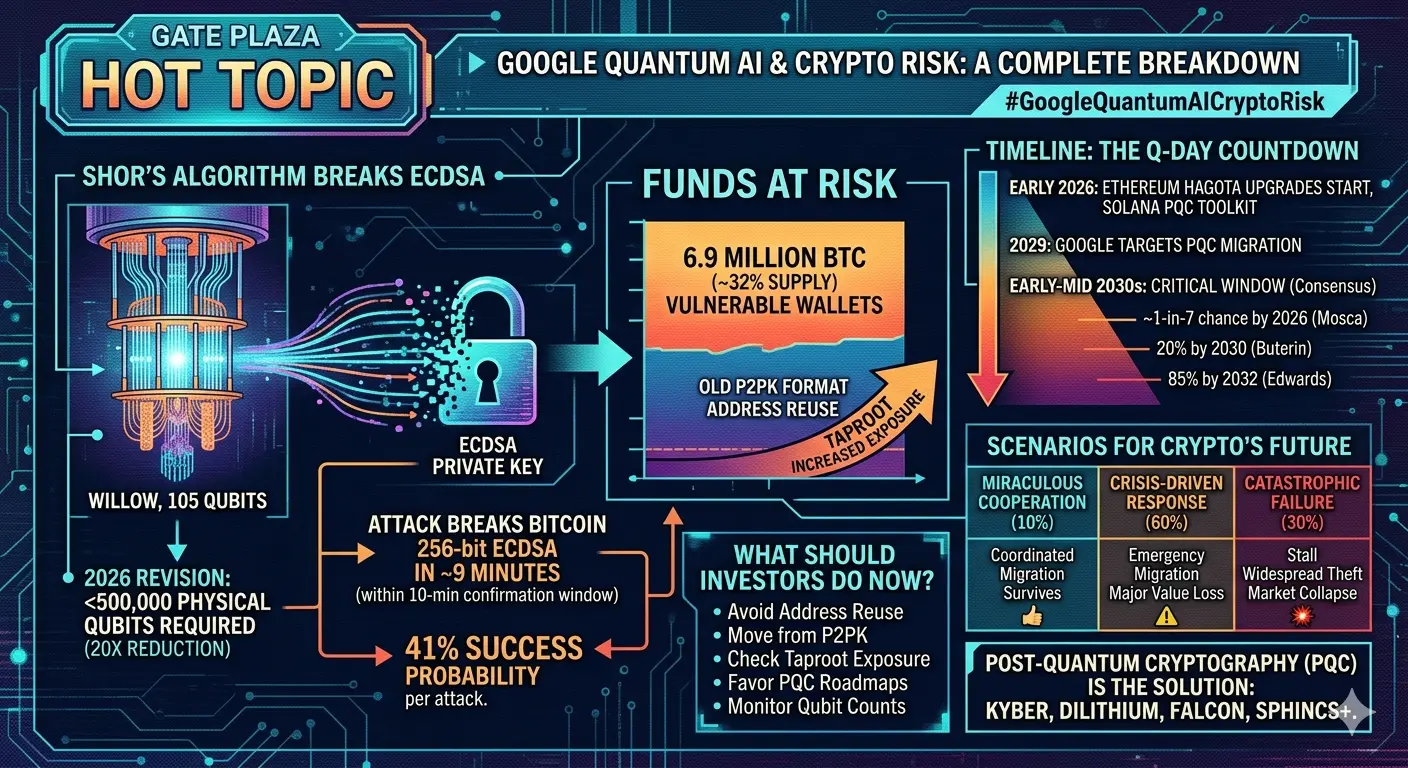
The core of the issue is the 256 bit elliptic curve cryptography ECDSA 256 which serves as the digital lock for almost every major blockchain. Previous estimates suggested it would take 20 million physical qubits to crack this lock. Googles new research
BTC0,13%
ETH2,41%
post-image
post-image
  • Reward
  • 5
  • Repost
  • Share
xxx40xxxvip:
2026 GOGOGO 👊
View More
#GoogleQuantumAICryptoRisk
Google Quantum AI just dropped a white paper that quietly compressed one of the most consequential timelines in crypto history, and most people have not fully processed what it means.
The core finding is this: breaking the elliptic curve cryptography that Bitcoin and Ethereum both rely on may require roughly 500,000 physical qubits on a fast superconducting system — not the millions that prior models assumed. That is a 20-fold improvement in efficiency for executing an optimized version of Shor's algorithm, the quantum method designed precisely to shatter the math u
BTC0,13%
ETH2,41%
post-image
post-image
  • Reward
  • Comment
  • Repost
  • Share
#GoogleQuantumAICryptoRisk
April 1, 2026 marks a new chapter in blockchain evolution—not the end, but the beginning of the next era of crypto security and innovation. Google’s Quantum AI team released a whitepaper highlighting the theoretical ability of quantum computers to challenge Bitcoin and Ethereum’s current encryption. The headline is dramatic, but the story underneath is full of opportunity.
Here’s the upside: while Google demonstrates a 500,000-qubit attack could theoretically hijack a live transaction, we are still years away from this threshold. Current chips like IBM’s Heron (156
BTC0,13%
ETH2,41%
post-image
  • Reward
  • 7
  • Repost
  • Share
xxx40xxxvip:
To The Moon 🌕
View More
Market Impact Analysis
#GoogleQuantumAICryptoRisk introduces a long-horizon but high-impact narrative, where advances in quantum computing—potentially accelerated by players like Google—raise concerns about the future security of cryptographic systems underpinning crypto markets.
This is not an immediate threat—but it is a structural risk vector.
Implications:
Cryptography Vulnerability Narrative: Current encryption (ECDSA, RSA) could eventually be compromised
Protocol Upgrade Pressure: Blockchains may need to transition toward quantum-resistant cryptography
Market Perception Risk: Even early-
post-image
post-image
  • Reward
  • Comment
  • Repost
  • Share
#GoogleQuantumAICryptoRisk The crypto market has faced hacks, regulations, collapses, and cycles of extreme fear before—but what emerged on March 31, 2026 feels fundamentally different. This isn’t about a failed exchange or a bad actor exploiting a smart contract. This is about the very foundation of cryptographic security being questioned. Google’s Quantum AI whitepaper didn’t say Bitcoin is broken today—but it made one thing very clear: the distance between theory and reality is shrinking faster than anyone expected. And for the first time, the industry is no longer asking “if” but “when.”
F
BTC0,13%
ETH2,41%
SOL-1,72%
KNC-0,56%
post-image
post-image
  • Reward
  • 4
  • Repost
  • Share
MasterChuTheOldDemonMasterChuvip:
Just go for it 👊
View More
#GoogleQuantumAICryptoRisk #GoogleQuantumAICryptoRisk | The Clock Just Moved ⏳⚛️
A new quantum paper didn’t break crypto — but it compressed the timeline in a way the market hasn’t fully priced in yet.
The key shift:
Breaking the cryptography behind Bitcoin and Ethereum may require hundreds of thousands of qubits — not millions. Still out of reach today… but no longer comfortably distant.
🧠 What Actually Matters
This isn’t about “quantum kills crypto.”
It’s about where the risk concentrates:
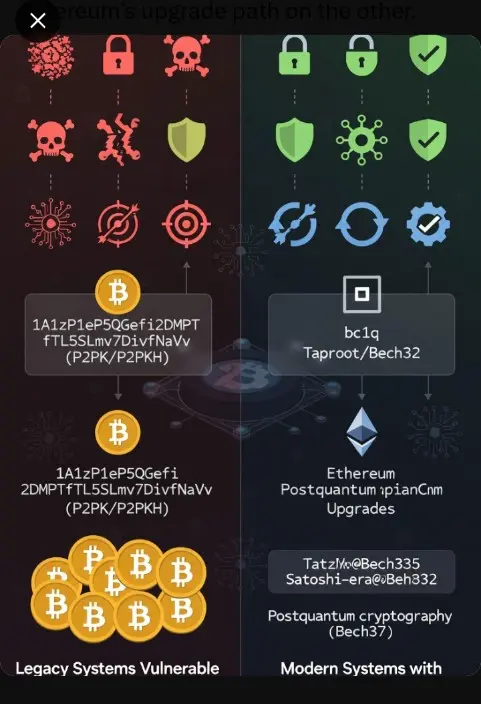
• Legacy Bitcoin wallets with exposed public keys
• Dormant, early-era holdings
• High-value Ethereum
BTC0,13%
ETH2,41%
  • Reward
  • Comment
  • Repost
  • Share
#GoogleQuantumAICryptoRisk
Introduction: The Wake-Up Call Nobody Expected
On March 31, 2026, Google’s Quantum AI research team released a whitepaper that shook the cryptocurrency world. The paper didn’t claim quantum computers can break Bitcoin today — but it revealed something arguably more alarming: breaking Bitcoin’s encryption requires far fewer quantum resources than previously thought. The industry is now assessing the clock and the risk seriously.
Point 1 — What Did Google Actually Publish?
Google’s whitepaper outlined a much more efficient implementation of Shor’s Algorithm, which can
BTC0,13%
ETH2,41%
SOL-1,72%
post-image
post-image
  • Reward
  • 22
  • Repost
  • Share
CryptoEyevip:
2026 GOGOGO 👊
View More
#GoogleQuantumAICryptoRisk
🚨 Google Quantum AI Drops Bombshell: Crypto Faces Existential Quantum Threat
A groundbreaking 57-page whitepaper from Google Quantum AI, co-authored with Ethereum Foundation researcher Justin Drake and Stanford's Dan Boneh, has fundamentally rewritten the timeline for quantum attacks on cryptocurrency.
---
⚛️ The Quantum Reality Check
Google's research shows that breaking the 256-bit elliptic curve cryptography (ECC-256) securing Bitcoin and Ethereum could require fewer than 500,000 physical qubits — a 20‑fold reduction from previous estimates. A separate Caltech/Or
BTC0,13%
ETH2,41%
ARB1,98%
OP-0,22%
post-image
post-image
  • Reward
  • Comment
  • Repost
  • Share
Load More