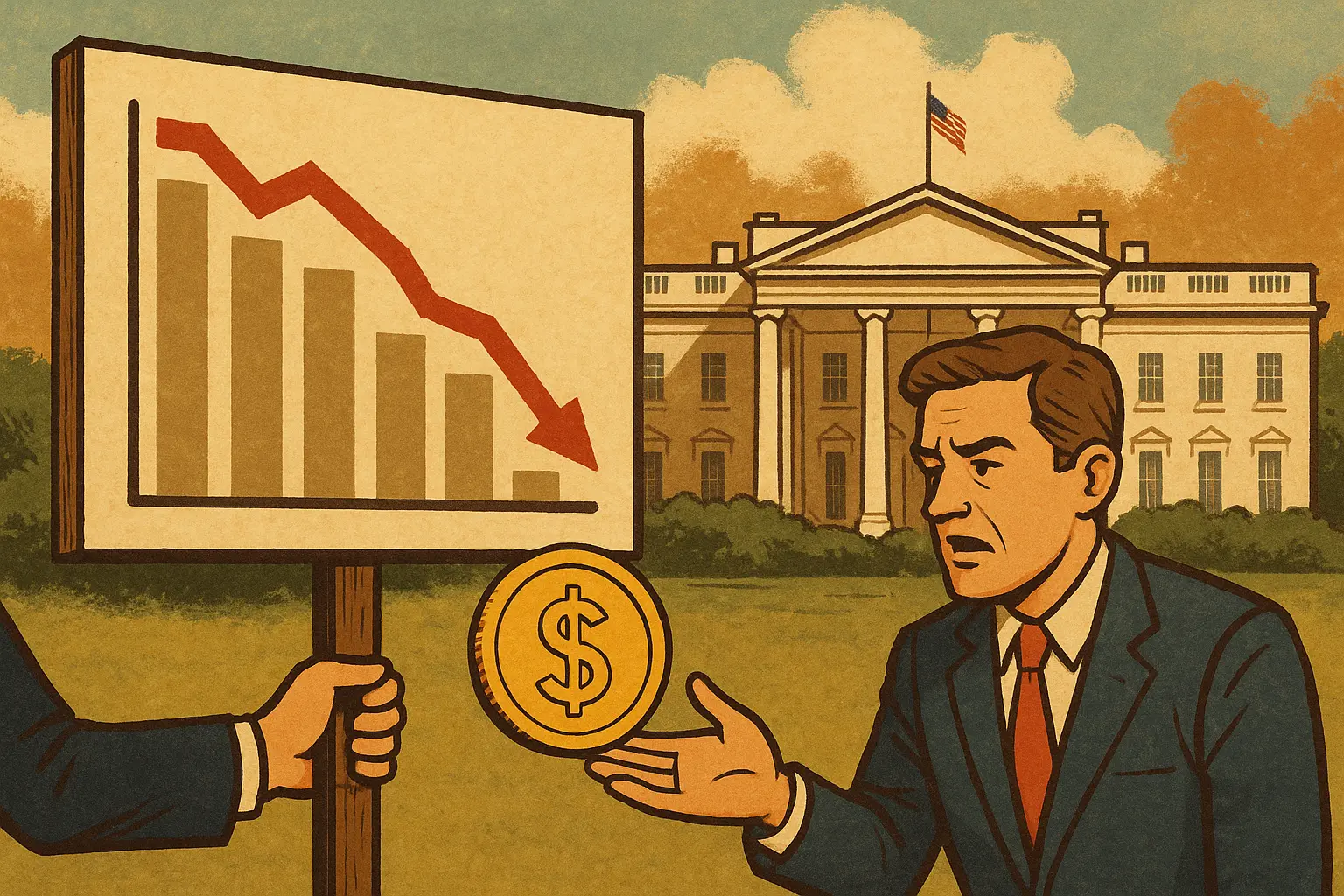
White House Digital Asset Advisor Patrick Vitter outlined a tentative compromise draft of the “CLARITY Act” to representatives from the cryptocurrency industry and banking sector. The core provision bans companies from earning yields on idle stablecoin balances, shifting the discussion toward activity-based reward mechanisms linked to trading or network participation. Data from the Polymarket prediction platform shows that the probability of the “CLARITY Act” passing this year once dropped to 44%.
Key Content and Enforcement Framework of the White House Compromise Proposal
The critical aspect of this draft is the establishment of a “ban on idle yields.” According to the draft, stablecoin issuers cannot offer passive yield on held coins, but reward mechanisms in the following scenarios remain under discussion:
Trade-based Rewards: Incentives tied to actual payment behaviors or on-chain trading volume
Network Participation Incentives: Rewards directly related to activities within the protocol (such as providing liquidity)
Ecosystem Contribution Rewards: Incentives for specific service usage behaviors, not just holding coins
On the enforcement side, proposed anti-avoidance clauses would grant the SEC, Treasury, and CFTC joint authority to enforce the idle yield ban. Civil penalties are capped at $500,000 per violation per day.
Vitter stated that last week’s closed-door meeting significantly narrowed the gap between the banking and crypto industries, and he believes coordination efforts are currently progressing in sync.
Stakeholder Interests and Key Legislative Timeline
This negotiation involves direct clashes of core interests. Industry representatives include Coinbase, Ripple, and venture capital firm Andreessen Horowitz, with industry groups like the Blockchain Association and Crypto Innovation Council also participating. On the banking side, representatives include the American Bankers Association (ABA), the Bank Policy Institute (BPI), and the Independent Community Bankers of America (ICBA).
The main disagreement centers on: banks worry that stablecoin yield mechanisms could lead to a drain of deposits from traditional financial institutions and increase systemic risk; crypto companies warn that overly broad restrictions could stifle innovation and advantage existing financial institutions.
Coinbase Chief Legal Officer Paul Grewal publicly stated that discussions around the bill remain constructive and cooperative. Once negotiators finalize the wording, Senate Banking Committee Chair Tim Scott will decide whether to reschedule the hearing originally set for January 15.
Notably, Vitter admitted that ethical issues involving President Trump’s family’s involvement with cryptocurrency exchanges are still under discussion, but he believes these topics are a lower priority compared to the yield-related disputes in the “CLARITY Act.”
Frequently Asked Questions
How would the “ban on idle yields” in the “CLARITY Act” affect ordinary token holders?
If the bill passes and this ban is enacted, stablecoin issuers would be unable to offer passive interest on holdings, similar to bank deposit interest, thus restricting stablecoin yield products that are purely interest-based. However, reward mechanisms tied to trading or network activity remain under discussion, with specific boundaries depending on the final legislative language.
What does the Polymarket probability increase from 44% to 52% indicate?
Polymarket is a decentralized prediction market, and its probability data reflect collective market sentiment about the outcome of a specific event. The rise from 44% to 52% suggests that market participants are cautiously optimistic about the White House actively engaging in negotiations and the March 1 deadline, but uncertainty about passage still exists.
If the “CLARITY Act” fails to reach consensus by March 1, what are the potential consequences?
March 1 is an internal negotiation target set by the White House, not a legal legislative deadline. Failure to reach consensus by then would delay the Senate Banking Committee’s review process, potentially further postponing overall legislation. Vitter indicated that Chairman Tim Scott will decide on the final review schedule based on negotiation progress.
Disclaimer: The information on this page may come from third parties and does not represent the views or opinions of Gate. The content displayed on this page is for reference only and does not constitute any financial, investment, or legal advice. Gate does not guarantee the accuracy or completeness of the information and shall not be liable for any losses arising from the use of this information. Virtual asset investments carry high risks and are subject to significant price volatility. You may lose all of your invested principal. Please fully understand the relevant risks and make prudent decisions based on your own financial situation and risk tolerance. For details, please refer to
Disclaimer.
Related Articles
UNI and AAVE are first in line! Analyst: The current draft crypto market law could severely damage the DeFi yield myth
10x Research warns that if the CLARITY Act is passed, it will ban stablecoin balance yield, potentially impacting DeFi protocols and related tokens. Returns would be funneled back to the traditional financial system, leading to reduced market competition, and many DeFi projects will face strict regulation.
CryptoCity15m ago
XRP Today’s News: Arizona Proposes Legislation to Include XRP as a Treasury Reserve Asset
The Arizona House Rules Committee unanimously passed the SB1649 bill, establishing a Digital Assets Strategic Reserve Fund that puts digital assets such as XRP under the management of the Department of the Treasury, and allows revenue to be generated through methods such as staking. If the bill passes, it will become the first U.S. state to officially recognize XRP as a fiscal reserve asset. XRP is currently trading at $1.28 and faces challenges from technical support and resistance.
MarketWhisper1h ago
Gate Daily Report (April 3): Bitcoin miner MARA lays off 15%; North Korea is accused of attacking Drift to profit 286 million
Bitcoin (BTC) gives back this week’s gains, temporarily trading at around $66,780 on April 3. Bitcoin miner MARA cut 15% of its workforce, shifting its strategy toward energy and digital infrastructure. Blockchain analytics firm Elliptic says North Korean hackers may exploit a vulnerability in the Drift Protocol to profit $286 million.
MarketWhisper2h ago
DRIFT (Drift Protocol) is up 24.16% in the last 24 hours, currently trading at $0.0561
As of April 3, DRIFT’s price is up 24.16%, now trading at $0.0561, with a market cap of approximately $32.62 million. Drift Protocol, as a decentralized exchange, has performed well in terms of security and liquidity, but trading has been restricted due to recent security incidents and risk management measures by South Korean exchanges, which has increased market volatility.
GateNews2h ago
XPL (Plasma) up 11.34% in 24 hours
Gate News, April 3, according to Gate market data, as of the time of this release, XPL (Plasma) is trading at $0.12. As of the time of this report, it has increased by 11.34% in the past 24 hours, reaching a high of $0.17 and dropping to a low of $0.10. The 24-hour trading volume is $9.1528 million. Its current market cap is approximately $281 million.
Plasma is a high-performance Layer 1 blockchain designed specifically for stablecoins. Plasma is committed to serving the stablecoin market that has already surpassed a total issuance of $275 billion and monthly transaction volumes in the tens of trillions of dollars. Its core advantages include: zero-fee USDT transfers, custom Gas tokens, and convenient crypto payments. At the same time, supported by outstanding throughput, it provides solid backing for global-level transaction circulation.
This news does not constitute investment advice; investors should be mindful of market volatility.
GateNews2h ago
Why is Bitcoin down today? Trump’s “Stone Age” comments trigger a $440 million liquidation
Trump, in a speech on April 2, warned Iran, causing market risk sentiment to contract sharply; Bitcoin fell by about 4%, hitting a low of $65,789. Rising oil prices and a strengthening dollar index intensified macro pressure, further impacting the market. From a technical perspective, Bitcoin may face a key support level at $64,000.
MarketWhisper2h ago


